

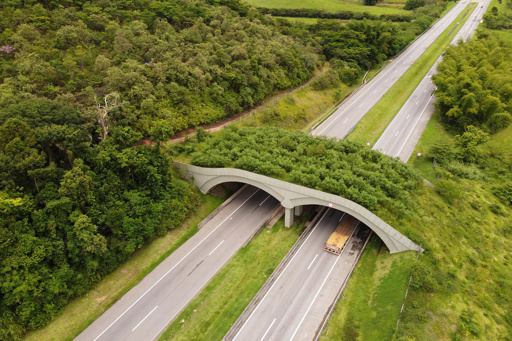
Nearly three years ago, Newscast guest, author and journalist Ben Goldfarb discussed his book Crossings, which is about wildlife crossings and road ecology. Wildlife crossings help reconnect habitats fragmented by road networks, reducing collisions, helping protect threatened wildlife, and improving genetic diversity. Since that conversation, Goldfarb has documented the growing popularity of wildlife crossings worldwide. He returns to the Newscast to detail how, where, and why wildlife crossings are becoming increasingly funded and built. “Probably the biggest factor is that at this point, the evidence that wildlife crossing structures are effective is just overwhelming. Maybe 20 years ago, you could’ve theoretically said, ‘Well … we don’t necessarily know that …’ but here in 2026, we just have a lot of scientific research basically showing that animals of all shapes and sizes use wildlife crossings,” Goldfarb says. He takes us to locations in South America, North America and Europe, where this particular type of infrastructure has rare nonpartisan political support. A bill is currently before the U.S. Congress to make the Wildlife Crossings Pilot Program permanent. Public surveys show overwhelming support for wildlife crossings in the United States. Goldfarb explains that the positive reception may also be due to the visual nature of one iteration of crossings, the highway overpass, which a source of his long ago described as “billboards for connectivity.” “I love wildlife crossings for … their ability to … just remind us that we’re sort of global citizens of a planet that we share with wildlife.” Please take…This article was originally published on Mongabay
From Conservation news via This RSS Feed.
I’d prefer if we used elevated highspeed rail instead, so that we don’t get in the way of animals just trying to live their life
You take what you can get. Elevated trains aren’t on the table in most places