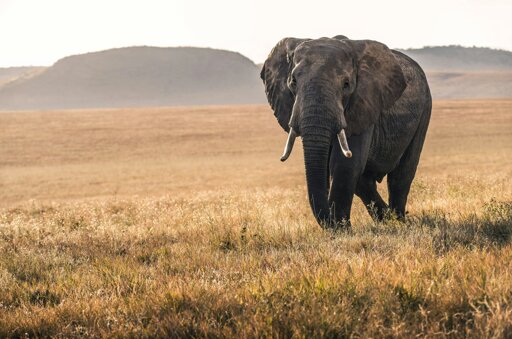
Africa is home to many iconic national parks and marine reserves, such as Virunga in the Democratic Republic of the Congo, Niokolo-Koba in Senegal, Kruger National Park in South Africa and Serengeti National Park in Tanzania. Many of them were established during the colonial era, and nearly half are still managed by government agencies.
From Biology News - Evolution, Cell theory, Gene theory, Microbiology, Biotechnology via This RSS Feed.
Decolonisation is a long slow process. Even longer when it hasn’t begun.
The 1933 London Convention established national parks where people were excluded and game reserves where European hunters were allowed. The convention was also driven by fears that expanding agriculture, fueled by new farming equipment and firearms, was rapidly destroying wildlife habitats across Eastern and Central Africa.
After independence, African states inherited and continued this system by supporting wildlife laws and regulations based on the London Convention.
I found that using this governance model leaves no room in African countries for community access to the areas. It cuts off community rights over their ancestral lands. It doesn’t protect wildlife either because it confines animal species to small, disconnected areas where they become isolated. When animals cannot move between areas, neither can seeds, pollen or other plant materials that rely on wind, water and animals to spread.
Over time, this weakens genetic diversity. Plants and animals become more vulnerable to disease and climate change.
I argue that Africa’s protected areas must be redesigned to support community livelihoods. This is not a favor to communities, but a condition for the protected areas’ survival and legitimacy.
The history of Africa’s protected areas My review noted that across the continent, communities have been evicted and displaced to make way for protected areas.
Those communities that lived on the edges of protected areas were denied access to their land and prevented from using the resources in the protected areas.
Although African countries’ struggles for independence centered on returning land taken by colonizers to the people, wildlife preservation groups pushed back against this. By the time liberation struggles got underway in the 1950s, wildlife preservationists had set up powerful international organizations.
For example, at the 1961 conference attended by representatives of several African states, President Julius Nyerere of Tanzania presented the Arusha Manifesto, which endorsed the London Convention’s model of protected areas.
From this time, the colonial protected-area model has been justified on ecological and economic grounds. However, it is important to remember that Yellowstone National Park was established in 1872. “Ecology” entered the Oxford English Dictionary in 1875, and “ecosystem” only appeared in 1935.
This suggests that the original justification for protected areas was not ecological in the way we understand it today, as the preservationist model was driven by aesthetics, not by ecological science.
What needs to happen next Africa’s wildlife laws still reflect a colonial mindset. They push people off their ancestral lands and treat local communities as a threat to conservation. Wildlife laws turn protected areas into tourist destinations rather than places…
deleted by creator