

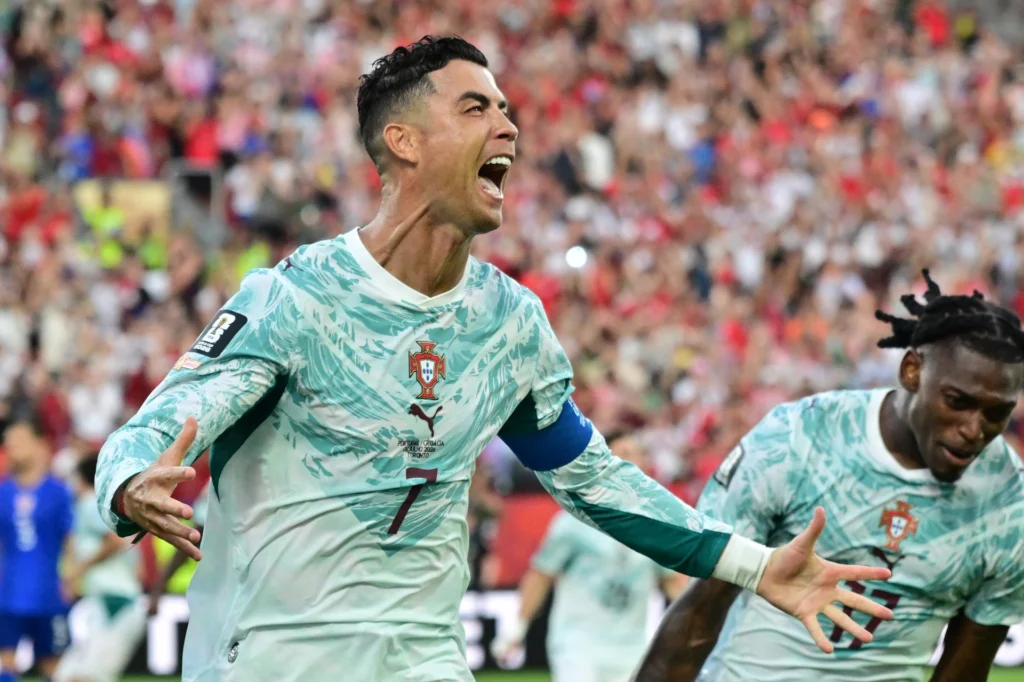
Cristiano Ronaldo scored a controversial penalty this Thursday to secure a 1-1 equalizer for Portugal against Croatia in their high-stakes Round of 16 match of the World Cup 2026 in Toronto.
Portugal secured its FIFA World Cup Round of 16 qualification on July 2, by defeating Croatia 2-1 in an intense elimination match held at Toronto Stadium in Canada.
Goals from Cristiano Ronaldo and Gonçalo Ramos propelled the Iberian team forward, while a late Croatian equalizer by Josko Gvardiol was controversially disallowed by VAR, sealing Croatia’s official exit from the major tournament.
RELATED: Spain Advances in World Cup 2026 After Eliminating Austria
This pivotal result maintains Portugal’s steady progression in the global football event, keeping their aspirations firm on the world stage. Conversely, the Croatian squad has officially concluded its competitive participation within the magnificent championship, co-organized across North American territory.
The encounter itself showcased a delicate tactical balance during the initial 45 minutes, a period characterized by both teams prioritizing defensive organization and structural solidity. However, the most significant offensive actions and decisive effectiveness were concentrated in the second half, a crucial timeframe that ultimately determined the match’s trajectory and the fate of both competing nations.
The Portuguese team, under the guidance of coach Roberto Martínez, demonstrated remarkable resilience. They successfully reacted to the adversity of an early deficit on the scoreboard, effectively capitalizing on the opportunities generated in the crucial closing stages of the match. This strategic execution allowed Portugal to consolidate its victory during the added minutes of the game, highlighting their ability to perform under pressure and secure a decisive outcome.
Ver esta publicación en Instagram
Una publicación compartida de teleSUR English (@telesurenglish)
The opening goal of the match came from the experienced Croatian winger Ivan Perišić at the 53rd minute, who broke the deadlock and put his team ahead. This early strike injected significant tension into the proceedings, compelling Portugal to redouble its efforts to find an equalizer.
Subsequently, Portugal’s legendary forward, Cristiano Ronaldo, successfully converted a penalty kick at the 68th minute, scoring 1-1 the provisional equalizer. This crucial goal not only restored parity to the scoreboard but also underscored Ronaldo’s enduring ability to deliver in high-stakes situations, providing a vital lift for the Portuguese team during a challenging phase of the game and setting the stage for further drama.
This particular goal held special significance for Portugal’s most iconic player, marking his first-ever goal in a World Cup knockout stage match. Furthermore, with this strike, the forward increased his remarkable professional tally to 976 goals, bringing him ever closer to the historic milestone of one thousand career goals.
Penalty Drama Unfolds
The closing moments of the match were nothing short of electrifying, amplifying the already intense atmosphere. In the 102nd minute, Croatian defender Josko Gvardiol appeared to score a dramatic equalizer, sending the Croatian bench and fans into a frenzy of celebration. However, their joy was short-lived as the play was meticulously reviewed by VAR. Following the video assistant referee’s intervention, the goal was ultimately disallowed due to an offside position detected in the build-up. This contentious VAR decision became a central point of discussion, causing immense disappointment for Croatia and relief for Portugal, definitively shaping the outcome of the match in the final seconds of play.
The penalty incident unfolded after referee Espen Eskas was called upon to review a potential foul. Nikola Vlasic was accused of holding Gabri Veiga inside the box, prompting the official to consult the monitor on the sidelines. Following careful consideration of the replay, the referee deemed an infringement had occurred and pointed to the penalty spot, despite fervent objections from the Croatian team.
Ronaldo stepped up to take the spot-kick, calmly striking the ball into the middle of the net to level the score. His ability to deliver in such a critical moment once again underscored his enduring impact for his national team.
Given the numerous substitutions, VAR interventions and various stoppages, the referee added an astonishing 18 minutes to the game.
The decisive moment arrived in the 94th minute, when forward Gonçalo Ramos scored the definitive goal that clinched Portugal’s victory. His strike not only secured the 2-1 lead but also confirmed their coveted ticket to the next phase of the competition, sparking jubilant celebrations among the Portuguese players and fans alike.
It was in the 102nd minute that the match reached its peak of controversy. A cross into the box led to a rebound off Igor Matanovic, which then fell to Josko Gvardiol, who promptly scored what appeared to be Croatia’s equalizer. The Croatian bench erupted in wild celebrations, believing they had forced extra time. However, once again, technology intervened. The ball sensor, a cutting-edge feature, detected a minute prior touch from Matanovic’s head, which altered the play’s origin and confirmed Gvardiol’s offside position, nullifying the goal.
With this hard-fought 2-1 victory**, Croatia was eliminated** and Portugal is now scheduled to confront Spain in the next stage of the tournament on July 6 in Dallas.
Portugal have qualified for the Round of 16
— FIFA World Cup (@FIFAWorldCup) July 3, 2026
From teleSUR English via This RSS Feed.
Game ends when the referee decides it after assessing total time wasted during the whole game.
The time can increase if he deems it appropriate but never decrease.
Right, but if they determined that only 10 minutes of extra time were needed at the end of 90 minutes, isn’t the only way to get to 18 minutes of extra time if the ref determined that 8 of those 10 added minutes were “wasted” and so needed to add an additional 8 minutes to account for it? That doesn’t match my recollection of what was happening during those initial 10 minutes of extra time.