

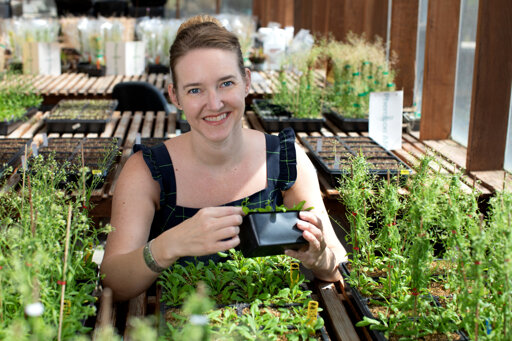
Similar to the way DNA damage can contribute to human diseases such as cancer, it can also disrupt growth, development and survival in plants. Every day, plants endure environmental stresses such as sunlight, radiation, drought and soil stress—all of which can damage their DNA. However, they cannot move away from danger. How do plants handle all that damage?
From Biology News - Evolution, Cell theory, Gene theory, Microbiology, Biotechnology via This RSS Feed.
YAF9A and YAF9B repairs? Plants can repair broken DNA in multiple ways. One method, called nonhomologous end joining, is favored for its speed. Like a quick patch job in a pinch, it rapidly seals broken DNA ends back together. This method works fine most of the time, but it runs the risk of introducing mistakes or mutations into the code.
Another method, called homology-directed repair, is slower but far more accurate. Instead of simply reconnecting broken DNA, the cell carefully rebuilds the damaged sequence using an intact DNA copy as a template, preserving the original genetic information.
“Accurate DNA repair is essential for maintaining genome stability, but it depends on many proteins working together within chromatin,” says Law. “What’s exciting about this study is that we identified YAF9B as a DNA damage-responsive chromatin reader that helps cells carry out high-fidelity DNA repair, revealing a novel innovation used by plants to protect their genomes.”
“Our next goal is to understand how these chromatin effectors coordinate different stages of DNA repair and how exactly YAF9B promotes accurate and effective DNA repair,” says Law.
