

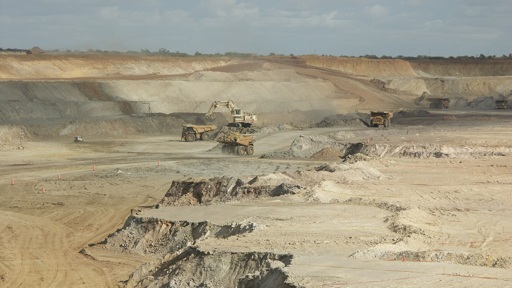
To transform “mining rents into a lever for sustainable development and economic sovereignty for the benefit of the people of Burkina Faso”, its Council of Ministers decreed the establishment of the Burkina Faso Sovereign Mining Investment Fund (FSMIB) on May 21.
Also called Siniyan-Sigui, it will be financed by surpluses generated when international mineral prices – especially gold, which accounts for over 80% of the country’s export revenues – rise above the benchmark set by the state.
The fund, thus generated by tapping into the cyclical movement of mineral prices, will not be used for short-term expenditure or to ease budgetary pressures. It will instead be allocated for building long-term infrastructure and industries, while reducing the dependence on external funding for large-scale, strategic projects.
Toward economic sovereignty
The establishment of this fund is the latest in a series of measures instituted by the popular sovereignist government to channel mining revenues – previously extracted out of the country – into national development.
Historically, the mining industry in Burkina Faso was foreign-owned. Only one industrial mine in the country was domestically owned – by a former minister, as his private company – when the regime of Roch Kaboré, propped up by its former colonizer France, was ousted in a popularly supported military coup in 2022, amid mass, anti-France protests.
Led by Capt. Ibrahim Traore, the present military government, which expelled French troops from the country, consolidated power later that year with the backing of the protest movement, trade unions, and other progressive civil society groups.
The Burkinabe stake in its mining has grown multifold. By the end of 2025, six of the country’s 15 industrial mines, were majority Burkinabe-owned. Those six amount to 40% of mining operations in the country and three of these six are directly controlled by the state mining company. This shift followed the nationalization of five foreign-owned mines earlier in 2025.
The state’s direct mining revenues, around USD 930 million in 2023, rose to USD 1.34 billion by the end of 2025. Using this revenue, the government repaid almost a quarter of its domestic debt, amounting to over USD 2 billion.
“Major shortcomings have been identified”
Nevertheless, “major shortcomings have been identified,” said the Council of Ministers’ communique after the cabinet meeting on May 21. The most notable among them was “the absence of a mechanism dedicated to capturing and managing surplus mining revenues, as well as the lack of intergenerational savings that would allow future generations to benefit from current mining revenues.”
It is to address this shortcoming that the Council has established the “sovereign wealth fund backed by mineral resources… to, among other things, autonomously finance strategic infrastructure and national industrial recovery” and “strengthen the financial sovereignty”.
Read also: Burkina Faso launches Five-Year plan
The post Burkina Faso asserts financial independence from the West with mineral-backed sovereign fund appeared first on Peoples Dispatch.
From Peoples Dispatch via This RSS Feed.
 2·3 hours ago