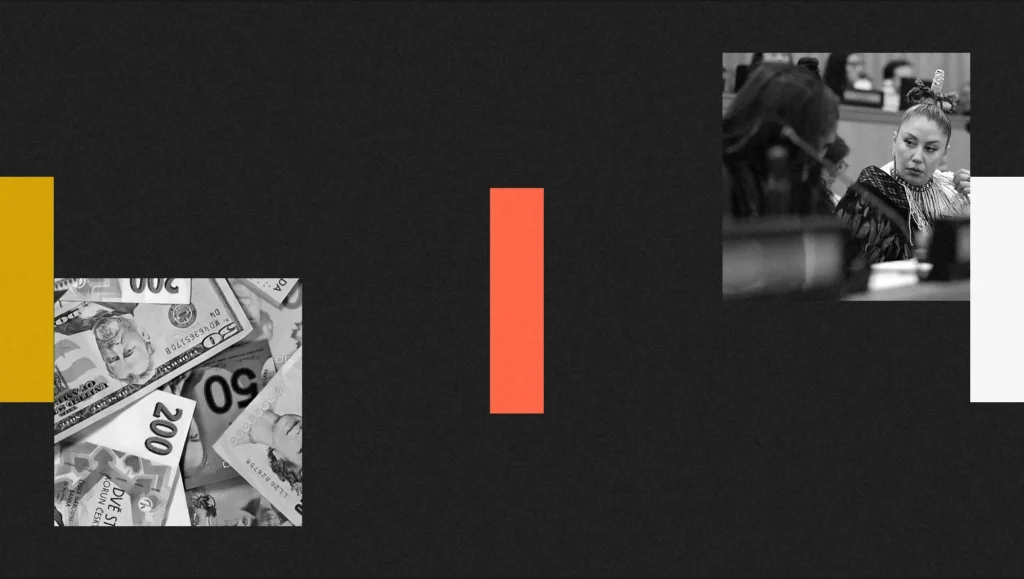
Diné advocate Janene Yazzie, with the International Indigenous Peoples Forum on Climate Change, calls the global approach to funding Indigenous climate initiatives ‘continuation of those same colonial policies.’ Illustration by Tristan Ahtone/Grist
This story was produced by Grist and is published here through the Indigenous News Alliance with minor style edits.
Billions of dollars have been pledged to fight the climate crisis.
Yet almost none is reaching Indigenous peoples, even as world leaders credit them as essential to solving it.
“From the Amazon to Australia, and Africa to the Arctic, you are the great guardians of nature, a living library of biodiversity conservation, and champions of climate action,” United Nations Secretary-General António Guterres told the UN Permanent Forum on Indigenous Issues in New York City last week.
But global funding hasn’t followed those words. Multi-billion-dollar financial institutions set up to address the climate crisis have largely failed to deliver money to Indigenous communities, or even track whether they’re benefiting.
At the Permanent Forum, Indigenous advocates described how their communities have been devastated by flooding and wildfires and called on governments and global funds to provide direct access to climate finance.
“The demand for direct access to finance by Indigenous peoples is a matter of right,” said Joan Carling, who is Indigenous Kankanaey Igorot from the Philippines.
“It’s actually explicitly mentioned in the UN Declaration on the Rights of Indigenous Peoples that because of the historical injustices and the need for us to develop, we need direct access to finances.”
READ MORE: At the UN, Mohawk leader calls for UNDRIP watchdogs to ensure standards are met
An analysis by the Rainforest Foundation Norway estimates that — between 2011 and 2020 — Indigenous peoples and local communities involved in land tenure and forest management received less than one per cent of global funding for climate change mitigation and adaptation.
Indigenous peoples are often combined with “local communities” in conservation spaces, despite calls from Indigenous UN experts to distinguish them.
“We are not asking for charity. We are not asking for privilege,” continued Carling, a former expert member of the Permanent Forum and executive director of the organization Indigenous Peoples Rights International.
“This is a matter of right for us because it’s a matter of social justice. It’s just enabling us to adapt to the impacts of climate change that we did not create in the first place.”
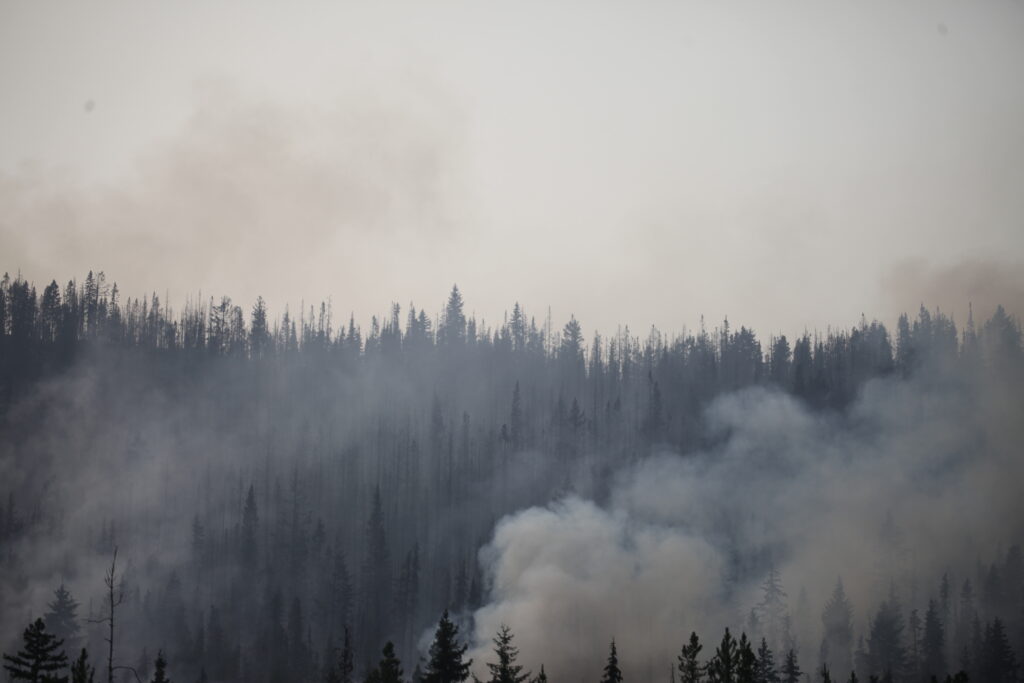
On Nlaka’pamux territories, smoke fills a forest as an out-of-control wildfire burns near the Coquihalla Highway in ‘B.C.’ Photo by David P. Ball
‘Access to the fund by Indigenous peoples is near to nil’
The climate crisis is forcing many Indigenous leaders to make painful choices: rebuild homes after major disasters or relocate entire villages from ancestral lands.
Those decisions are made harder by a lack of financial resources and despite international court rulings affirming the right to reparations for those harmed by climate change.
“We are protecting forests, we are protecting biodiversity,” said Deborah Sanchez, who is Indigenous Miskito from Honduras.
Sanchez is the director of the Community Land Rights and Conservation Finance Initiative, which was created in 2021 to address the need for more direct climate financing.
“Once the rights are realized for the communities,” she said, “that’s the basis where everything can really be sustainable over time.”
The Green Climate Fund, or GCF, the official global climate fund designated by the UN Paris Agreement, has a portfolio of US$20 billion (C$27 billion).

READ MORE: War, climate change, and AI: What’s at stake at this year’s UN Indigenous forum
But not a single Indigenous peoples organization has been accredited to receive money from it, according to Helen Magata, who serves on the fund’s Indigenous advisory committee, established in 2022.
“That goes without saying that access to the fund by Indigenous peoples is near to nil,” said Magata, who is Indigenous Kadaclan Igorot.
Getting accredited involves meeting stringent criteria — financial management and accounting standards, environmental and social safeguards — and can take years.
The fund’s minimum grant of US$10 million (C$14 million) can also be difficult for smaller communities to manage.
“We have to jump through hoop after hoop in order to even qualify,” said Janene Yazzie, who is Diné and a member of the climate finance working group of the International Indigenous Peoples Forum on Climate Change.
“They literally created a problem that is on us to prove our capacity to solve.”
Little data on Indigenous funding
A 2025 report by the fund’s Independent Evaluation Unit found that “the Green Climate Fund has not actively pursued a portfolio with Indigenous peoples” and that its processes lacked the flexibility to serve them.
“For Indigenous peoples, this challenge is often compounded to the point of being insurmountable,” the report concluded, recommending the fund create a dedicated funding window for Indigenous peoples.
Magata said the fund also lacks a mechanism to track how much money Indigenous peoples actually receive. Funding recipients may claim their projects will serve Indigenous peoples, but it’s often unclear what percentage of the money reaches those communities.
“If you don’t have a framework like that, then how could you say how much Indigenous peoples are really benefiting or not?” she said.
Rebecca Phwitiko, a communications specialist for the Green Climate Fund, acknowledged in an email that the fund does not yet have “a dedicated marker to track funding flows specifically to Indigenous Peoples’ organizations.”
She said the fund has revised its accreditation process and supported projects benefiting Indigenous peoples in the Amazon, Australia, and the Pacific.
“Strengthening tracking, reporting, and accountability around Indigenous Peoples-related finance is an area GCF recognizes as important and is continuing to work on,” she said.
The fund recently held its first-ever Indigenous peoples conference in South Korea and last year accredited the International Land and Forest Tenure Facility, which works to secure land tenure rights for Indigenous peoples and local communities.
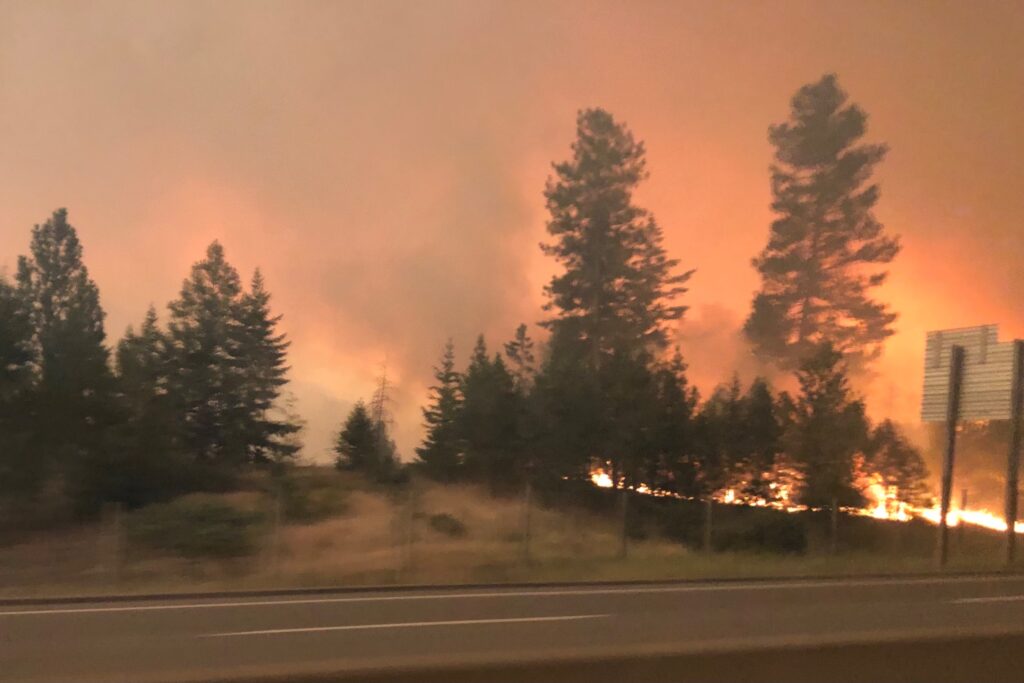
On Nlaka’pamux territories, an out-of-control wildfire burns beside the Coquihalla Highway in ‘B.C.’ Photo by David P. Ball
‘Seeking to learn and improve’
The Global Environment Facility, another major international climate fund, has disbursed more than US$27 billion (C$37 billion) over three decades, including US$50 million (C$68 million) in dedicated funding for Indigenous peoples and local communities over the past eight years.
Adriana Moreira, the fund’s head of partnerships, said it plans to increase that to US$100 million (C$136 million) for the next four-year funding round and intends to partner with five Indigenous-led trust funds.
“We are constantly seeking to learn and improve,” she said.
Unlike the Green Climate Fund, the Global Environment Facility doesn’t require an extensive accreditation process and offers US$75,000 (C$102,000) capacity-building grants to Indigenous-led organizations.
It has also set a goal of directing 20 per cent of all its funding to Indigenous peoples and local communities. But like the Green Climate Fund, it is still working on ways to verify whether money actually reaches those communities.
READ MORE: Indigenous health can’t be separated from environmental health, leaders tell UN
Sarah Wyatt, a senior biodiversity specialist at the fund, said it recently tested a new tracking method within one program and plans to expand it.
“It is admittedly not going to be an exact science,” Wyatt said. “But still, if you don’t count, you can’t try to improve, right?”
Even if both funds improve their processes, neither can reach Indigenous peoples in the Global North.
Both rely on governmental contributions classified as “official development aid” — funding that flows exclusively from wealthy countries to developing ones.
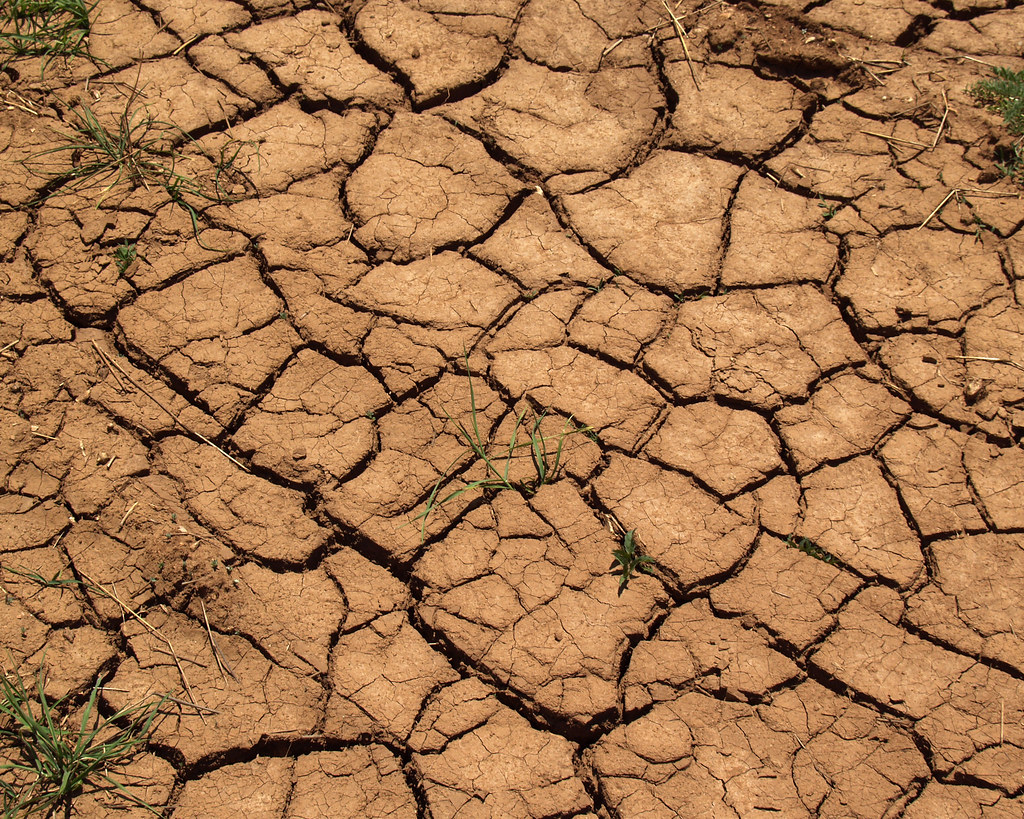
More frequent and longer droughts are one aspect of the climate crisis globally. Photo by David P. Ball
Challenging a ‘false dichotomy’
At the UN’s annual climate conference in 2022, Yazzie was part of a caucus of Indigenous peoples who called on states to recognize the “false dichotomy of developed and developing countries in regard to funding initiatives and actions directed to Indigenous Peoples.”
At the Permanent Forum, delegates from Indigenous nations in North America described how melting ice and rising seas are causing irreversible harm to their traditional homelands — communities excluded from the current global climate financing structure.
“We are dealing with the same issues and same forms of disenfranchisement across those global barriers,” said Yazzie.
“It actually invisibilizes the way that the so-called ‘developed North’ profits from the theft of lands of Indigenous peoples within their own territories. To demand that those flows only go to the South is a continuation of those same colonial policies.”
Yazzie also criticized the widespread use of the phrase “Indigenous peoples and local communities,” which UN experts have called on climate treaties to abandon.

READ MORE: AI is a double-edged sword for Indigenous stewardship, say UN experts
Representatives from the Global Environment Facility said they use the description of local communities in the Convention on Biological Diversity, which describes local communities as embodying traditional lifestyles relevant for the conservation and sustainable use of biological diversity.
“So you see how much more narrow that truly is,” said Wyatt from the Global Environment Facility.
“But I would give the example actually in the Pacific, where folks may not always call themselves Indigenous, but they would fit that type of definition.”
She added the term also helps channel funding to communities in countries that don’t formally recognize Indigenous peoples — but acknowledged they don’t know what share of their grants go to Indigenous communities specifically versus local communities more broadly.
The challenge of receiving global climate finance is pushing some groups to build alternatives.
“We were in the communities, we saw that the funding didn’t go to the ground,” said Sanchez from the Community Land Rights and Conservation Finance Initiative, whose organization draws mostly from private philanthropy to provide grants to Indigenous peoples, local communities, and Afro-descendant organizations.
Magata remains hopeful that the major funds can change.
“At the end of the day,” she said, “the ultimate objective is we want to bring as much money as near to the ground as possible.”
The post Indigenous peoples bear the brunt of climate change — but get almost none of the money to fight it appeared first on Indiginews.
From Indiginews via This RSS Feed.
But global funding hasn’t followed those words. Multi-billion-dollar financial institutions set up to address the climate crisis have largely failed to deliver money to Indigenous communities, or even track whether they’re benefiting.
Caucasian people who like to tell themselves and others that indigenous and other PoC are “irresponsible,” but who wrecked our habitat and climate?