

Ecuador local elections 2026 draw 40% turnout by midday as voters choose mayors and prefects amid El Niño and a fierce Noboa-correísmo showdown.
Ecuador Local Elections 2026: 40% Turnout as 1 High-Stakes Race Grips the Nation
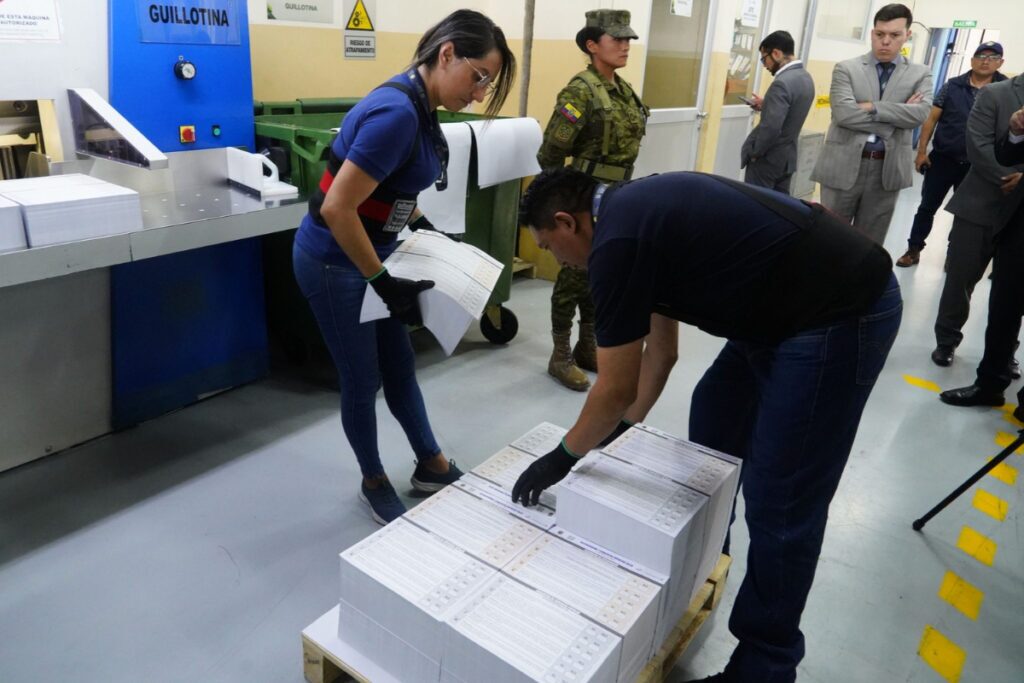
The Ecuador local elections 2026 recorded 40% turnout by 13:30 on November 29, with about 5.5 million voters casting ballots. Polls remain open until 17:00, and the first official results are expected after 18:30.[eluniverso]
The National Electoral Council (CNE) said all polling stations were operational and that the 41,475 voting tables were installed normally. By 10:00, 10.43% of the electorate had voted, a pace that accelerated through the morning.[eluniverso]
The vote is taking place under states of exception in several provinces because of rains linked to El Niño. Despite mobility problems, the CNE reported no serious incidents affecting the process.[eluniverso]
[Ecuador Local Elections: 13.8 Million Vote as 1 Crisis Looms: Ecuador Local Elections 2026: 40% Turnout as 1 High-Stakes Race Grips the Nation](https://www.telesurenglish.net/ecuador-local-elections-2026/)
Ecuador Local Elections 2026: 40% Turnout at Midday
The Ecuador local elections 2026 figure of 40% is partial. It does not represent the final result, because several hours of voting remain and overseas tables have yet to be counted.[eluniverso]
In the 2023 sectional elections, final participation reached 84%, with abstention at 16.05%. In 2019, abstention was 16.9%, and in 2014 it was 17.4%.[eluniverso]
If the current pace holds, Ecuador could approach those historical levels. But the comparison is not direct: the 84% in 2023 was measured at the close of voting, not at midday.[eluniverso]
Abstention has historically been higher in Cañar and Azuay provinces, and lower on the coast and in large cities. That geography of voting could repeat itself this Sunday.[eluniverso]
External link: El Universo: CNE reports 100% of polling stations operational
Comparing Turnout Across Elections
| Year | Final participation | Abstention |
|---|---|---|
| 2014 | 82.6% | 17.4% |
| 2019 | 83.1% | 16.9% |
| 2023 | 84.0% | 16.05% |
| 2026 | 40% at 13:30 | To be confirmed |
The trend over the past three elections has been a gradual decline in abstention. In 2023, 2,093,640 people did not vote inside Ecuador, compared with 2,180,019 in 2019 and 2,012,731 in 2014.[eluniverso]
This year, 13,827,643 voters are eligible, of whom about 13.3 million vote in Ecuador and nearly 496,000 abroad. The roll grew compared with 2023, when 13,450,047 people were called to the polls.[eluniverso]
The 2023 election also included a referendum, which may have boosted participation. This year, voters are choosing 5,749 local authorities and seven members of the Council for Citizen Participation and Social Control.[eluniverso]
A Plebiscite on Noboa and the Correísmo
The Ecuador local elections 2026 are widely seen as a plebiscite on President Daniel Noboa and on the rivalry between his movement, National Democratic Action (ADN), and Correísmo.
The government says it will win a majority of mayoralties and prefectures. The opposition, led by the Correísmo, disputes that and trusts its territorial structure.
Noboa voted in Olón, Santa Elena, and said he expects a strong showing for ADN. “The expectation is that the vast majority of Ecuadorians want change. We want people to vote with hope and without fear,” he said.
In Guayaquil, candidate Fiorella Ycaza expressed confidence and asked for calm while waiting for results. “A lot of confidence, and the decision belongs to God,” she said after voting.
ABC: Noboa turns local elections into a plebiscite
The Key Battlegrounds
Quito, Guayaquil, and Cuenca are the focus of attention. In Guayaquil, the government side appears favored, while in Quito the race is more open. In Cuenca, the two main political forces are tied in the polls.
The prefectures are also decisive. They will manage reconstruction after the floods and coordinate with the national government on security and public works.
The CNE decided not to conduct a quick count, so results will come through the official tally. That could delay the outcome in the closest races.
In Quito, the contest has been shaped by disputes over the mayor’s office and the legacy of the previous administration. In Guayaquil, the ruling party is trying to consolidate its control of the country’s largest city.
A Complex Scenario
The day unfolded calmly, but the context is demanding. El Niño rains have left 30 dead, 15 injured, and more than 121,000 affected since late August, along with damage to about 44,000 homes.[eluniverso]
That scenario forced the relocation of at least 40 polling centers and reinforced logistics in rural areas. It also shaped the campaign, which focused on the state response and local management capacity.[eluniverso]
The CNE reported 67 incidents during the day, all resolved by the armed forces and police. Authorities also reported 271 people detained on outstanding warrants and seven arrests for flagrant crimes.[eluniverso]
Geopolitical Context
The Ecuador local elections 2026 matter beyond the country’s borders. Ecuador is a key player in the Andean region, and its political direction affects security cooperation, migration, and trade.
The vote is also a test for Noboa’s governing project. A strong result for ADN would strengthen his hand ahead of the 2027 presidential race. A strong showing for Correísmo would signal that the opposition remains the country’s dominant political force.
The election takes place amid a regional shift. Latin America is divided between governments of different ideological orientations, and Ecuador’s outcome will be read as a signal about the mood of voters in the region.
The broader geopolitical meaning is that local elections are no longer just local. They are part of a wider contest over security, economic policy, and the balance of power in the Andes.
What Comes Next
The first official data will be released after 18:30. The CNE has asked for patience and warned that final results will not be known until February 2027.[eluniverso]
Meanwhile, parties are watching turnout and provincial trends. High participation could favor local machines and candidates with stronger territorial structures.
For Noboa, the result will be a signal about his political capital at midterm. For Correísmo, it will test its ability to recover territory. For voters, it is a chance to shape the direction of their cities and provinces.
The Ecuador local elections 2026 have already delivered a clear message: participation is robust, the race is tight, and the country remains deeply divided. The count will decide who governs, but the political realignment is already underway.
Ecuador Local Elections: 13.8 Million Vote as 1 Crisis Looms
From teleSUR English via This RSS Feed.