

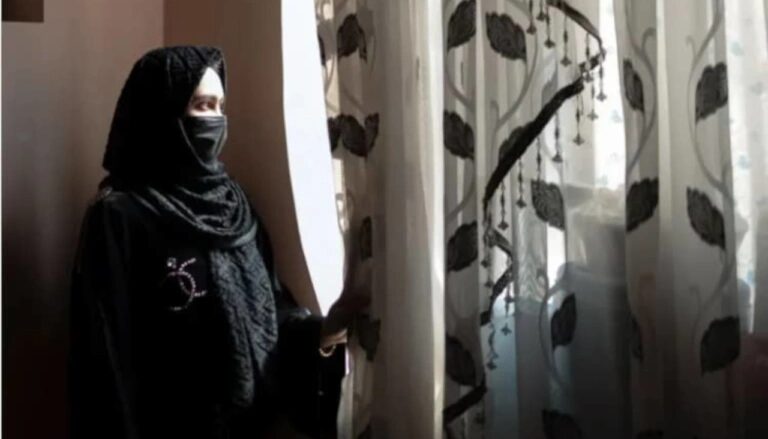
Afghan women name ban forces generic labels in records and hospitals, deepening Taliban restrictions on women’s visibility and identity.
Related: Taliban Orders That Women Given Names No Longer Be Used
Afghan Women Name Ban: 1 Harsh Rule Erases Identity From Public Life
The Taliban regime in Afghanistan has introduced a new rule restricting the use of women’s and girls’ proper names, replacing them with generic terms across public and administrative life. The Afghan women name ban marks another step in the systematic removal of women from visible roles in society.
Under the regulation, female names are to be removed from official records and from public and private documents. They are to be replaced by common designations that the authorities consider respectful under their interpretation of Islamic law.
The measure has already affected the health sector in Balkh province. Health workers there say they must avoid writing or pronouncing the names of female patients and instead refer to them as “Bibi,” a term meaning grandmother or elderly woman.
Reports also indicate that some women have been referred to by animal names, a detail that underscores the dehumanizing effect of the policy.
How the Afghan Women Name Ban Works in Practice
The practical consequences of the Afghan women name ban are most visible in hospitals and clinics. In Balkh, medical staff described having to abandon the use of patients’ names when registering them, calling them, or writing their files.
The rule extends to official records and documents, meaning that women’s identities are being stripped from the paperwork that governs daily life. Birth certificates, medical files, and administrative registries are among the areas affected.
International organizations and observers say the directive expands the restrictions already imposed on Afghan women. It adds to a growing body of regulations adopted by the Taliban authorities in recent years.
A Health System Already Under Strain
The Afghan women name ban arrives amid existing limits on women’s access to healthcare and medical training. The Taliban have restricted medical education for women and curtailed the hiring of female staff in hospitals.
Those restrictions are promoted by the Ministry for the Propagation of Virtue and the Prevention of Vice, the body responsible for enforcing the regime’s interpretation of Islamic morality.
The combination of limits on female health workers and the ban on using women’s names creates practical obstacles. Patients may struggle to be identified correctly, and medical staff face difficulties in maintaining accurate records.
Women’s access to care is further complicated by rules requiring male guardians and by the scarcity of female doctors. The new naming rule adds another layer of invisibility to an already fragile system.World Health Organization
A Pattern of Erasing Women From Public Life
The Afghan women name ban is part of a broader pattern of policies that have reduced women’s participation in public and professional spaces. Previous measures include a ban on installing windows in new homes if they allow views into areas used by women in neighboring residences.
Restrictions also extend to employment. The Ministry of Economy has limited the employment of women in non-governmental organizations and warned of possible sanctions for entities that fail to comply.
Education has been another target. The Taliban have barred girls from secondary school and restricted women’s access to universities, decisions that have drawn widespread international condemnation.
Taken together, these measures are redefining the presence of women in public, educational, professional, and administrative life. The naming rule is the latest expression of that broader project.
Why Names Matter
Names are more than labels. They are the basis of legal identity, medical records, property rights, and family ties. Removing women’s names from documents makes it harder for them to prove who they are and to claim rights or services.
The use of generic terms such as “Bibi” also erases individual histories. In a hospital, a woman becomes indistinguishable from any other patient. In a registry, she becomes a category rather than a person.
Human rights groups argue that the policy is designed to make women invisible in public life. By removing their names, the authorities are effectively denying their existence as independent individuals.
The measure has drawn condemnation from international organizations and observers, who see it as part of a systematic effort to erase women from Afghan society.
Geopolitical Context
The Afghan women name ban takes place as the Taliban government remains largely isolated internationally. No country has formally recognized the regime, and Western governments have conditioned any normalization on improvements in women’s rights.
The policy also complicates engagement with humanitarian organizations. Aid groups operating in Afghanistan must navigate a complex set of rules that restrict women’s movement, employment, and access to services.
Regional powers have taken a more pragmatic approach, engaging with the Taliban on security and economic issues while offering limited criticism of social policies. That stance has frustrated rights advocates who want stronger pressure on the regime.
The broader geopolitical meaning is that Afghanistan has become a test case for how the international community responds to systematic gender discrimination. The answer will shape not only the lives of Afghan women but also the credibility of global human rights norms.
What Comes Next
The immediate question is how the rule will be enforced beyond Balkh. Reports suggest that health workers in other provinces may face similar requirements, though the full scope of implementation remains unclear.
International organizations are likely to continue documenting the impact of the policy and pressing for its reversal. Whether that pressure produces results depends on the willingness of regional powers to engage with the issue.
For Afghan women, the consequences are immediate. The loss of their names in official records and public spaces is another step toward erasure from the society they live in.
From teleSUR English via This RSS Feed.