

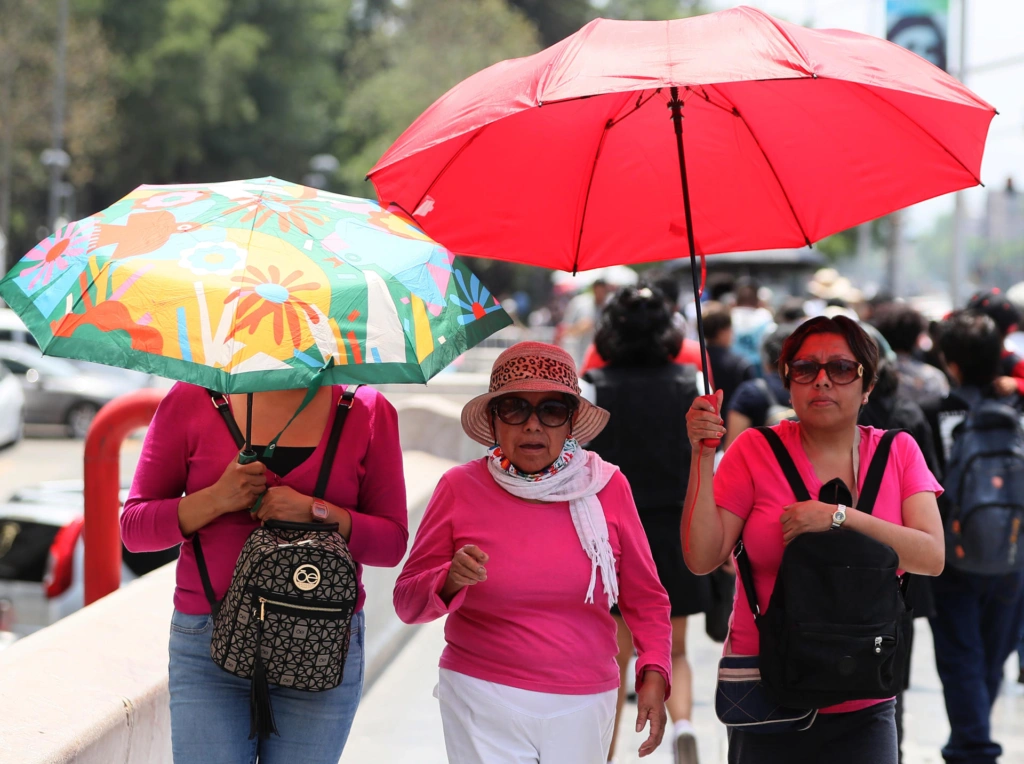
Panama is under a heat alert this Friday, with temperatures reaching 36 degrees Celsius and a heat index of up to 42 degrees, prompting authorities to urge hydration, light clothing, and reduced sun exposure.
The Institute of Meteorology and Hydrology of Panama (IMHPA) issued the alert, which remains in force through Monday, November 30. “Over the course of the day, conditions may reach the ‘danger’ category, increasing the likelihood of sunstroke, cramps, and heat stroke due to prolonged sun exposure or intense physical activity,” the agency said.
The heat index measures how hot the body perceives conditions to be, based on a combination of weather parameters, including elevated humidity. In Panama, daytime highs are expected to range between 32 and 36 degrees Celsius, with relative humidity near 80 percent. Together, those factors generate a perceived temperature of 35 to 42 degrees.
RELATED: Extreme Heat in 2023-2024 Drove Unprecedented Global Freshwater Decline
That combination pushes the body harder than the thermometer alone would suggest. High humidity slows the evaporation of sweat, the body’s natural cooling mechanism, and turns an already warm afternoon into a health hazard for anyone exposed without protection.
Panama has a predominantly tropical climate, with average temperatures that generally vary between 24 and 32 degrees Celsius. The country now sits in transition between the rainy season, which begins in May, and the dry season, which starts in December and typically runs through April.
Text reads: “Warning of Surveillance for Elevated Temperature and Thermal Sensation. Continuing the mostly dry and warm environment over the Pacific sector of the Panamanian isthmus, high thermal sensation is expected from early morning between 35°C and 42°C.”
El Niño Drives Drought
Specialists recalled that Panama’s tropical climate has been altered throughout 2026 by the presence of the El Niño phenomenon. The event drives severe drought across Central America, and official records show it has remained active for five consecutive months.
This year, the rainy season has been altered by the El Niño phenomenon, which produces severe droughts across Central America. The event has remained active for five consecutive months and is expected to continue, according to the Panamanian meteorological institute.
El Niño warms surface waters in the tropical Pacific, disrupting weather patterns far beyond the ocean itself. For Panama and its neighbors, the consequence is drier conditions that amplify heat already typical of the dry season. Forecasters expect the phenomenon to keep influencing regional atmospheric conditions.
The alert arrives as the country also manages the aftermath of a recent earthquake. For Panamanian authorities, the coming days will test whether public guidance can hold back a predictable surge in heat-related illness. With temperatures expected to remain elevated through Monday and El Niño lingering over the region, the alert marks the start of a longer season of risk rather than a passing spike.
The meteorological institute warned that prolonged exposure to solar radiation or intense physical activity increases the risk of sunstroke, cramps, and heat stroke. The danger is not limited to a single hour of the day but stretches across the afternoon, when temperatures and humidity combine most aggressively.
The measures now in place focus on prevention. Hydration, shade, and rest during peak hours are the main defenses against conditions that escalate quickly from discomfort to medical emergency. Whether those precautions reach the most vulnerable households will determine how the country weathers the heat still ahead.
With El Niño expected to keep influencing regional conditions, the current alert may be an early sign of a longer dry season ahead. For Panamanian authorities, the challenge is not just managing this week’s heat but preparing communities for months of elevated risk.
From teleSUR English via This RSS Feed.