

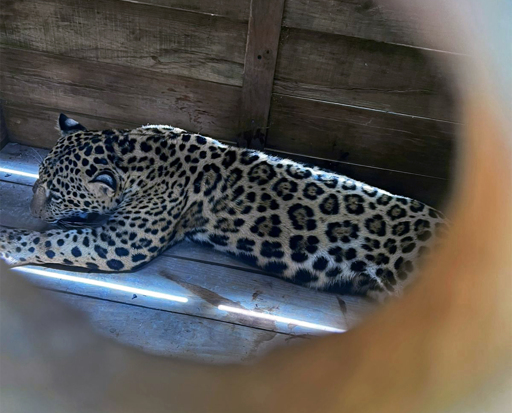
International Jaguar Day has been marked every Nov. 29 since 2018, to raise awareness of the threats faced by the Americas’ biggest cats and the efforts to protect them. Jaguars (Panthera onca) were once found across some 19 million square kilometers (7.3 million square miles), from what is today the southwestern U.S. to central Argentina. But their range has shrunk by more than half, and today spans about 9 million km² (3.5 million mi²). Most jaguars live in a stronghold ranging from the Amazon Rainforest and stretching into the Pantanal wetlands, the Chaco dry forest and the Llanos grasslands of Colombia and Venezuela. However, recent sightings and reports from outside these core areas highlight that many jaguars are still holding on at the edges of their historical territory. For example, in Brazil’s eastern Atlantic Forest and dry Caatinga, fewer than 250 adult jaguars survive, and researchers have begun banking their genes in an effort to save them through cloning. At the northern edge of the species’ range, a male nicknamed Cinco showed up on camera footage in southern Arizona state in late 2025, becoming the fifth jaguar recorded there in 15 years. Meanwhile, in Honduras’s Sierra del Merendón, a mountain range in the country’s northwest, camera traps recorded a young male at an altitude of about 2,200 meters (7,200 feet) for the first time in a decade. “The fact that they’re able to travel through these high elevation areas also shows how resilient they are,” Allison Devlin, who directs the…This article was originally published on Mongabay
From Conservation news via This RSS Feed.