

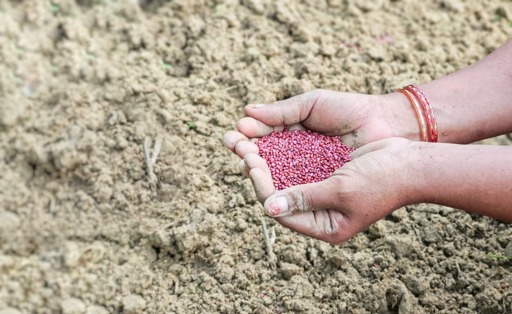
KUTUPALONG REFUGEE CAMP, Bangladesh —”It is like a jail, but it isn’t a jail,” says Roshid Ahamed Bin, a 47-year-old Rohingya farmer, living in what is now a refugee camp in Bangladesh. It is far from the farmland where he used to live in Myanmar, before he and thousands of Rohingya people like him fled persecution eight years ago. Here, amid the world’s largest refugee settlement with over 1.1 million refugees, space is tight and evergreen forests have paid the price. But families are combining NGO-funded farming projects with traditional Rohingya agroecology techniques to create agroforestry plots that are restoring land while helping refugees become self-sufficient in response to deep cuts in international food aid. “I feel so bad here as I have no land, but I am keeping my ancestors’ heritage alive. Growing these crops reminds me of the life we had in Myanmar. Here, life is difficult,” said Amina Khatun, a 58-year-old refugee living in Camp 1W, a sector of the sprawling settlement. Before the 2017 influx, Kutupalong refugee camp in Cox’s Bazar was a tropical evergreen forest, dominated by Dipterocarpus species, and sanctuary for endangered Asian elephants (Elephas maximus). To make way for the massive refugee settlements, the Bangladeshi government allocated roughly 2,500 hectares (6,100 acres) of protected forest land, and refugees and aid agencies cleared the vegetation to build shelters and provide firewood. Over 1,500 hectares of forest were cleared in total. The rain, with nowhere to soak in, ran straight down the slopes. Landslides became…This article was originally published on Mongabay
From Conservation news via This RSS Feed.