

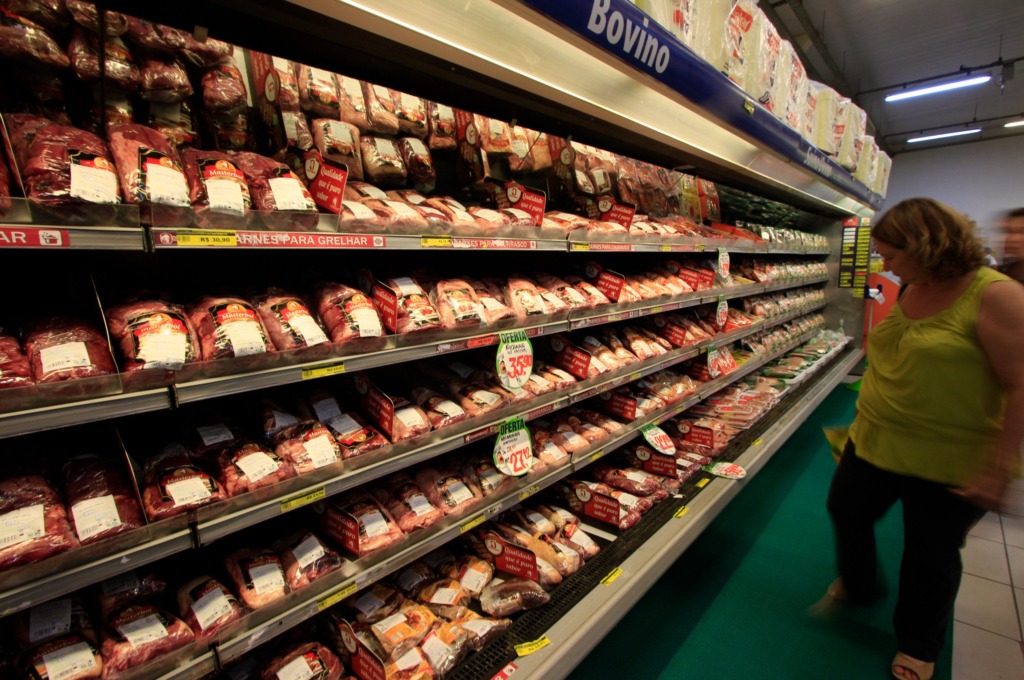
Authorities noted that the country exports animal protein to 177 international markets.
On Thursday, the Brazilian government criticized statements by French President Emmanuel Macron, who questioned the quality of meat produced in the South American country and supported European restrictions on imports from the sector.
RELATED: Brazil Hosts Regional Discussions on Scientific and Technological Cooperation
In a joint statement, the Brazilian Ministries of Foreign Affairs and Agriculture accused the French president of disseminating information contrary to the available technical and scientific evidence on Brazilian livestock production.
The controversy arose after Macron told French agricultural organizations that Brazilian meat was “doped” and praised the limitations imposed by the European Union (EU) on certain products from Brazil.
Brazilian authorities defended the sanitary controls applied to domestic production and noted that the country exports animal protein to 177 international markets, in addition to maintaining trade relations with Europe for decades.
French President Macron called Brazilian meat “doped” and welcomed the EU’s suspension of Brazilian animal product imports.
“The doped meat, so to speak, particularly Brazilian meat, which reached our ports and markets and did not comply with our rules, ended up being banned,”… pic.twitter.com/pvQzqYhzRU
— Clash Report (@clashreport) November 26, 2026
The statement also highlighted that a recent European audit gave a positive assessment of Brazilian poultry and beekeeping production chains. Brazil also stated that its environmental legislation requires levels of native vegetation preservation that, in some cases, exceed European standards.
Brazilian authorities expressed concern about what they consider a political exploitation of the sanitary restrictions imposed by the European Union. According to the government of Luiz Inacio Lula da Silva, these measures could conflict with World Trade Organization rules and the spirit of the Mercosur-EU agreement.
These statements come at a particularly delicate time for the Brazilian export sector. The suspension of purchases by the EU and the reduction in shipments to China, the main destination for its exports, are forcing the country to seek new markets for a significant portion of its meat production.
Brazil is taking a major step toward improving workers’ rights, ending the 6-day workweek and guaranteeing two paid days off per week. The reform could reshape working conditions and reignite debate over work-life balance and labor rights.
Is a shorter workweek the way forward… pic.twitter.com/JiWiJHguMM
— teleSUR English (@telesurenglish) November 20, 2026
teleSUR: JP
Source: EFE
From teleSUR English via This RSS Feed.