

“Hegel remarks somewhere that all great world-historical facts and personages occur, so to speak, twice. He forgot to add: the first time as tragedy, the second time as farce.” With this famous sentence Karl Marx introduced his work The Eighteenth Brumaire of Louis Bonaparte, in which he analyzed Louis Bonaparte’s coup d’état of December 2, 1851, in France and developed the analytical category of Bonapartism. In Burkina Faso when they speak of Ibrahim Traoré today, who is intended to resemble the reincarnation of Thomas Sankara, the question arises: is history repeating itself? And if so — as what?
Ibrahim Traoré – A Reincarnation of Sankara?
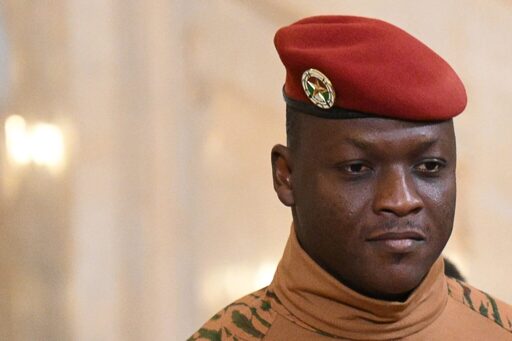
Ibrahim Traoré, who has led Burkina Faso since September 2022 following a military coup, publicly follows in the footsteps of Thomas Sankara. Traoré wears a red beret, continually cites Sankara, and paints himself as a symbolic figure of resistance against neocolonial structures and as the guarantor of national sovereignty. He casts himself as the corrective to a model in which the Sahel bears the costs of an imperialist world order that profits from its raw materials while the people languish in poverty.
In order to test this claim, it is worth looking back at Sankara’s short, intense period of government. The four years under Thomas Sankara, from his taking office in 1983 to his assassination in 1987, stood for the anti-colonial struggle of an oppressed nation whose raw materials, labor power, and land were under colonial control. French colonial rule had permitted scarcely any industrial development in Upper Volta.1The West African country was called Upper Volta because it was a French colony and declared its independence only in 1960. But only under Thomas Sankara, in 1984, was the country renamed Burkina Faso (Land of Upright People) in order to break with the colonial legacy of the past. Instead, the country was strongly agrarian in character, with subsistence farming and exports (cotton, livestock, and labor migration to Ivory Coast). Over 90 percent of the population was made up of peasants. Capital accumulation was limited to trade (such as intermediary trade in colonial goods and import/export) and small workshops. There was no developed national bourgeoisie in the sense of industrial capitalists.
Accordingly, there was a commercial bourgeoisie, that is, traders operating on behalf of French or international firms. The Burkinabè commercial bourgeoisie was especially strong in the grain trade (e.g., millet, maize, and sorghum) as well as in importing consumer goods. It was closely connected with French and Lebanese businesspeople who controlled important trade networks in West Africa. For Sankara they were the symbol of a comprador bourgeoisie: a class oriented not toward national development but toward integration into the colonial supply chain. Sankara’s policy aimed to push back their role — not through direct expropriation, but through price controls, state enterprises, and subsidies for peasant cooperatives. Under the motto “Consommez burkinabè” (“Buy Burkinabè products”), he preached a modest lifestyle that relied on local production and was meant to strengthen economic self-sufficiency.
Second, there was the bureaucratic caste, a privileged caste of officials, high-ranking military officers, and politicians created to maintain the colonial state, tied to French banks and development funds. Sankara himself was an officer and relied on parts of the military, especially young officers and soldiers. He was involved in three different phases of the military junta’s rise to power — with a successive growth of his political role: first as Minister of Information in 1981 under Saye Zerbo, then in 1983 as Prime Minister under Jean-Baptiste Ouédraogo, and finally on August 4, 1983, as President of Upper Volta. He criticized senior officers who had close ties to France, enjoyed privileges, or were corrupt. They profited from posts and development funds. With anti-corruption courts, drastic salary cuts, and the abolition of privileges, Sankara mainly targeted the upper ranks of the administration and the military. Official cars, special allowances, and the luxurious lifestyles of higher officers were curtailed.
Third, there were the large landowners and traditional authorities, who exercised their power over land allocation, access to water, and the social hierarchy. Their position was not only of economic but at the same time of political and ideological significance. At the center of Mossi society — the historically dominant ethnic group of present-day Burkina Faso — stood the Moro Naba (“King of the Mossi”). His position was anything but symbolic: through a network of subordinate princes and village heads, he secured control over land, harvests, and labor power. Under French colonial power he was regarded as the “guarantor of order.”
At the local level, the chefs de terre (“lords of the land”) were responsible for land distribution. This institution cemented dependence by the peasant population, since use of land was often only possible through the mediation of these authorities. They had been used by colonial powers as tax and labor intermediaries. Next came the religious authorities who had built an independent power base during the Islamic expansion into West Africa from the 15th century onward. Of particular note are the marabouts, who established themselves in Burkina Faso as Islamic scholars, Quran teachers, and social mediators.
Sankara’s agrarian reform was aimed above all at large landowners and traditional authorities, whose power was to be broken through nationalization of the land and the abolition of feudal levies. In this way, the issue of land was no longer to be regulated by descent or privilege.
Sankara initiated a series of reforms, including the redistribution of land, the abolition of privileges for authorities of Indigenous communities, the promotion of women’s rights, literacy campaigns (from 13 percent in 1983 to 73 percent in 1987), health programs, the building of infrastructure, such as the construction of railway lines for free travel. Many of these measures were centrally directed by the government and implemented through state committees and local initiatives. In foreign policy he was a passionate fighter against French imperialism and the International Monetary Fund (IMF), and promoted the idea of a free and united Africa.
Sankara relied on the Committees for the Defense of the Revolution (Comités de défense de la révolution, CDR). They were to enable control from below, provide political education, and organize the completion of local projects, in order to finally integrate the people into the state’s reform projects. Accordingly, they remained entirely under the political control of the National Council of the Revolution (Conseil national de la Révolution, CNR), that is, with the military government itself. In this respect the committees were not organs of independent class power, as the soviets were at the time of the Russian Revolution, or the councils at the time of the November Revolution in Germany – to name two prominent examples. It is true that Sankara called for the mobilization of the masses, but the institutional and political form of his committees differed fundamentally from the soviets, which appeared after 1917 in Russia as organs of a new state power (the dictatorship of the proletariat).
Lenin and Trotsky described the councils (soviets) not only as organs of workers’ and soldiers’ representation but as the foundation of a new state apparatus. In his work State and Revolution Lenin emphasized that the existing bourgeois state machine — consisting of parliament, bureaucracy, police, and military — cannot simply be taken over or reformed. Rather, it must be totally replaced by new institutions directly controlled by workers (peasants and soldiers) themselves. For Lenin, these councils were the expression of the “dictatorship of the proletariat,” a transitional phase in which the working class exercises its political power. It combines the interests of workers with those of rural peasants, small traders, women, and the oppressed, in order to build a socialist society without exploitation and oppression.
Sankara could not create the conditions for socialist development because he rejected the role of the proletariat as the leader of the oppressed. He instead relied on peasants and a section of the military apparatus to assert his authority over them, exercising unrestricted governmental power across the entire country and pushing through reforms from above. The experiences of four years in Burkina Faso, beginning with Sankara’s accession to power and ending with his assassination, show that the masses were willing to go all the way for the transformation of their country. They did not act autonomously, choosing their own direction, but were treated primarily as a mass to be maneuvered, tasked with implementing the government’s political directives. Through the CDR, Sankara linked the masses to the state, gave them tasks and mobilized them without ever ceding power to them. Trade unions, which in the past had played a strong oppositional role, were declared contrary to the interests of the so-called “people’s revolution” and suppressed. Thousands of teachers were dismissed at the beginning of his seizure of power because they had gone on strike against the coup. The unions, by contrast, recruited their members from an urban population employed in public service or in semi-state enterprises. In this way they gained serious political influence and, especially in the 1970s, formed the country’s most important political opposition. Thus, under Sankara, workers were divided into “lazy” and “ambitious,” with the former publicly denounced. All protests were branded “counter-revolutionary” regardless of their class basis, which meant that no genuine workers’ movement could ever develop.
Sankara adopted a model in Burkina Faso which, drawing on the Chinese experience, imposed on oppressed peoples a militarily-led, peasant-based, national-democratic revolution without the proletariat having power. This was a stageist model inspired by Stalinism-Maoism for countries pushed into dependence and underdevelopment. This model saw its first task as achieving national unity to carry out unfulfilled democratic tasks — and these were separated from workers’ power.
Thus the leading role of the proletariat, which had been confirmed by the experiences of the October Revolution, was abandoned. And this is ultimately where the project failed as well. Since the workers and peasants assumed no independent role in the administration of production in factories or in the countryside, they were largely passive or malleable elements of the regime. Through the concentration of power in a presidential figure, any possibility of a serious anti-imperialist mobilization by the masses was limited, and this ultimately facilitated a counterrevolutionary coup and the assassination of Sankara.
The assassination of Sankara in 1987 and the accompanying defeat of his project opened a long restoration, that is, the restoration of old forms of property and orientation toward Françafrique (French-African neocolonialism), whose order rests on maintaining France’s political, economic, and military interests over many African states.
Blaise Compaoré, Sankara’s treacherous right-hand man who co-planned his assassination and thereby became the new ruler, represented an open break with Sankara’s line. Many progressive reforms (land reform, women’s rights, mass participation, the fight against corruption, the dismantling of “tribal hierarchies”) were reversed. Compaoré bound Burkina Faso closely to the interests of French imperialism and the IMF, and opened the economy to foreign capital, while political opposition was repressed. In 2014, the system collapsed under the pressure of a popular uprising when Compaoré wanted to unconstitutionally extend his term in office. The attempt by the presidential guard to carry out a counter-coup in 2015 failed in the face of massive mobilization of the people. Elections followed, which indeed marked a civilian transition but did not dissolve the social contradictions. Under these conditions the first elected government of Burkina Faso since its independence in 1960 came to power.
From 2019 onward, protests against social precarity, price increases, and economic stagnation increased. Villages were cleared out, the number of internally displaced persons rose to roughly two million, and numerous schools and small health clinics were closed. In addition, jihadist violence in Burkina Faso was quite real and had profound effects on the population and the political landscape. The Fulbe communities2The Fulbe live throughout the Sahel. In Burkina Faso they are traditionally livestock breeders, increasingly also settled peasants. There are constant conflicts with Mossi, Bobo, and Gurunsi, above all over land and water rights. are among the hardest hit: they face racism, being routinely accused of “terrorism” or “jihadism,” which leads to (military) repression and routine discrimination.
Initially, militant groups, in particular the al-Qaeda-affiliated Jama’at Nusrat al-Islam wal-Muslimin (JNIM), began carrying out attacks in the north of the country. From 2019 onwards, the situation escalated dramatically with a series of massacres. This increasing violence led to massive internal displacement. By the beginning of 2020, over 830,000 people had fled their home regions, leading to a humanitarian crisis. Against this backdrop, Paul-Henri Sandaogo Damiba, a former army colonel and former commander of the anti-terror units in the north, seized power in a coup on January 24, 2022. He charged the government with failing to stop jihadist terror.
On September 30 that same year, a second coup overthrew Damiba and brought the then 34-year-old Ibrahim Traoré to the top position.
Bonapartism sui generis
The political strategies of Thomas Sankara and Ibrahim Traoré can most precisely be analyzed with the concept of Bonapartism sui generis, that is, a Bonapartism of a special kind, as Trotsky formulated it for semi-colonial countries.
The term “Bonapartism” has a very specific meaning in Marxist theory: as mentioned in the introduction, Karl Marx wrote the book The Eighteenth Brumaire of Louis Bonaparte in order to analyze Bonapartism. He describes a form of state power that seemingly rises above the existing classes through the growing autonomy of the executive and restores capitalist equilibrium, in order to secure the stability of the system, even if in the process the bourgeoisie “must forfeit the crown, and the sword that is to safeguard it must at the same time be hung over its own head as a sword of Damocles.”
Ibrahim Traoré declares his rule to be a “Progressive People’s Revolution,” which operates in clear distinction from established democracy — with the motto that democracy is a later stage and not a precondition for development. He said the following at a ceremony on April 1, 2025:
Let’s stay focused, and if we need to say it loud and clear here, we are not in a democracy. We are indeed in a popular progressive revolution. Everyone needs to understand this. And it’s even more astonishing that those who are supposed to be intellectuals, who went to school, can imagine that a country can develop democratically. That’s wrong! Name a single country that has developed democratically; it’s impossible. Democracy is only the end result. We inevitably go through a revolution, and we are indeed in a revolution. […] So, this question of democracy versus freedom of action or expression is irrelevant. As I said before, just as you believe you are free to speak and act, so too is everyone else free to speak and act. Otherwise, we will end up with a society of disorder. And since we are currently celebrating days of patriotic engagement and civic participation, whose theme is “order and discipline,” we cannot achieve revolution in disorder; it is impossible. We will establish order and discipline so that we can move forward. Because social, economic, political, and ideological reforms require order and discipline. And everyone has a role to play.
Trotsky used the addition “sui generis” to describe the special character of Bonapartism in semi-colonial or dependent countries. This form of Bonapartism appears precisely where the economic base is weak or fragmented and the national bourgeoisie is undeveloped, but where imperialist powers and international capital interests are very strong. For in these countries there exists a further social stratum: the imperialist bourgeoisie, which owns the majority of the means of production. This is why as a rule the development of a native bourgeoisie depends very strongly on the imperialist bourgeoisie.
During his stay in Mexico in the 1930s, Trotsky observed that the government of Lázaro Cárdenas represented a Bonapartism of a special kind (sui generis), which was characteristic of colonial and semi-colonial countries. When the Cárdenas government expropriated the oil industry from Anglo-American imperialism in 1938, Trotsky recognized that the expropriation of the oil industry and other key sectors represented a form of state autonomy vis-à-vis international capital that at the same time weakened the national bourgeoisie and mobilized the working class. In his words:
In the industrially backward countries foreign capital plays a decisive role. Hence the relative weakness of the national bourgeoisie in relation to the national proletariat. This creates special conditions of state power. The government veers between foreign and domestic capital, between the weak national bourgeoisie and the relatively powerful proletariat. This gives the government a Bonapartist character of a distinctive character. It raises itself, so to speak, above classes. Actually, it can govern either by making itself the instrument of foreign capitalism and holding the proletariat in the chains of a police dictatorship, or by maneuvering with the proletariat and even going so far as to make concessions to it, thus gaining the possibility of a certain freedom from the foreign capitalists. The present policy [of the Mexican government] is in the second stage; its greatest conquests are the expropriations of the railroads and the oil industries.
He defined these measures as state-capitalist, pointed to the workers’ lack of control over the expropriated industry, and added:
It would of course be a disastrous error, an outright deception, to assert that the road to socialism passes, not through the proletarian revolution, but through nationalization by the bourgeois state of various branches of industry and their transfer into the hands of the workers’ organizations.
The expropriation was an instrument of the state to gain a certain independence from foreign capital, without the working class itself taking power. It was a classic example of a Bonapartism that stands above the classes but purposefully balances the interests of capital and the masses — precisely “sui generis” in the semi-colonial context.
In some cases these Bonapartisms could lean to the left, make concessions to the masses and at the same time strengthen their control over them, as in the case of Cárdenas, Hugo Chávez, Thomas Sankara, Gamal Abdel Nasser (Egypt, 1952–70), or Kwame Nkrumah (Ghana, 1957–66). In others they could become a police and/or military dictatorship like Augusto Pinochet (Chile, 1973–90), Anastasio Somoza (Nicaragua, 1937–79), Hosni Mubarak (Egypt, 1981–2011). In Burkina Faso the basic features of Bonapartism sui generis can be recognized very clearly in Traoré’s government — even if the contexts differ. Traoré uses the military government and the state apparatus as an instrument to assert Burkina Faso’s sovereignty vis-à-vis French imperialism, to improve the social conditions of the people, and to stabilize the national economy within the framework of state capitalism.
We return to the question of whether we are dealing with a reincarnation of Sankara. Aside from metaphysical notions of rebirth, the question is whether Traoré continues a historical line that Sankara began — under changed objective and subjective conditions. Beyond the rhetorical and symbolic reference, Traoré takes up central features of the Sankara era — the independence of the executive from the classes, the mobilization of the military and the people, an emphasis on national sovereignty, and state control over resources — and then adapts them to today’s conditions. Traoré does not stand for the return of Sankara himself but for the return of a Bonapartism sui generis.
The Traoré Model
The economic conditions in Burkina Faso have changed in the 21st century. For more than a decade, Burkina Faso has been experiencing a mining boom. In 2009, gold replaced cotton as the country’s most important export and today accounts for almost two-thirds of foreign-currency earnings. Burkina Faso is currently, after Ghana, South Africa, and Sudan, Africa’s fourth-largest gold producer. This economic transformation opens up new possibilities for the state to gain control over mineral resources and forms a central lever of Ibrahim Traoré’s policy. The aim is to bring the wealth from gold mining and agriculture more firmly under state control in order to assert “national sovereignty,” particularly vis-à-vis France. At the Russia-Africa Summit, which took place from July 27 to 28, 2025, in St. Petersburg and in which delegations from 49 African countries took part, he referred to this:
We do not understand how Africa, with so much wealth on our soil, with generous nature, water, sunshine in abundance—how Africa is today the poorest continent. Africa is a hungry continent. And how come there are heads of state all over the world begging? These are the questions we are asking ourselves, and we have no answers so far. (…) The people of Burkina Faso have decided to fight, to fight against terrorism, in order to relaunch their development.
Traoré is expanding state control over mineral resources. Raw gold exports were partially stopped in order to keep value creation in the country, and a national refinery was established. The entire economic policy remains capitalist, steered by the state. The state itself appears as a capitalist by compensating companies when it takes over means of production. Five gold mining facilities were transferred to the state mining corporation. These are two active mines and three exploration licenses that were previously owned by companies such as Endeavour Mining and Lilium. The state provided compensation when the Boungou and Wahgnion gold mines were handed over to the state company Société de Participation Minière du Burkina (SOPAMIB). According to reports, the Burkinabè government paid about $80 million. These measures do not challenge the capitalist mode of production — only change its particular form in a dependent country. The state becomes, in the words of Friedrich Engels in The Development of Socialism from Utopia to Science, more and more from an “ideal” to an actual “aggregate of capitalists”:3Translator’s note – Aveling translates “Gesamtkapitalist” as “national capitalist” but other translations use “aggregate capitalist.”.
The modern state, no matter what its form, is essentially a capitalist machine — the state of the capitalists, the ideal personification of the total national capital. The more it proceeds to the taking over of productive forces, the more does it actually become the national capitalist, the more citizens does it exploit. The workers remain wage-workers — proletarians. The capitalist relation is not done away with. It is, rather, brought to a head.
Industrial and informal gold mining in Burkina Faso leads to considerable ecological and social costs. In many mining areas, highly toxic substances such as mercury and cyanide are used to extract gold from ore. These substances enter the environment via runoff and rainwater, contaminate soils, waters, and the air, and pose a direct danger to the health of people living there. Rural communities that depend on agriculture are particularly affected. These ecological changes are not accidental side effects but a direct consequence of the capitalist mode of production, which regards nature as a resource for the accumulation of capital.
In parallel with expanding mining, Traoré is attempting to modernize agriculture and reduce dependence on food imports through an agricultural offensive. Measures such as introducing modern equipment, improving seeds, and constructing processing plants for tomatoes and cotton are intended to increase productivity and keep value creation within the country. But the land question remains unresolved. Agriculture is integrated into capitalist accumulation, not transformed into a collective form of ownership and production. Millions of small farmers continue to work in subsistence farming or semi-commercial farms. A portion of the rural population is driven into informal gold mining, a sector often controlled by international mining companies but which also accommodates small-scale, informal mining. This work is dangerous, poorly paid, and ecologically harmful, but for many it is the only way to survive.
The Traoré model is inseparably connected with the geopolitical shift in the Sahel region. A central element of Traoré’s economic policy is decoupling from the West African Economic and Monetary Union (UEMOA) and the CFA franc. In January 2024, the government announced that it would leave UEMOA in order to reduce dependence on France and control its own monetary policy.
French imperialism has faced an acute crisis since the beginning of the 2020s in maintaining its dominance in the Sahel, which it traditionally regarded as its “backyard.” After Burkina Faso, Guinea, Mali, and Chad, Niger is the most recent West African country to have recently been taken over by the military. The new governments all gave notice of their withdrawal from the Economic Community of West African States (ECOWAS) and then in 2023 founded the Alliance of Sahel States (AES). In July 2024, the three Sahel states announced that they would transform the defense alliance into a confederation. In Senegal, the opposition won presidential elections after strong mobilizations, especially by young people, against the candidate supported by France. These political and military failures of French imperialism have reinforced its structural decline as the dominant power in the region.
But the crisis of Françafrique does not automatically mean liberation. It opens a transitional space in which alternative hegemonic projects overlap: France’s hegemony is now increasingly being called into question by other actors, such as Russia, China, and Turkey, because some African countries are turning to them. Traoré is among those seeking closer relations with Russia.
Russia sees in this potential conflict an opportunity to win the acceptance of the Sahel states, which in turn see in Russia a new ally that can provide security and is not burdened by the weight of a colonial legacy. Moscow reopened its embassy in Burkina Faso in 2023 after there had been no Russian diplomatic representation for 31 years, since the collapse of the Soviet Union. The Russian paramilitary group “Bear Brigade” was in the country for months last year, guarding officials of the military government, including Traoré.
The granting of an industrial mining license to the Russian company Nordgold in April 2025 is an example of the economic consequences of this alliance. In June 2025, Burkina Faso and Russia signed an agreement on the use of nuclear energy. This includes the development of nuclear technologies in the West African country. Since Burkina Faso is considered one of the least electrified countries in the world, the government sees nuclear power as an opportunity to increase energy capacity.
The second axis of geopolitical reorientation is China. Since the resumption of diplomatic relations (2018), loans, trade volume, and project-based cooperation have steadily expanded. In the energy sector, solar projects and grid modernization are central. Foreign trade between Burkina Faso and China has visibly increased in recent years (with exports of gold, cotton, and leather, and imports of machinery and chemical products). Chinese banks act as lenders for electricity generation and transmission projects. Today China is the most important partner for railway projects, road construction, and telecommunications in Burkina Faso. According to a 2024 report by the African Development Bank, over 40 percent of major infrastructure investments in Burkina Faso came from China. This dynamic clearly shows that Burkina Faso is increasingly sliding into a new dependency within the framework of China’s global infrastructure and investment strategies. The projects do serve the expansion of basic economic infrastructure, but at the same time, they are strongly shaped by China — as they were initially by Russia.
On September 1, 2025, the Traoré regime passed a law criminalizing homosexuality. In practice, this means that homosexual acts are considered crimes that can be punished with prison sentences and fines. According to the government, the law is supposedly intended to protect “traditional values and moral order” and to prevent social stability from being endangered by “Western decadence.” For LGBTQIA+ people, however, this means nothing other than state persecution, the criminalization of their existence, and the systematic threat of violence.
Uneven and Combined Development
Walter Rodney showed in his classic work How Europe Underdeveloped Africa that Africa’s poverty cannot be attributed to an “inherent inferiority” or a lack of resources, but rather to the exploitative relationship between Europe and Africa that developed over centuries of colonial rule. The concept of underdevelopment is applied by him in a differentiated way:
Obviously, underdevelopment is not absence of development, because every people have developed in one way or another and to a greater or lesser extent. Underdevelopment makes sense only as a means of comparing levels of development. […] A second and even more indispensable component of modern underdevelopment is that it expresses a particular relationship of exploitation: namely, the exploitation of one country by another. The underdevelopment with which the world is now preoccupied is a product of capitalist, imperialist, and colonialist exploitation.4Walter Rodney, How Europe Underdeveloped Africa (London: Bogle-L’Ouverture, 1972).
Rodney was right. Underdevelopment is neither a determined law of nature nor a simple deficit. It is a product of capitalist development itself. Underdevelopment and development are not opposites but two sides of the same process. Capitalist expansion in Europe produced wealth and industrial accumulation precisely by pushing Africa into a dependent and exploited position. What was called “progress” in Europe rested at the same time on the systematic underdevelopment of Africa.
He examined the economic, political, and social conditions that shaped Africa’s history and contributed to its underdevelopment.
African and Asian societies were developing independently until they were taken over directly or indirectly by the capitalist powers. When that happened, exploitation increased and the export of surplus ensued, depriving the societies of the benefit of their natural resources and labor. That is an integral part of underdevelopment in the contemporary sense.5Ibid.
These relations of dependency persist to the present day. The example of Niger, a neighbor of Burkina Faso, is apt: despite enormous uranium deposits indispensable for France’s nuclear industry (a third of the uranium for France’s nuclear power plants comes from Niger), the country is among the poorest in the world. The French corporation Orano skims off the profits, while the people are exposed to hunger and radioactive legacies. Similar patterns are found in Mali (gold), in the Congo (cobalt and copper), and in Burkina Faso (gold and cotton).
The capitalist world order has been marked from the outset by a fundamental asymmetry. Capitalism did not arise evenly in all countries but developed at an uneven pace, or in Lenin’s words: “Uneven economic and political development is an absolute law of capitalism.”
From the origins of capitalism, some countries advanced to the forefront of economic development, others have been held back in dependence, and still others skipped individual stages or combined different stages of development in a contradictory unity. Trotsky developed the basic features of the theory of “uneven and combined development” in order to explain why an “underdeveloped” country like Russia at the beginning of the 20th century could become the arena of a successful proletarian revolution.
Russia was simultaneously agrarian-feudal in character and highly industrialized in certain sectors. The railway, the Petrograd metal industry, or Moscow’s textile factories were on par with international standards, while millions of peasant families lived in outdated forms of subsistence farming. This explosive combination of underdevelopment and modernity created a specific dynamic: The bourgeoisie was too weak to carry through the democratic revolution against Tsarism, while the young but concentrated proletariat was able to take on the tasks of democracy and national liberation, going beyond its own class movement.
Trotsky did not originate the law of uneven development — “unevenness, the most general law of historical process,” was already a working assumption in Marxist theory. Trotsky’s contribution was to show that in dependent countries this unevenness does not merely signify a lag, but creates a historical predicament. Under the pressure of the world market, underdevelopment is compelled to “skip” certain steps:
A backward country assimilates the material and intellectual conquests of the advanced countries. But this does not mean that it follows them slavishly, reproduces all the stages of their past. […] Although compelled to follow after the advanced countries, a backward country does not take things in the same order. The privilege of historic backwardness — and such a privilege exists — permits, or rather compels, the adoption of whatever is ready in advance of any specified date, skipping a whole series of intermediate stages.
Trotsky thus explained that there is no linear, universal path of development. He refuted the notion that every country must pass through the same stages as England or France as “stupid evolutionism.” Rather, integration into the world market also forces “underdeveloped societies” to adopt modern technologies, modes of production, and forms of domination. Likewise, archaic structures and highly modern forms of production can exist simultaneously in one country. He argued that underdeveloped countries can also adopt modern technologies without having to pass through all earlier phases of development.
The theory of uneven and combined development allows us to understand the situation in Burkina Faso: here the gold industry, integration into global markets, traditional agrarian structures, and informal small-scale mining all coexist. This confluence cannot be explained with a model of simple historical stages that expects a “catching up” with the development of the West.
The Path to Liberation
The drive for national self-determination in Africa did not arise by chance. The history of the continent is marked by uprisings and bloody repression. Every time the peoples of the region rose up, they inevitably encountered direct resistance from imperialism. Niger demonstrates this unbroken pattern: when its military leadership called France’s dominance into question, Paris immediately urged neighboring states to send in their armies in order to restore “order.” Traoré’s program of national sovereignty has broad support among the masses, because they see in it an upright stance that opposes colonial demands for subordination — this subordination brought Africa’s riches to the capitals of Europe while leaving behind hunger, illiteracy, and misery. The people no longer want to be a source of raw materials for foreign powers. They want to be masters of their own countries, their own labor, and their own futures. Who can break this cycle and bring about liberation?
The theory of uneven and combined development forms the basis of the theory of permanent revolution, which states that not only are revolutions possible in dependent societies, but socialist revolutions can be led by the working class. Trotsky argued that a revolution in such countries does not proceed in separate stages but as a continuous process that passes from a national-democratic to a socialist revolution.
What does the composition of the Burkinabè working class look like? It is still limited in number but, through its position in the country’s key sectors, especially the gold industry, it possesses enormous social weight. The industrial sector, especially mining, plays a central role. As noted previously, Burkina Faso is one of the largest gold producers in Africa, and the mining sector employs both formal and informal workers. Burkina’s industrial mining sector employs an estimated 51,000 direct and indirect workers. The General Workers’ Union of Burkina Faso (CGT-B) is active in this sector. This includes mine workers as well as personnel in infrastructure and logistics. With the commissioning of the first gold refinery (by Marena Gold), new strata are also now emerging in the value-creation process. This shifts a portion of the value added from raw gold extraction to domestic processing.
In contrast, about 1 to 1.3 million people are employed in informal mining. These workers are predominantly employed in gold extraction. The informal mine workers in Burkina Faso are mostly small farmers, migrant workers, or part-time workers. They are almost exclusively engaged in extraction. They extract raw gold from smaller mines or river deposits and work the ore with simple tools. This sector, however, is characterized by insecurity, low productivity, and a lack of social security. Accordingly, their struggles have often been made more difficult by the informal structure of the sector, since many workers are not officially employed and therefore have no access to trade-union support. The formal workforce is employed in large mines, while millions of informal workers work in smaller, often illegal mines.
The state enterprise Burkinabè Company for Textile Fibers (Société Burkinabè des Fibres Textiles, SOFITEX) plays a central role in the processing of cotton. SOFITEX operates textile factories in which cotton is processed into yarn and fabric. Workers in these factories are often poorly paid and work under precarious conditions. Child labor is a major problem in the cotton, textile, and clothing industry.
The service sector, especially the public service, includes areas such as education, health, administration, and transport. The Union of Health Workers (SYNTSHA) is one of the oldest and most active trade unions in Burkina Faso. Workers in these sectors are often better organized and have repeatedly fought in the past for better working conditions and higher wages. The trade union of workers in the education and research sector is also part of the CGT-B.
Despite their importance, the trade unions in Burkina Faso face considerable challenges. The military government increasingly suppresses trade-union activities and restricts freedom of expression.
On the other hand, there are millions of peasants. The overwhelming majority of the population continues to depend directly or indirectly on agriculture. According to current figures, about 70 to 80 percent of people work in the agricultural sector. This means that the peasantry remains numerically dominant and is responsible for the largest share of production. They are oppressed by traders, indebted to banks, plundered by international markets, and affected by the consequences of environmental damage. The question is whether they have a force that can lead them — one that is capable of conquering power over all of society. This force is the proletariat. Only it can fulfill the universal task of emancipation. Not because it is morally superior, but because from its position in the production process it can pull the whole of society along with it. The policy of proletarian hegemony means that it does not only pursue its own interests but takes up the demands of the peasantry, the urban petty bourgeoisie, women, and youth. It can lead the peasantry by making demands for land, water, access to seed and tools, protection from displacement, credits without a debt trap, etc. part of its program. Thus the land question becomes the question of social control over all resources. The water question becomes the question of a plan for society as a whole that ensures life instead of profits. The working class is the only class that can play this role. Building socialism does not mean its immediate completion, but setting out on a path on which every concrete measure deepens the logic of liberation.
The experiences of Burkina Faso demonstrate that Bonapartist leaderships mainly create conditions under which the masses are mobilized without self-determination. Bonapartism mediates between classes instead of overcoming class divisions. It mobilizes the masses but denies them the power to decide. This means that the driving force of social development in Burkina Faso cannot be the Bonapartist government. The decolonization of the economy — whether through the break with the CFA franc, the control over mineral resources, or the construction of national industries — is more than a question of national sovereignty. Who makes decisions about production, working hours, wages, and ecological standards? Who determines research, innovation, and the use of resources? Self-determination remains incomplete as long as banks, merchants, and foreign capital control prices, credits, and investments. Raw materials, gold mines, cotton plantations, infrastructure projects — everything that is formally “nationalized” or controlled remains economically stagnant under the logic of profit maximization and dependence on international markets as long as labor itself is not socially controlled.
The Burkinabè working class, however combative and organized it may be, depends on regional and international cooperation. The means of production, markets, and the infrastructures of the region are closely interwoven, and the economy is highly dependent on exports, foreign investments, and supply chains. Without a connection to the international workers’ movement, and the solidarity of workers in neighboring states or in the imperialist centers, social achievements in Burkina Faso would immediately be blocked, sabotaged, or militarily suppressed by other states, as the instructive experience of revolutions in Africa shows.
The socialist project depends on cooperation and solidarity between proletarian movements in the region and internationally. This is because the national relations of production, considered in isolation, do not have the strength to completely overcome capitalism in its present imperialist form. The Burkinabè working class alone can neither control the raw-material markets nor autonomously shape the industrial supply chains. That is why solidarity with the workers in neighboring countries and internationally is necessary. A successful socialist movement requires economic planning and regional coordination of transport, energy, communication, and trade as part of the planned distribution of goods, raw materials, energy, and services according to social need. From this perspective, a revolution in one African country becomes the start of a chain reaction that spreads across borders and calls into question the conditions of capitalism. This is the logic of permanent revolution. The tasks of the proletariat in this phase are therefore twofold. It is a matter of liberating the masses both from dependence on Bonapartist governments and from the yoke of imperialism.
First published in German on Klasse Gegen Klasse on September 7, 2025
Translation by David Ehrens
Notes[+]
Notes
| ↑1 | The West African country was called Upper Volta because it was a French colony and declared its independence only in 1960. But only under Thomas Sankara, in 1984, was the country renamed Burkina Faso (Land of Upright People) in order to break with the colonial legacy of the past. |
| ↑2 | The Fulbe live throughout the Sahel. In Burkina Faso they are traditionally livestock breeders, increasingly also settled peasants. There are constant conflicts with Mossi, Bobo, and Gurunsi, above all over land and water rights. |
| ↑3 | Translator’s note – Aveling translates “Gesamtkapitalist” as “national capitalist” but other translations use “aggregate capitalist.”. |
| ↑4 | Walter Rodney, How Europe Underdeveloped Africa (London: Bogle-L’Ouverture, 1972). |
| ↑5 | Ibid. |
The post From Sankara to Traoré: The Return of Bonapartism in Burkina Faso appeared first on Left Voice.
From Left Voice via This RSS Feed.
Referring to Traore or Sankara as bonapartist is an incredibly bad faith argument. It really feels like whenever a leader in the global south pushes against neocolonialism and resource extraction that they are suddenly pigeonholed into this narrow view of an authoritarian despot. There’s really no reason to believe that the rise of Traore (and historically Sankara) aren’t genuine people’s movements with support of the proletariat. Traore has steadily and consistently moved the means of production away from European corporations and into the hands of the state. I think what a lot of leftcoms don’t understand (this article is written from a trot perspective) is that creating dual power, building the means of production, rooting out foreign capital, and establishing democratic centralism do not happen overnight or in a vaccum. When you become to sectarian in your thinking it can lead to the idea that any progress is not enough and alienates your ideological beliefs from the material reality. Traore should have the full support of the leftist community as it is very clear his primary mission is decolonization in Burkina Faso