

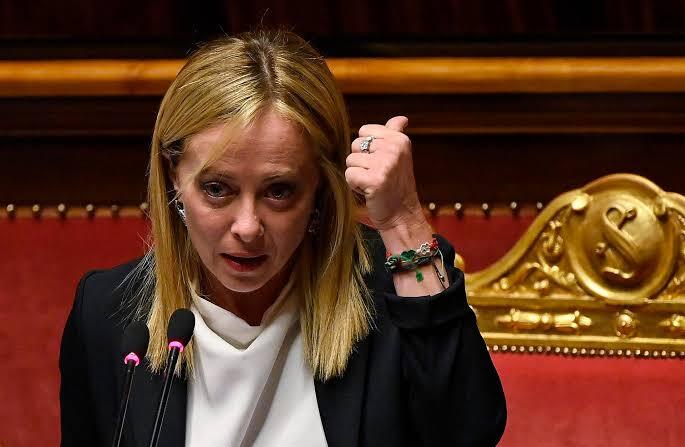
Italy’s Chamber of Deputies definitively approved on Thursday, Nov. 26, an education reform promoted by Giorgia Meloni’s government that bans the burka and niqab in schools and imposes admission quotas and fines on migrant families.
The legislative text prohibits participating in any school activity with the face covered in a way that prevents full identification of the person, targeting the burka—which covers the entire face and body—and the niqab—which leaves only the eyes uncovered—worn by some Muslim women and girls after puberty. Non-compliance carries fines of 200 to 1,000 euros, falling directly on parents or legal representatives when the violation is committed by a minor student.
RELATED: Italy Fines Meta €805 Million for Accessing User Photos Without Permission
From the 2027-2028 school year, students without Italian citizenship who were born abroad, or who do not prove at least two years of prior schooling in Italy, may not exceed 30% of total enrollment in each primary classroom. For middle and secondary levels, the same 30% cap applies to foreign students who have not completed and passed at least three school years in the Italian education system.
To manage schools exceeding that threshold, the executive announced a special fund of 17.5 million euros to finance extracurricular activities focused on learning and reinforcing Italian
Con 142 voti favorevoli e 112 contrari, la Camera ha approvato in via definitiva il ddl recante misure urgenti per il regolare avvio dell’anno scolastico e l’attuazione del PNRR di competenza del Ministero dell’istruzione. pic.twitter.com/5tL4Br2V3B
— Camera dei deputati (@Montecitorio) November 26, 2026
The law also obliges schools to notify child protection services of cases of “persistent language barriers”; the State will offer free Italian courses for parents, who may be fined 200 to 1,000 euros if they fail to reach a basic command of the language.
The reform passed with 142 votes in favor, 112 against and four abstentions, and now awaits formal promulgation by President Sergio Mattarella, according to the Chamber of Deputies vote.
From teleSUR English via This RSS Feed.