

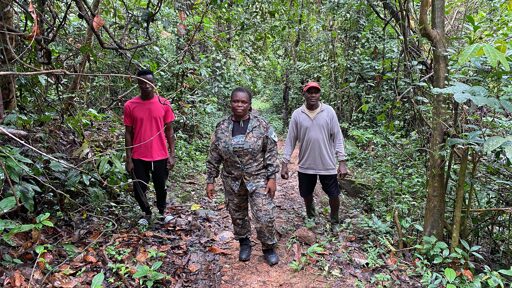
ZORTAPA, Liberia — Grace Kotee-Zansi is living a dream she had as a child: patrolling the East Nimba Nature Reserve (ENNR) as a biologist ranger to stop hunters from killing protected animals. Her job today brings relief from her childhood memories of her grandfather hunting and farming in the forest. The ENNR, a proposed extension to a UNESCO World Heritage Site, covers 13,500 hectares (33,400 acres). Zansi says she’s working to stop wildlife killing and tree cutting. She patrols the forest, checking cameras installed to capture animals and human activities. The Mount Nimba landscape lost roughly 9.9% of its total forest cover between 2013 and 2020, according to a report using satellite imagery. Zansi is one of the few women serving as a ranger here, making her stand out in a field dominated by men. For decades, men have carried out forest protection in Liberia, with only a few women like Zansi now joining the race. They patrol for months, leaving their spouses and children at home, tracking poachers, documenting animal footprints and recording illegal human activity in the park. Official data from the Liberian Forestry Development Authority (FDA) state that a total of 143 rangers are deployed across Liberia’s protected areas; only 17 are women. This gap is due to the struggle of “recruiting qualified women who are willing and prepared to serve as rangers,” the FDA tells Mongabay. “Liberia’s ranger workforce continues to expand through various biodiversity conservation initiatives. However, comprehensive gender-disaggregated data remain limited, and available estimates…This article was originally published on Mongabay
From Conservation news via This RSS Feed.