

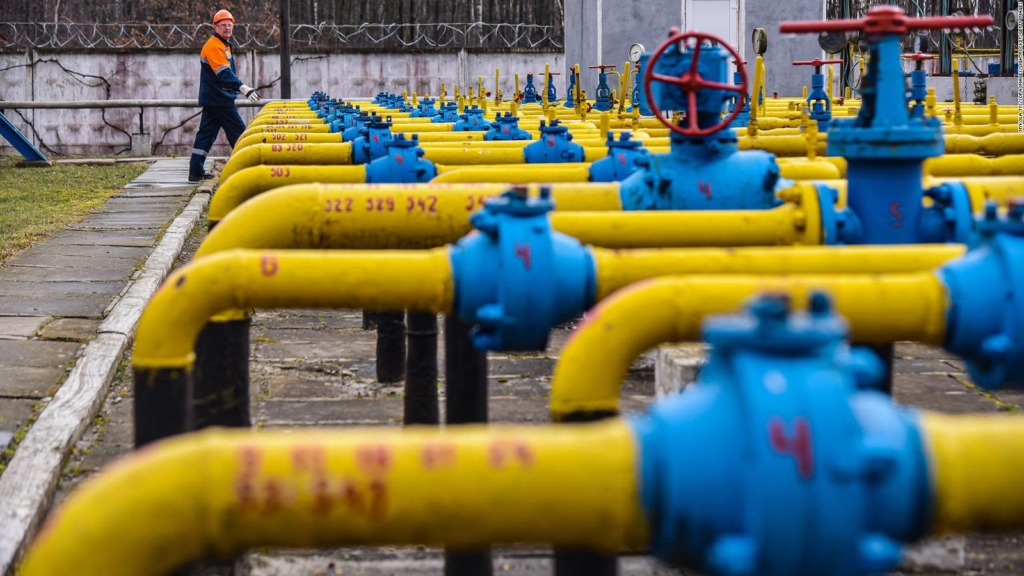
Gas reserves in Europe’s largest storage nations have fallen to their lowest late-November level since 2011, according to Gas Infrastructure Europe, just weeks before the boreal winter.
The measurement, published by Gas Infrastructure Europe (GIE), corresponds to November 25 and lands as the cold season approaches. In fifteen years of tracking, the bloc has never started winter with its storage tanks this empty.
RELATED: U.S. Retail Sales Up in September Amid Surging Gas Prices
Germany and the Netherlands carry the sharpest shortage. Their fill levels stood at 55.25% and 57.96%, both marks of historic emptiness. Slovakia sits even lower at 46.7%, the smallest figure on the GIE list.
Italy, France and Austria logged their second-worst readings since 2011. Italy stood at 84.39%, France at 71.12% and Austria at 62.06%. The comparison with previous seasons shows a narrowing margin for all three. None of the continent’s major storage countries escapes the trend.
The drop has alarmed operators. Gasunie, the Dutch company that manages natural gas transport infrastructure in the Netherlands and part of Germany, called for a new strategic gas reserve. The company points to the historically low tank levels and a possible surge in demand during winter.
Europe also missed its own target. By November 1, underground storage had not reached the 80% fill level required by the European Commission, according to Gas Infrastructure Europe (GIE) data. The bloc closed the injection campaign below the threshold fixed in its own rules, and the decline continued in the weeks that followed.
Europe shuts down 28% of its ammonia fertilizer production due to soaring natural gas prices driven by Middle East tensions, media reported.
This reportedly leaves the region heavily reliant on foreign suppliers and vulnerable to global supply chain shocks. pic.twitter.com/i2CyenJtBQ
— Sputnik Africa (@sputnik_africa) November 24, 2026
Sanctions Reshaped Supply
The energy crisis has gripped the continent since 2022, when European countries imposed sanctions on Russian energy. That decision reshaped continental supply. Governments turned to other markets, and the replacement proved costlier, a burden that passes through to the final price paid by consumers and industry.
Russian President Vladimir Putin said the policy of containing and weakening his country forms part of a long-term Western strategy. He added that the sanctions “have dealt a hard blow to the entire world economy.” Putin insisted that Russia denies no one the supply of its energy resources. The statement arrives amid the tug of war between Brussels and Moscow over the continent’s energy supply.
On the other side, European Commission President Ursula von der Leyen keeps pushing for a complete break with the Russian energy sector. Brussels maintains its definitive rejection of energy from Russia and bets on costlier alternatives. The community executive holds that line despite the calls coming from the sector itself.
The outcome will become visible in the coming weeks, when heating demand drives consumption. Available gas reserves mark the worst start to a winter season in fifteen years and leave European consumers facing a winter of pressured prices.
The immediate challenge is to secure supply without adding new pressure on prices. Gasunie’s call for a strategic reserve suggests the industry sees no quick fix, only a longer-term buffer that would take years to fill. For now, the continent enters December with less gas on hand than at any comparable moment in a decade and a half.
From teleSUR English via This RSS Feed.