

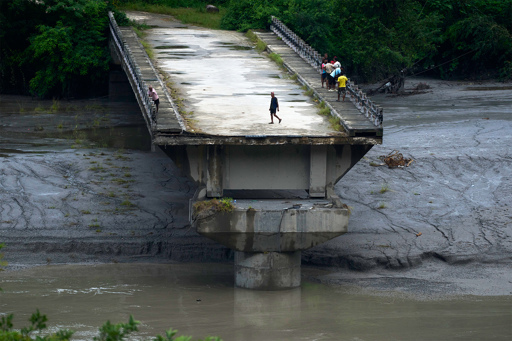
KATHMANDU — Until recently, residents living in the lap of the Himalayas saw the peaks as immovable giants silently nurturing them with snowmelt. But on Aug. 26, there was a road from the mountain overlooking the Bhotekoshi rivershed in central Nepal roared. What appears to have been an avalanche on Langtang Lirung sent a churning wall of water, mud and boulders down the valley. In Nepal, more than 1,353 people were killed and many thousands went missing. The flood also damaged at least a dozen hydropower projects. As the flood receded, a debate surfaced in Nepal’s policy circles about the future of hydropower. Some experts now advocate mega-dams in the Himalayas to contain large floods, manage winter power shortages and even prepare for a future without snow in the Himalaya. But limits to engineering and earthquakes in the young mountains challenge any such endeavor, experts tell Mongabay. “The question for the future is not whether Nepal will continue to develop its rivers,” writes David Fickling, climate and energy columnist for Bloomberg. “It is whether the next generation of hydro projects merely extracts electricity with run-of-river, or builds storage dams to give downstream communities greater protection against the consequences of our increasingly deadly climate.” Reservoir dams, which store large volumes of water and generate electricity on demand, have long been part of government policy. The pro-dam camp points to Kulekhani, located southwest of Kathmandu, which generates 92 GWh (Gigawatt-hour) annually and helps meet winter peak demand. But the four-decade-old plant is…This article was originally published on Mongabay
From Conservation news via This RSS Feed.