

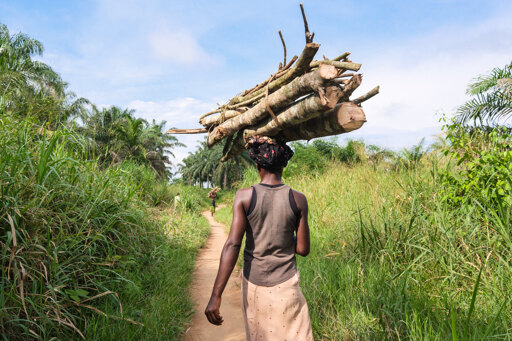
LUBUMBASHI, Democratic Republic of Congo — In the Democratic Republic of Congo, an initiative is underway to award community-based forestry land titles to 7.1 million hectares of land, or about 17.5 million acres — an area the size of Ireland. This is one of several conservation strategies aimed at protecting the DRC’s biodiversity while recognizing customary rights over the land. Apart from the protected areas that have been formally established to date and the vast Kivu-Kinshasa green corridor, the number of local community forest concessions (CFCLs) has risen from eight in 2017 to more than 350 in 2026, of which at least 236 have been legally established. However, while they provide the legal framework that protects communities from unjust or arbitrary expropriation, and allow certain communities to benefit from their forests, CFCLs also have the task of creating opportunities for communities. Without these opportunities, some communities are tempted to illegally exploit their own forests. One decade after the ministerial decree that established the rules for managing and operating these concessions, Mongabay’s Didier Makal speaks with two experts in the sector to get their take on progress. Official presentation of forest concession titles from local communities (CFCL) to the members of the community of Bafwalungu (territory of Bafwasende). Image courtesy of Tropenbos. Blaise Mudodosi, a doctoral researcher at the University of Goma in the DRC, works on the implementation and evaluation of community forestry projects and serves as the national coordinator of the NGO Actions for the Promotion and Protection of…This article was originally published on Mongabay
From Conservation news via This RSS Feed.