

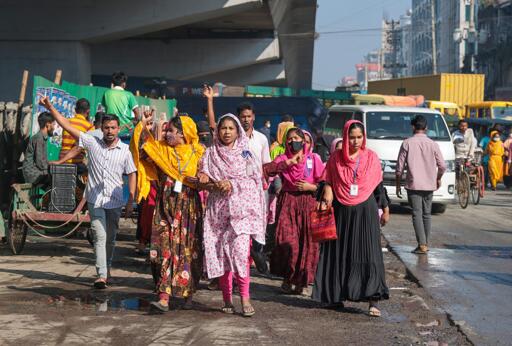
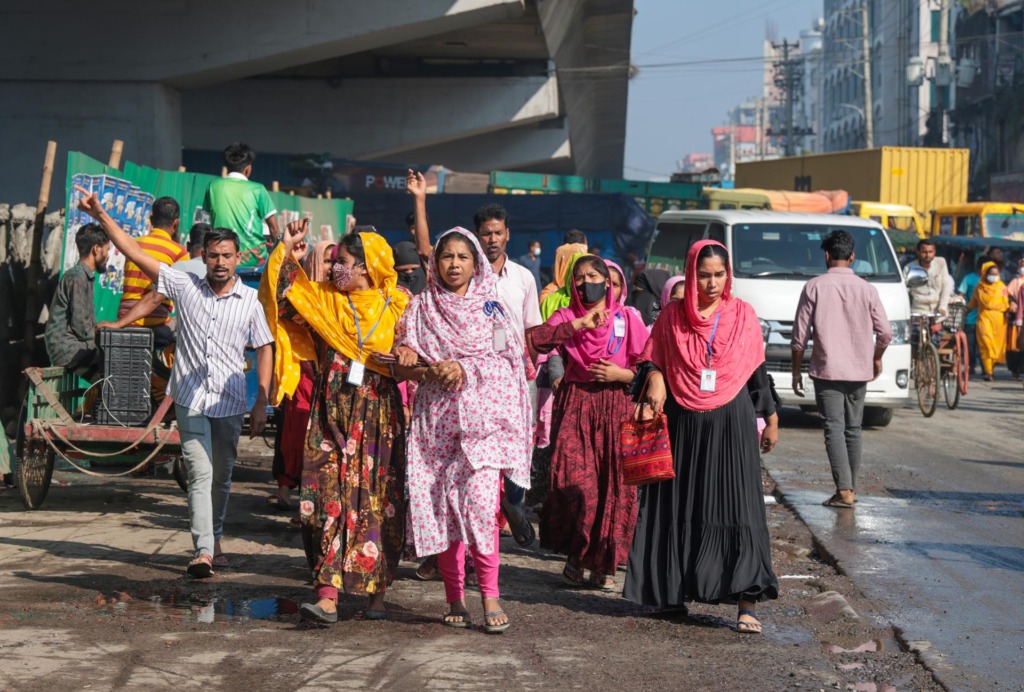
At least 320 garment factories in Bangladesh remained shut on Thursday amid a new day of labor protests against the government’s proposed minimum wage for the textile sector, which unions say falls far short of what workers need to cope with rising living costs.
The suspensions were reported on November 26, by Mahmud Hasan, President of the Bangladesh Garment Manufacturers and Exporters Association (BGMEA). He confirmed that 173 plants, mostly in the Gazipur industrial zone on the outskirts of Dhaka, had to declare the day a holiday because of unrest. They join 147 facilities that have been closed since the mobilizations began in late October.
RELATED: Indonesia Factory Fire Kills Three, Leaves 36 People Missing
On Thursday morning, hundreds of workers tried to block a major highway, and police used sound grenades to disperse the crowd. Authorities have maintained a maximum alert since Wednesday, deploying 18 platoons of the Border Guard Bangladesh (BGB) in the industrial belts of Savar, Ashulia and Gazipur.
Since the protests erupted almost a month ago, police repression left at least two workers dead and vehicles set on fire.
On Wednesday, the Bangladesh Wage Board voted four to two to set the monthly minimum wage for the textile sector at 17,000 takas, about 137 U.S. dollars. That is a 36% increase over the 12,500 takas ($102) in force since 2023, and the lowest percentage adjustment of the six reviews held in recent years. The decision is provisional and must go through an objection period before it is officially published in the Labor Ministry’s gazette.
#Bangladesh Garment #Workers’ Protests for Living Wages
This is how Bangladesh treats the four million workers who sustain the country’s largest source of export earnings – the readymade garment (RMG) industry.
Why? Because they are demanding wages that reflect the rising cost… pic.twitter.com/itlrNFABlT
— Bangladesh Watch (@bdwatch2024) November 26, 2026
Unions rejected the figure immediately as insufficient given the higher cost of living. The Bangladesh Industrial Council (IBC) said the approved amount does not meet the sector’s expectations and questioned the performance of its representative at the negotiating table.
Workers have demanded since October that the base wage be raised to 30,000 takas ($241), almost double what the board approved.
Economic Fallout
The Bangladesh Garment Manufacturers and Exporters Association (BGMEA) said production disruptions and factory closures have caused estimated losses of $428 million. It warned of declining confidence among international buyers, who have diverted previously confirmed orders for 59 million garments, valued at $254 million, to other countries.
Labor Minister Ariful Haque and the head of the employers’ association both appealed for dialogue, expecting operations to resume at full capacity on Saturday, November 28.
The garment industry is Bangladesh’s main economic engine, accounting for almost 85% of total exports, which reached $55 billion last year. The sector has a long history of conflict over working conditions, especially after the 2013 collapse of the Rana Plaza complex, which killed more than 1,100 workers. All six wage updates approved since 1986 were driven by street mobilizations.
From teleSUR English via This RSS Feed.