

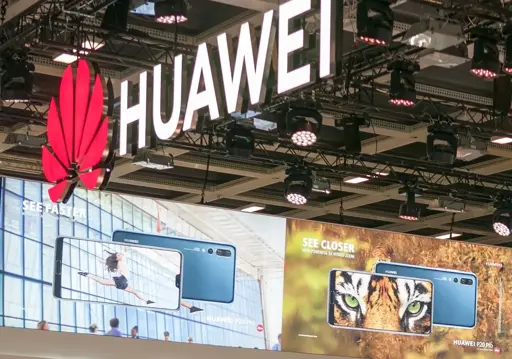

A federal court in New York found Chinese technology and telecommunication giant Huawei and three of its subsidiaries guilty of conspiracy to steal trade secrets and commit bank fraud on Tuesday, November 24, while rejecting the more serious charges of “overarching racketeering” against it.
The charge of “overarching racketeering,” was related to US allegations that Huawei was involved in secret operations to steal intellectual property or technological know-how from American companies.
The trial in the case lasted for over two months with the jury finding Huawei guilty on 10 out of 12 charges. The sentencing is scheduled for September next year.
The case against Huawei was filed by the US Department of Justice in January 2019. The trial began earlier this year after a years-long investigation into the allegations, particularly related to the company’s business operations in Iran.
In a statement issued on Wednesday, Huawei welcomed the acquittal in racketeering charges claiming it “vindicates” its “consistent position over the past eight years” that they were without “factual basis.”
It also claimed that the rest of the charges, including the alleged fraud related to hiding Iranian business also were without legal and factual merit, with its lawyers saying the company will appeal against the guilty verdict once the sentencing completes.
“No court ever found Huawei liable for wilful intellectual property misappropriation, and the company was never ordered to pay damages for trade secret misappropriations,” it said in the statement.
Huawei lawyers had argued that the banks in the US such as HSBC knew about the company’s business in Iran and the allegations of fraud against them were false.
The US Department of Justice, in a press release after the verdict on Tuesday, reiterated its allegations against Huawei, claiming it enlarged its business in the US and elsewhere through its “criminal activities.”
It also claimed that Tuesday’s verdict confirms that Huawei was involved in “conspiring to secretly assist the government of Iran, steal secrets from US companies, lie to its banks and Congress and launder money” and posed a threat to US national security.
Attempt to suppress China’s high-tech companies
Successive US administrations in the last decade have repeatedly accused Chinese companies of intellectual property theft or blacklisted them over their alleged relations with the Chinese armed forces.
China has long condemned the US allegations, maintaining that such accusations against its tech companies are nothing but a political act to suppress their rise and a deliberate attempt to deny them fair opportunity.
Over 1,100 Chinese companies, largest from any one particular country, are on the so-called US Entity List. The companies on the list face massive restrictions on their operations, including the compulsory requirement of licenses for trade.
The charges against Huawei followed the Donald Trump administration escalating trade disputes with China and imposed arbitrary tariffs and restrictions against various Chinese goods and services.
The “trade war” impacted Huawei, then a leading global company, after its senior executive Meng Wanzhou was suddenly arrested in 2018 in Canada over charges of fraud for allegedly misrepresenting Skycom as a separate entity. It was alleged that the misrepresentation was an attempt to bypass US unilateral sanctions on Iran between 2009 and 2014.
Meng was released after spending three years in prison and returned to China as a part of a deal.
Meanwhile, Huawei was put on the US Entity List and restricted from operating in the US. Several other US allies such as the UK and Australia also implemented similar measures against the company, with Google suspending its transactions with it.
Huawei has maintained that allegations against it were false and politically motivated.
“Huawei operates in more than 170 countries and regions, holds over 165,000 active granted patents, and has invested more than $ 270 billion in R&D cumulatively since 2007,” it said in the statement on Wednesday.
It claimed its success is a result of “40 years of continuous investment in R&D, an unwavering commitment to innovation and quality, dedicated employees, and a customer-centric culture.”
From BT News via This RSS Feed.