

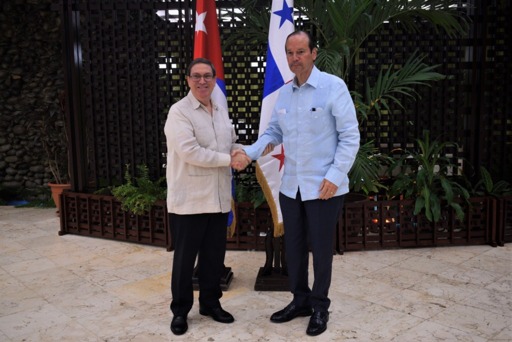
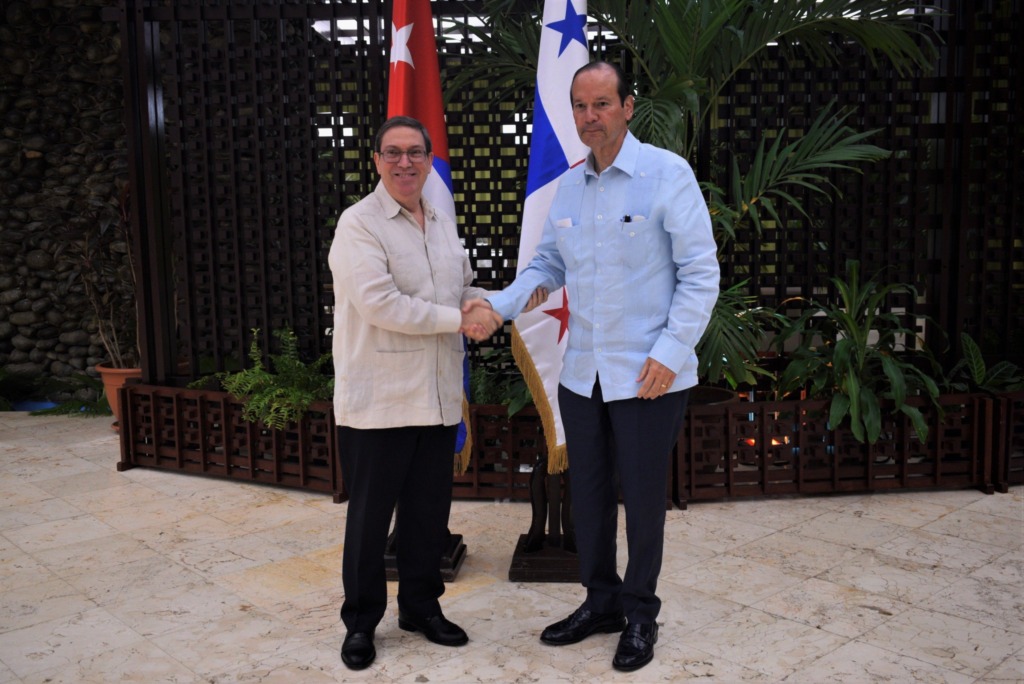
Cuban Foreign Minister Bruno Rodríguez Parrilla and his Panamanian counterpart, Javier Eduardo Martínez-Acha, met Wednesday in Havana to discuss bilateral relations and other issues on the bilateral and regional agenda.
Rodríguez Parrilla thanked Panama for its traditional vote at the United Nations General Assembly in favor of ending the blockade against the island. This marks Martínez-Acha’s second visit to Havana so far this year, after a March working visit in which President Miguel Díaz-Canel Bermúdez received him and expressed the willingness to strengthen economic and commercial exchange between both countries.
RELATED: Cuba Seeks Food Sovereignty Amid Blockade and Energy Shortages
Martínez-Acha arrived in Cuba in the early hours of Wednesday and was received on arrival by Otto Vaillant, director general of Latin America and the Caribbean at the Foreign Ministry. Cuban Deputy Foreign Minister Josefina de la Caridad Vidal and other officials from that ministry attended the official talks. The Panamanian delegation included Ambassador to Cuba Edwin Pitty; the foreign minister’s advisers Adolfo Ahumada and Ferdelin Bonilla; and presidential advisers Marcos Caisutti and Carolina Riutort.
According to a note published on the official Cubaminrex portal, both ministers advocated continuing to promote bilateral ties and “deepened various issues on the bilateral agenda and exchanged on matters of common interest on the regional and international agenda.” The statement highlighted that the diplomats addressed “the importance of continuing to consolidate bilateral cooperation and coordination mechanisms on migration and consular matters, issues of special relevance for both nations.”
Recibí al canciller de #Panamá, @javierachapma, con quien trasladé un cordial saludo al Presidente @JoseRaulMulino.
Destacamos las oportunidades existentes para ampliar nuestras relaciones económico-comerciales.
Agradecí la oposición de Panamá al #bloqueo impuesto a #Cuba. pic.twitter.com/6SsVmdIqXx
— Miguel Díaz-Canel Bermúdez (@DiazCanelB) November 25, 2026
During the March trip, the official program included meetings with local authorities and a meeting with a group of Panamanian citizens detained in Havana and accused of committing crimes against the constitutional order of the Republic of Cuba. At that time, according to the island’s Foreign Ministry on social media, Martínez-Acha was able to verify that his compatriots received “humanitarian treatment and due legal assistance.”
Regarding the judicial situation of this group, in July Martínez-Acha said the Panamanian government would ask Cuba to allow the seven Panamanian citizens accused of attacking the island’s government to serve their sentences in Central American territory if they were eventually declared guilty after a trial. Previously, in April, three of those originally arrested had been repatriated to Panama. According to the Central American country’s Foreign Ministry at the time, the measure was carried out thanks to “the collaboration provided during the process, under the legal figure of effective collaborator and the application of the opportunity criterion.”
The group of Panamanian citizens had traveled to Cuba on a date that has not been specified. According to reports from the island’s Ministry of Interior (Minint), they were recruited in Panama with the aim of committing crimes against the constitutional order of the Republic of Cuba, for which, according to their first statements, they were to receive remuneration of between $1,000 and $1,500 each upon returning to their country.
From teleSUR English via This RSS Feed.