

A trial opening in Mar del Plata will examine the role of the local judiciary and police in concealing crimes committed during Argentina’s “death flights,”
A trial over the alleged cover-up of Argentina’s so-called “death flights” will begin on Friday in the city of Mar del Plata, with a former judge and other defendants accused of covering up 14 killings committed during the last civil-military dictatorship.
The oral public trial, known as the “Facio Case,” will open on November 27, in the year Argentina marked 50 years since the 1976 coup. The proceeding will seek to determine the responsibility of the accused for 14 aggravated homicides and, in the alternative, for cover-up, and it plans to hear testimony from 100 witnesses.
The case forms part of a broader judicial reckoning with the civic-military dictatorship’s clandestine repression apparatus.
RELATED: Death Flights Argentina: 3 Shocking Life Sentences Expose Dictatorship Horror
Prosecutors allege that former judge Carlos Augusto Facio, who headed Criminal Court No. 2 of Dolores from August 10, 1976, until mid-1984, diverted the investigation into bodies found along the Atlantic coast. The bodies showed signs of torture, yet the accusation says he endorsed the hypothesis that the victims had drowned and allowed them to be buried without identification.
The so-called “death flights,” the practice of throwing kidnapped detainees from aircraft into the sea during the 1976-1983 dictatorship, have already been addressed in multiple proceedings, including the third segment of the Navy Mechanics School (ESMA) trial. The investigations made it possible to reconstruct that the victims had been illegally abducted in clandestine detention centers of Greater Buenos Aires.
Those rulings reinforced a central judicial finding: the clandestine detention centers operated under the last civic-military dictatorship were systematic and concentration-camp-like in nature. The crimes were not isolated acts or individual excesses, the courts concluded, but part of a planned, coordinated, and centralized network of extermination, torture, and social discipline.
That characterization matters far beyond the courtroom. It establishes that the violence that consumed Argentina between 1976 and 1983 was state policy and it extends legal responsibility beyond the immediate perpetrators.
ARCHIVO Y MEMORIA | Adolfo Scilingo relalante los “vuelos de la muerte” de la dictadura: “Los llevábamos con un somnífero, engañados. Los desnudábamos y los arrojábamos uno por uno. Así eliminamos cerca de 4000 personas” #NuncaMas
📽️ @ArrepentidosLLA pic.twitter.com/jeLxy7oIsH
— Agencia El Vigía (@AgenciaElVigia) March 23, 2025
Text reads: “Adolfo Scilingo recounting the “flights of death” of the civic-military dictatorship: “We were carrying them with a sleeping pill, deceived. We would strip them and throw them out one by one. That way, we eliminated about 4,000 people.”
Concealing Coastal Findings
Half a century after the coup that installed the civic-military dictatorship, the Mar del Plata trial shifts attention to a question that has long shadowed the region’s coastline. Bodies washed ashore for years while families searched in vain for the disappeared.
The hearings will reconstruct how those coastal discoveries were covered up. Judicial and police officials at the local level, the prosecution argues, played a decisive part in hiding evidence of the crimes committed against people seized by the security forces.
The victims’ bodies washed up on beaches in the Buenos Aires Coast, specifically in Villa Gesell and Pinamar between 1976 and 1980, after being thrown from aircraft, a method of extermination the military used to disappear kidnapped and murdered people. Their identities were established years later through work by the Argentine Forensic Anthropology Team (EAAF), which resumed identification efforts in 2006.
Evidence to be analyzed includes records from the time, among them medical reports that attributed the deaths to drowning and police procedures linked to the discovery of the bodies.
The proceedings are expected to detail the mechanics of that silence: how autopsies were withheld, how burials were handled without identification, how paperwork disappeared. Each step, according to the case against the accused, served the same end.
Human rights organizations have long insisted that the civic-military dictatorship could not have functioned without the collaboration of civilian institutions. Judges, clerks, police officers, and municipal officials all formed part of the machinery that made disappearances possible and obscured them afterward.
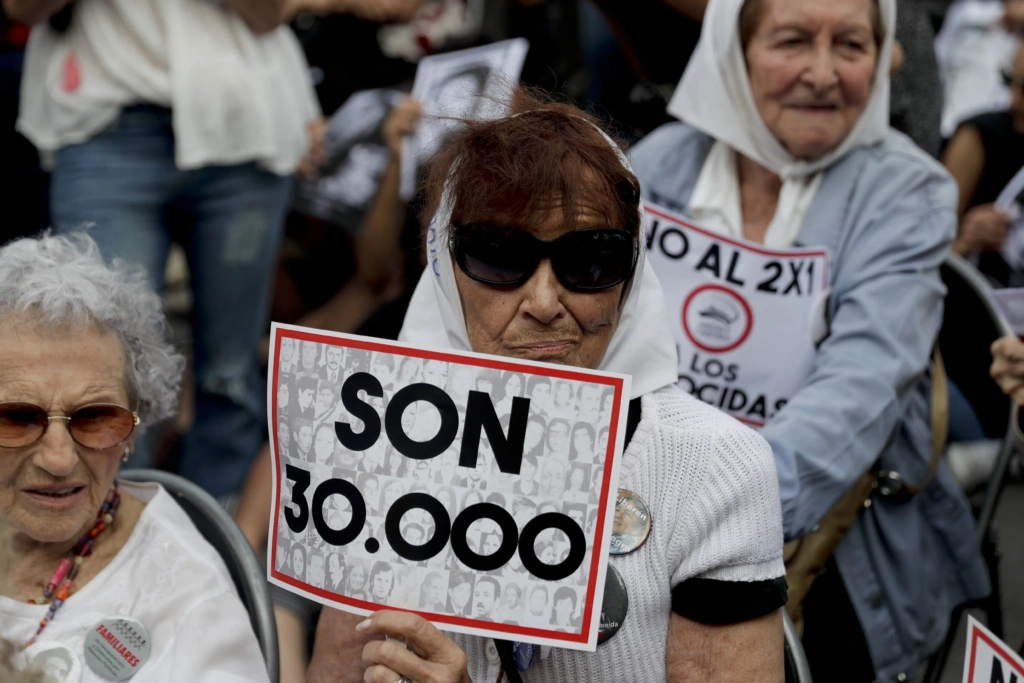
Isabel Perón’s Argentinian government was overthrown by a US-backed coup on this day in 1976, ushering in a bloody dictatorship under which 30,000 people were killed and disappeared. pic.twitter.com/7NMyXJxhx5
— Progressive International (@ProgIntl) March 24, 2024
Each judicial instance of this kind consolidates historical memory, say advocates and jurists who have followed the prosecutions for decades. The trials also reassert the state’s obligation to hold accountable everyone who participated, including those who operated from the bench or from public administration.
The Cassation Court’s decisions in recent months gave new momentum to that effort. By confirming that the repression was systematic, the rulings stripped away the last defense available to those who claimed their actions were exceptional or coerced.
The Mar del Plata trial will now test whether that logic extends to those who never fired a weapon or piloted a plane, but who, prosecutors allege, made the crimes possible and hid them afterward. The coastal findings, once buried in administrative silence, have become the central evidence.
In both June and September 1976, Henry Kissinger met with Argentine Foreign Minister Cesar Guzzetti and communicated Washington’s wish for the military dictatorship to “succeed.” Kissinger said that Washington was “aware you are in a difficult period. It is a curious time, when… pic.twitter.com/FJozxeyQbn
— Progressive International (@ProgIntl) March 24, 2024
The timing carries its own weight. As Argentina marks fifty years since the 1976 coup, the Mar del Plata hearings stand as a reminder that the process of justice remains unfinished. The civic-military dictatorship lasted seven years, but the effort to account for its crimes has now extended far longer, with trials still producing verdicts.
From teleSUR English via This RSS Feed.