

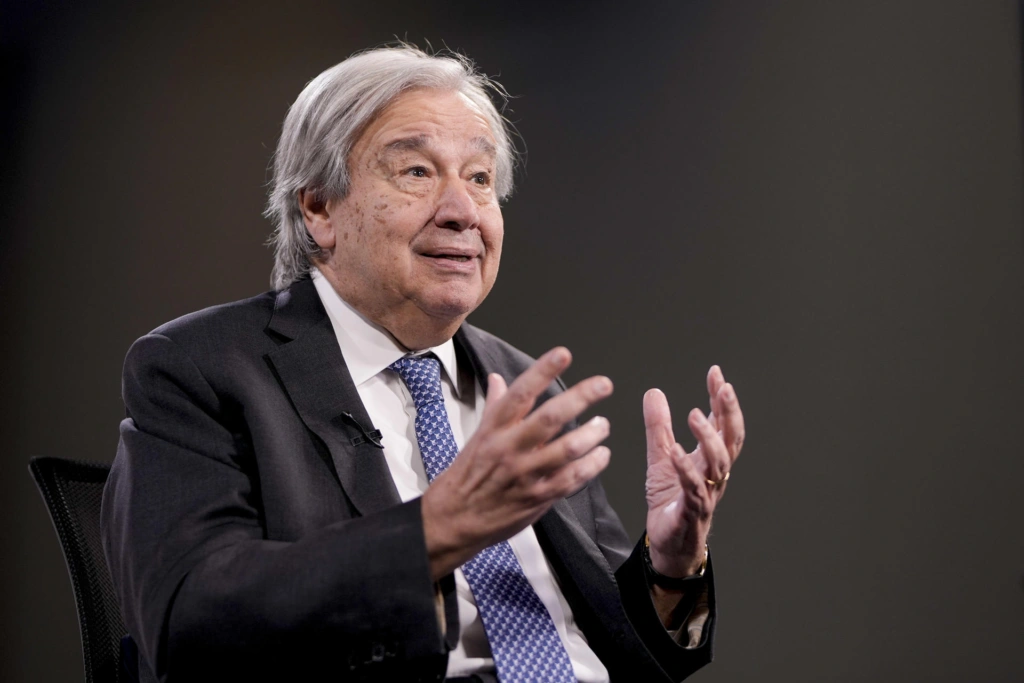
UN Secretary-General António Guterres on Wednesday called on Colombia to renew its commitment to the 2016 Final Peace Agreement as the country marks 10 years since its signing, saying he is “deeply concerned” about the violence that persists in regions still suffering the effects of the conflict.
In a statement issued on November 25, Guterres expressed his “deep appreciation for what has been achieved under its implementation” in areas such as the demobilization and social reintegration of former guerrillas, land distribution and rural reform, and the advancement of peace policies.
He highlighted the potential of the agreement signed by the now-defunct Revolutionary Armed Forces of Colombia-People’s Army (FARC-EP) and the government of Juan Manuel Santos (2010-2018) to build a more peaceful, inclusive and safe future.
RELATED: Santos Defends the Colombian Peace Agreement 10 Years After its Signing
The UN chief urged Colombia to “redouble its commitment to the fundamental processes begun in 2016,” noting that five years remain of the 15-year timeline set out in the accord. In this sense, the organization insisted that “the consolidation of rural reforms and the effective protection of those who defend human rights will determine the future stability of communities.”
10 years ago, the people of Colombia took an inspiring step toward peace through the Final Peace Agreement between the Government of Colombia and the former FARC-EP.
I express my deep appreciation for all that has been achieved to chart a more peaceful, inclusive & secure future…
— António Guterres (@antonioguterres) November 24, 2026
Persistent Violence
The tenth year of the peace agreement confronts Colombia with the task of closing institutional gaps in territories most exposed to violence.
According to UN data, more than 11,000 former combatants remain in civilian life through thousands of productive projects and cooperatives. The UN also noted that 501 reintegrated former fighters have been killed since the signing of the peace agreements.
Guterres named as priorities the peaceful reintegration of former combatants, bringing development and state institutions to marginalized communities, and guaranteeing victims’ rights through transitional justice. He said the UN Verification Mission in Colombia has insisted that expanding economic opportunities and strengthening local authorities are decisive for sustaining gains in rural areas.
The UN affirmed that the presence of multiple armed actors, illegal economies, geographic isolation and threats against social leaders continue to hit vulnerable populations. The head of the Verification Mission, Miroslav Jenča, warned of risks of child recruitment in ethnic communities and attacks against women in conflict-affected areas.
Recent UN reports indicate that the number of members of illegal armed structures grew from about 15,000 in 2022 to nearly 28,000, while groups such as the Gulf’s Clan multiplied their ranks. Rights violations reported include forced recruitment of minors, displacement, threats against women and killings of community defenders. That expansion keeps rural communities, ethnic peoples, social leaders and former combatants at risk. The danger concentrates in departments marked by geographic isolation and disputes over illicit routes.
Persistent complaints point to forced recruitment of minors, displacement, threats against women and killings of community defenders. These abuses converge in the same territories, compounding the toll on communities already exposed, and erode local confidence in state protection.
.@antonioguterres expresa su profundo reconocimiento por lo logrado con el #AcuerdoDePaz, así como su preocupación por la violencia que persiste en regiones de 🇨🇴.
El Acuerdo es instrumento valioso a disposición del país en sus esfuerzos por llevar mayor seguridad y desarrollo. https://t.co/sEz0YbzInf pic.twitter.com/pMRe1cchID
— Misión de la ONU en Colombia (@MisionONUCol) November 24, 2026
Text reads: “@antonioguterres expresses his deep appreciation for what was achieved with the Peace Agreement, as well as his concern about the violence that persists in regions of Colombia. The agreement is a valuable tool at the country’s disposal in its efforts to bring about greater security and development.”
Reforms and Protection
For the United Nations, overcoming this scenario demands rigorous application of the commitments set out in the 2016 accord. Rural reform, security and transitional justice must operate together rather than as separate tracks.
Transitional justice remains central to that equation. The accord’s mechanisms were designed to deliver truth and accountability in regions where armed groups have long disputed territory, and the United Nations treats their consolidation as inseparable from rural reform and security.
The stakes are highest in peripheral regions where public services remain weak and legal economic opportunities scarce. Without effective services, sustainable livelihoods and firm institutional control, those territories stay exposed to new cycles of violence that compromise lasting peace.
Guterres praised the “dedication and perseverance” of the signatories, state institutions, civil society and citizens, and said the UN stands ready to support efforts led by Colombians themselves during the remaining five years of implementation. He added that consolidating rural reforms and effectively protecting human rights defenders will determine the future stability of communities.
The five remaining years therefore emerge as decisive. The United Nations has signaled it will stand with Colombian-led efforts, but the ultimate test lies in whether the state can reach communities still caught between armed actors and the absence of institutions.
From teleSUR English via This RSS Feed.