

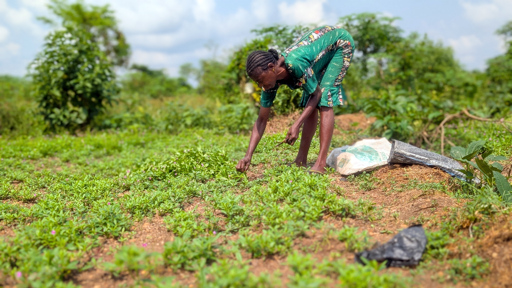
This is Part 2 in a two-part series on Nigerian waterleaf. Read Part 1 here. Except for the occasional roar of an airplane landing on the runway, it’s all quiet and lonely in the plantations surrounding the local airport in Calabar, southeastern Nigeria. Across the vast fields are strips of farmland studded with waterleaf crops grown by women farmers who depend on these crops for their livelihoods. Once harvested, these waterleaf plants are stuffed into large bags and ferried to local markets. But few of these crops have survived the relentless bursts of rain across Nigeria since June. As the rain continues for days on end, many stems become brittle and die shortly afterward. Others become shriveled, with wilting, yellowed leaves thirsting for sunlight. Left: Preparing crops for market. Right: Crop damage, stem cuttings shriveled from excessive rainfall. Images by Kingsley Charles. Among Nigeria’s most-consumed vegetables, waterleaf (Talinum fruticosum) is cherished for its culinary and therapeutic benefits. In southeastern Nigeria, it forms a key ingredient in staple sauces like afang and edikang ikong. Afang soup is made from Gnetum africanum and waterleaf. Image by Kingsley Charles. In September, Mongabay fellow and Nigerian journalist Kingsley Charles began covering the slump. He visited waterleaf farms and local markets across Calabar, where he spoke to dozens of farmers as well as consumers and vendors. Top: Farmer Martina Usang setting manure out in the sun’s heat. Bottom left: Heaps of bags containing decomposed manure on a farm in Calabar. Bottom right: Mature waterleaf crops…This article was originally published on Mongabay
From Conservation news via This RSS Feed.