

Caracas (OrinocoTribune.com)—Venezuelan political analyst and researcher William Serafino challenged the narratives surrounding Venezuela’s political situation following the January 3 US military aggression, pointing to the consequences of a decade of imperialist warfare, the failures of Latin American progressive leadership, and the dangers posed by Washington’s renewed military expansionism in the region.
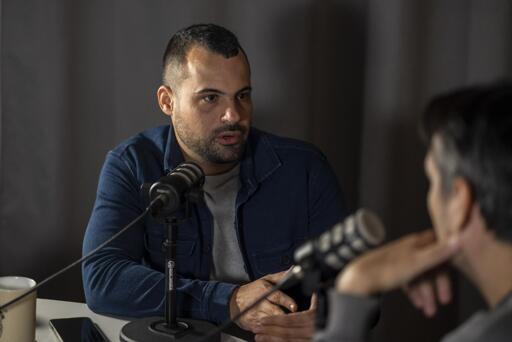
In an interview with journalist Carolina De Nova on the Mexican program La Disrupción, broadcast on November 19, Serafino argued that understanding Venezuela’s current circumstances requires recognizing both the military and political defeat suffered on January 3 and the unprecedented resistance that preceded it.
On January 3, US military forces bombed Venezuela and kidnapped President Nicolás Maduro and First Lady Cilia Flores, murdering more than 100 people, including 47 Venezuelan and 32 Cuban military personnel. Both remain illegally imprisoned in the US.
During the interview, De Nova also warned that debates over the decisions of the current Venezuelan leadership risk losing sight of who bears primary responsibility for the country’s predicament: US imperialism. She stressed that legitimate criticism of the Chavista leadership should not obscure Washington’s role as the aggressor or turn the Venezuelan people, who have endured a decade of economic warfare and military threats, into the targets of condemnation from sectors of the international left.
The history did not begin on January 3Serafino criticized analyses that disregard the material conditions endured by millions of Venezuelans over the past decade.
He recalled the collapse of public services, hyperinflation, shortages of food and medicine, mass migration, US military threats, and ultimately a direct military intervention.
“History did not begin on January 3,” Serafino stressed.
The analyst argued that expecting Venezuela to emerge victorious from a direct military confrontation with the US, given the enormous asymmetry of power, disregards the circumstances under which Venezuela had already resisted imperialism for years.
As reported by Orinoco Tribune, a UN special rapporteur estimated that Venezuela’s real GDP contracted by approximately 74% between 2014 and 2022. Despite subsequent economic recovery, Venezuelan workers continue to suffer severely depressed wages and deteriorated public services.
Serafino recalled that, after a decade of economic warfare and repeated failed regime-change operations, Washington ultimately resorted to direct military aggression to obtain concessions from Venezuela.
He identified the Trump administration’s revival of the Monroe Doctrine as a qualitative escalation of US imperialist policy, extending beyond Venezuela through initiatives such as the Shield of the Americas.
Beyond conspiracy theories and the betrayal narrativeSerafino questioned the proliferation of unsubstantiated theories alleging that Acting President Delcy Rodríguez participated in the kidnapping of President Maduro.
He argued that many of these narratives, amplified by social media influencers seeking greater exposure, offer simplistic explanations for a complex political reality without providing evidence.
However, Serafino also questioned the narrative of a sovereign strategic retreat, according to which Venezuela’s current concessions are merely temporary measures intended to gain time until the international balance of power becomes more favorable.
In his assessment, neither interpretation sufficiently explains the current situation.
Serafino maintained that recognizing the military and political defeat suffered by Venezuela does not mean accepting that the Bolivarian Revolution has been definitively defeated or that its achievements are irreversibly lost.
He also criticized attempts by government spokespersons to portray every concession to Washington as a victory, arguing that such narratives prevent Venezuelans from properly assessing the consequences of the aggression.
An asymmetric relationship under coercionRather than describing Venezuela as a US protectorate or a country exercising the same degree of sovereignty it possessed before January 3, Serafino proposed the concept of co-government to characterize the current relationship.
He emphasized that this is an exploratory analytical category, describing an asymmetric relationship under military and economic coercion in which both governments retain distinct interests.
In this context, Washington exercises control over Venezuelan oil revenues while Acting President Delcy Rodríguez maintains a degree of political autonomy and pursues her own economic and electoral objectives.
According to Serafino, the Venezuelan government’s calculation may be that economic recovery, increased oil revenues, and improved household incomes will allow Chavismo to recover some of its diminished electoral support.
Washington, meanwhile, has had to abandon, at least temporarily, its objective of completely removing Chavismo from Venezuelan political life.
Serafino pointed to the contradictory public presentations of the recent oil agreements as evidence of this relationship. Donald Trump announced a 100-year arrangement, while Acting President Delcy Rodríguez described a 25-year agreement under which Venezuela maintains ownership of its oil reserves.
The analyst warned, however, that the relationship should not be interpreted as a conventional bilateral partnership, given Washington’s long-standing objectives in Venezuela and the coercive circumstances under which the agreements were reached.
Military cooperation and the risks for ChavismoSerafino expressed particular concern over the recent military cooperation agreement signed during US War Secretary Pete Hegseth’s visit to Caracas.
He warned that Washington seeks to influence the ideological orientation and military doctrine of the Bolivarian National Armed Forces (FANB), one of the fundamental pillars of the Bolivarian Revolution.
The analyst also questioned the lack of public access to the agreement’s full text and the absence of parliamentary scrutiny.
Serafino characterized Hegseth’s statements in Caracas as humiliating for Venezuelans, particularly his questioning of Venezuela’s Pan-Bolivarian doctrine.
According to the analyst, Washington’s offensive is aimed not only at controlling Venezuela’s natural resources but also at dismantling the country’s historical, ideological, and cultural commitment to Latin American sovereignty.
Nevertheless, he argued that Chavismo extends beyond the government and the PSUV. The current circumstances could eventually generate new political expressions within Chavismo, including organizations that operate independently of the ruling party.
The responsibility of Latin America’s progressive leadershipSerafino emphasized that January 3 should also be understood as a failure of Latin American integration and its progressive leadership.
He specifically mentioned Brazilian President Luiz Inácio Lula da Silva, former Argentine President Cristina Fernández de Kirchner, and former Colombian President Gustavo Petro.
Had regional integration mechanisms been strengthened, particularly the South American Defense Council promoted by President Hugo Chávez within UNASUR, Serafino argued, Washington would have faced considerably greater political costs for intervening militarily in Venezuela.
He also highlighted Brazil’s decision to veto Venezuela’s entry into BRICS in October 2024 and Petro’s refusal to recognize President Maduro’s electoral victory that year.
According to Serafino, these decisions contributed to Venezuela’s international vulnerability, making it particularly unjust to concentrate responsibility for the current situation exclusively on Venezuelan actors.
The analyst also warned against disregarding the contradictions accumulated during President Maduro’s administration, including the increasing influence of private business interests and the disproportionate burden of economic recovery borne by the Venezuelan working class.
He noted that the economic opening and some of the ideological changes now associated exclusively with Acting President Delcy Rodríguez had already begun several years before January 3.
Cuba and the threat of US military aggressionAddressing Cuba’s situation, Serafino warned that the interruption of Venezuelan oil supplies following the US aggression has aggravated the consequences of more than six decades of illegal US blockade against the island.
He argued that the Trump administration’s difficulties in its confrontation with Iran could temporarily limit Washington’s capacity to intensify its military offensive against Cuba.
However, should Washington obtain a more favorable outcome in the Middle East, the danger of direct military aggression against Cuba could increase.
Serafino also pointed to the influence of US Secretary of State Marco Rubio in advancing the imperialist offensive against the Cuban Revolution.
Nevertheless, he argued that Trump cannot be certain that a military intervention against Cuba would achieve its objectives and that a failed operation could considerably deepen his administration’s political crisis.
Meanwhile, Washington continues to rely on intensifying economic warfare to force regime change on the island.
Serafino made a direct appeal to Lula to supply Cuba with as much oil as Brazil can provide, arguing that defending Cuban sovereignty should constitute a priority of Brazilian foreign policy.
For Serafino, the preservation of Venezuela’s anti-imperialist consciousness, historical memory, and commitment to the emancipatory projects of Bolívar and Chávez remains essential to recovering the sovereignty lost under the current circumstances.
Special for Orinoco Tribune by staff
OT/JRE/CD
From Orinoco Tribune via This RSS Feed.