

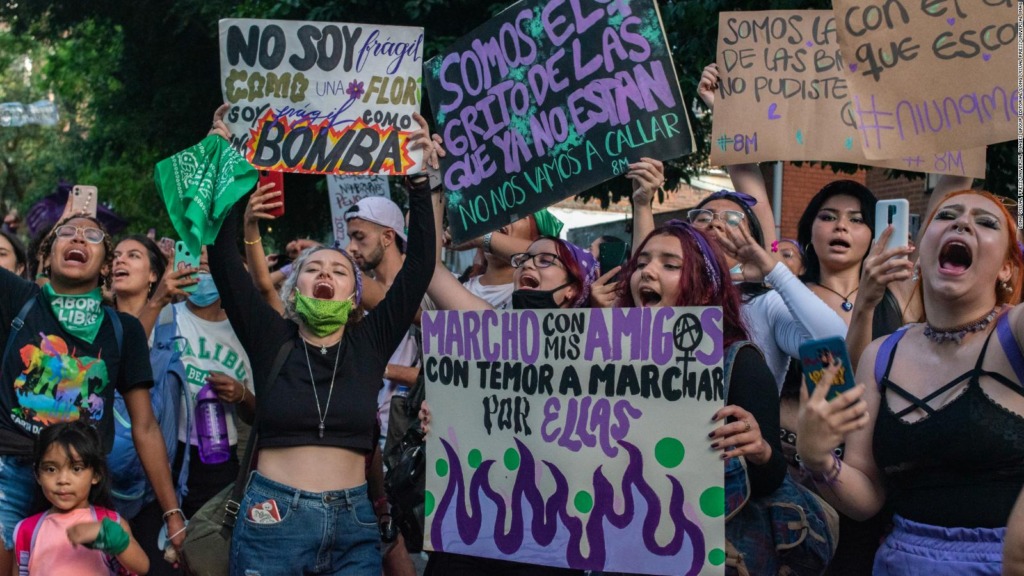
November 25 marks the International Day for the Elimination of Violence against Women. The UN established this date in 1999 in memory of the Mirabal sisters—Dominican activists who were murdered in 1960 during the Trujillo dictatorship.
The murder of these activists opened up a conversation about the importance and necessity of addressing gender-based violence globally. Since then, this date has been marked by demonstrations, discussion groups, and the creation of spaces that promote action to protect victims of the various forms of violence faced by women.
The year 2026 marks 27 years and mark the occasion, the UN will hold “16 Days of Activism Against Gender-Based Violence,” a campaign running from November 25 through December 10.
The theme is: “UNITE to End Violence Against Women and Girls: Ensure Access to Justice, Protect Survivors, and End Impunity.” The initiative focuses on establishing safe spaces—both in-person and digital—to facilitate these efforts.
Global figures are alarming. According to the World Health Organization (WHO, 2025), nearly one in three women (840 million) has experienced physical or sexual violence in her lifetime. The United Nations reports that every 10 minutes, a woman or girl is killed by an intimate partner or a family member.
In 2024, 50,000 women and girls were murdered—an average of 137 per day. After Africa, the Americas is the region with the second-highest rate of femicides committed by intimate partners or family members. In Latin America and the Caribbean, 22.8% of women have experienced physical or sexual violence at the hands of a partner at some point in their lives.
Guatemala
Across various departments of the country, feminist movements and social organizations will join in various activities to mark the International Day for the Elimination of Violence against Women.
On Sunday, November 22, Guatemala’s Ministry of Government launched “Línea Morada 120” (Purple Line 120)—a free telephone service for women who are victims of, or at risk of, violence. The service will operate 24 hours a day, 365 days a year, and will be staffed by officers from the National Civil Police (PNC) who are trained to provide guidance, initiate security measures, and follow up on cases.
Authorities stated that users can call 120 even if they have no phone credit. The service also accepts inquiries from family members or witnesses to acts of violence.
Additionally, feminist collectives, women’s groups, and social leaders have gathered on one of the city’s main thoroughfares for a march to raise awareness about violence against women.
CAMINATA CONTRA LA VIOLENCIA HACIA LA MUJER EN ZONA 1
En la 7.ª avenida y 21 calle, zona 1, se registra una concentración de personas que participarán en una caminata contra la violencia hacia la mujer.
Los participantes se desplazarán sobre la 6.ª avenida con destino a la… pic.twitter.com/IL8GV9wzkL
— Policía MT Ciudad de Guatemala (@PMTMuniGuate) November 25, 2026
The text reads, “MARCH AGAINST VIOLENCE AGAINST WOMEN IN ZONE 1
A group of people has gathered at 7th Avenue and 21st Street, in Zone 1, to take part in a march against violence against women. Participants will move along 6th Avenue, heading toward the Plaza de la Constitución. We recommend using alternative routes and planning your journey accordingly. We are working to improve mobility in your area.”
Panama
Various organizations have called for a march at 4:00 p.m. (local time)—from the Vía Argentina metro station to the Office of the Ombudsman—to demand thorough investigations into cases of violence and abuse against women, as well as rapes and femicides.
This year’s commemoration includes film screenings, discussions, walks, and other gatherings that will continue through December. Here are some of the activities and information on how to participate.
The documentary chronicles Olimpia Coral Melo’s fight against digital violence and her efforts to push for the legal reforms in Mexico known as the “Olimpia Law.” Admission to the screening is free.
Argentina
In observance of the International Day for the Elimination of Violence against Women, feminist and social organizations, along with labor unions, are calling for demonstrations in various parts of the country—including the city of Buenos Aires, Rosario, San Nicolás, and Río Gallegos—as well as in several public squares across the province of Santa Fe.
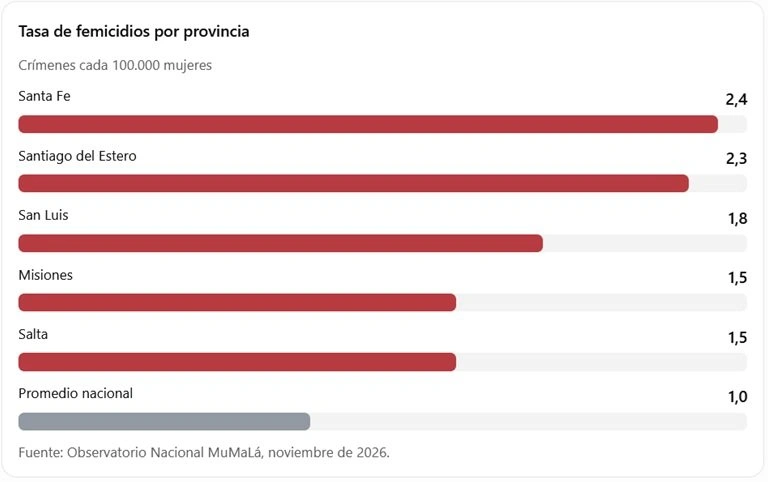
The text reads, “Femicides by province”
Chilean legal expert Patsilí Toledo Vásquez is intimately familiar with this issue. She is one of two Latin American members of the United Nations committee that oversees the implementation of the Convention on the Elimination of All Forms of Discrimination against Women (CEDAW)—which also encompasses violence against women—a treaty ratified by 189 states. Furthermore, she serves as co-chair of the committee’s Working Group on Gender-Based Violence against Women.
In an interview with EFE, she assessed the outlook for the future: “I believe there are a great many challenges. We must stop viewing violence against women as an individual problem or merely a collection of isolated cases. We need responses from the justice system, but also from the fields of education, healthcare, social services, the corporate sector, the media, and the cultural sector. As long as we continue to think that violence against women is a ‘women’s problem,’ we will not be able to combat it effectively,” she noted.
From teleSUR English via This RSS Feed.