

Caracas (OrinocoTribune.com)—The Venezuelan government published on Tuesday, November 24, its new national economic program, Venezuela Renace (Venezuela Reborn), a 97-page document establishing economic policy objectives and macroeconomic projections through 2036. The program promises to recover the purchasing power of workers and pensioners, restore public services, restructure the country’s foreign debt, and accelerate economic growth.
The plan comes almost 11 months after the January 3 US military aggression against Venezuela and the kidnapping of President Nicolás Maduro and First Lady Cilia Flores. Since then, international financial institutions that had excluded Venezuela for years have drastically changed their approach toward the country, resuming cooperation and exploring new financing mechanisms, thus generating anxiety among many Venezuelans.
The last relatively comprehensive economic program announced by Venezuela was the Economic Recovery, Growth and Prosperity Program launched by President Maduro in 2018. Despite being denounced as neoliberal by sectors of the Venezuelan left, including the Communist Party of Venezuela (PCV), the measures introduced under that program helped lay the foundations for the economic recovery that began in 2021 amid the devastating effects of illegal US sanctions.
As reported by Orinoco Tribune, Venezuela registered 22 consecutive quarters of economic growth by the third quarter of 2026. Nevertheless, according to the new government’s economic document, Venezuela’s real GDP in 2025 represented just 36.3% of its 2012 level.
The new program establishes four pillars: economic growth, fiscal sustainability, monetary and financial reform, and economic governance. Its implementation is divided into three phases:
• Normalization (first 12 months): Macroeconomic stabilization, exchange rate unification, debt restructuring, subsidy reform, and urgent reconstruction following the June earthquakes.
• Recovery (one to three years): Expansion of oil production, opening of public services to private investment, infrastructure rehabilitation, and implementation of fiscal reforms.
• Diversification (beyond three years): Expansion of non-oil industries, consolidation of monetary and fiscal reforms, and establishment of a sovereign wealth fund.
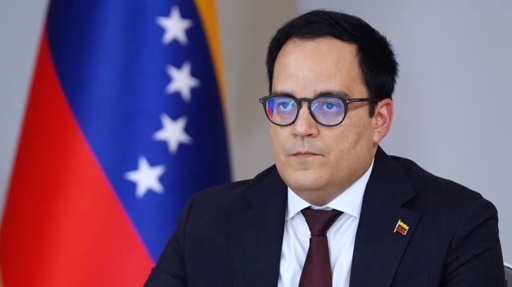
Economic recovery, salaries, and public servicesIn a televised address on Tuesday, Venezuelan Economy Vice President Calixto Ortega explained that the program’s central objective is to improve workers’ incomes through economic growth, macroeconomic stability, and Venezuela’s reintegration into the international financial system.
Ortega forecast economic growth between 5% and 6.5% in 2026 and an annual average of 6.3% over the next decade. According to the document, Venezuela’s nominal GDP would increase from $98.1 billion in 2025 to $200.9 billion in 2031 and $290.6 billion in 2036.
The document projects that Venezuela’s real GDP will reach 55.8% of its 2012 level in 2031 and 71.3% in 2036.
One of the most significant projections for Venezuelan workers is contained in the document’s technical annex (page 87). The government expects average monthly public-sector remuneration to increase from approximately $200 in January 2026 to $561 by 2032.
The document does not establish specific targets for the minimum wage or individual pensions, nor does it clarify the extent to which salary recovery will entail incorporating existing bonuses into regular salaries, an important demand of Venezuelan workers given the implications for their labor benefits.
The program also acknowledges the deterioration of several social indicators:
• Approximately 3.9 million children and young people were outside the education system in 2025.
• Educational coverage among people aged three to 24 declined from 73% in 2014 to 64% in 2025.
• Informal employment represented 54.5% of total employment in 2023.
• Life expectancy declined from 73.1 years in 2012 to 72.7 years in 2024.
The vice president also promised investment in schools, improved working conditions for teachers, technical and university education, and housing opportunities for families that do not own a home.
Oil production and foreign investmentThe plan identifies hydrocarbons as the principal driver of Venezuela’s economic recovery over the coming years. Oil production is projected to increase from 1.21 million barrels per day in 2026 to 2.27 million in 2031 and 2.91 million in 2036.
Ortega said that foreign partners would assume most of the $160 billion in oil-sector investment projected through 2036, facilitated by the January reform of the Organic Hydrocarbons Law and the expansion of Productive Participation Contracts (CPPs).
According to Ortega, these investments would generate an average of 323,000 jobs annually between 2026 and 2031 and result in annual purchases of approximately $3.5 billion from Venezuelan suppliers.
The document nonetheless assumes that foreign oil and gas corporations will repatriate all their operating cash flows through dividend distributions. Hydrocarbon-related dividend outflows are projected to increase from 3.8% of GDP in 2026 to 6.8% in 2031.
This raises questions about how much of the anticipated oil revenue will remain available to finance Venezuela’s social and economic development.
Inflation and exchange rate unificationOrtega announced that the government is working with the Central Bank of Venezuela (BCV) to unify the exchange rate and reduce inflation to double digits in the short term.
The document projects the following annual inflation rates at year-end:
| Year | Projected inflation |
|---|---|
| 2026 | 309% |
| 2027 | 72% |
| 2028 | 32% |
| 2031 | 24% |
| 2036 | 24% |
The proposed exchange rate reform seeks to eliminate the disparity between the official BCV exchange rate and alternative currency markets, eventually allowing the exchange rate to reflect supply and demand.
The unification of exchange rates could require a substantial devaluation of the bolívar’s official exchange rate unless the increased availability of foreign currency reduces the existing disparity, economists claim.
The plan also proposes reinforcing the BCV’s operational independence, restricting monetary financing of public expenditures, and introducing an inflation-targeting framework.
Foreign debt restructuring and transparencyThe government estimates that the total identified liabilities of Venezuela’s public sector reached $237.5 billion at the end of 2025, equivalent to 242% of GDP.
According to the document, these liabilities include:
- $116.5 billion in bonds, bank loans, and other commercial financial obligations.
- $67.3 billion in non-financial obligations associated with PDVSA.
- $26.3 billion in international arbitration awards.
- $23.3 billion in bilateral debt.
- $4.2 billion in multilateral debt.
Almost $46 billion of the outstanding $110.1 billion in international bonds corresponds to accrued interest rather than original principal.
Ortega announced that the debt restructuring process would be guided by sustainability, comprehensiveness, good faith, transparency, and speed.
However, Venezuelan political leaders have questioned the figures circulated in recent months. On November 16, opposition politician Claudio Fermín denounced as false the claim that Venezuela owes $240 billion, warning that paying an inflated debt would deprive Venezuelans of resources needed for their well-being.
Fermín had previously demanded a transparent audit before any restructuring agreement, questioning the interests of financial corporations, bondholders, and the firms hired to advise Venezuela during the process.
Such an audit would be particularly relevant given the accumulation of interest and penalties following the US financial sanctions imposed in 2017, which prevented Venezuela from refinancing its international obligations.
Another important commitment announced by Ortega was the regular publication of economic growth, budget, and public debt figures.
Over the past six years, under the framework of the Anti-Blockade Law approved in October 2020, Venezuelan authorities opted to keep substantial portions of the country’s macroeconomic and financial information confidential to protect the economy from US financial warfare. The resulting lack of transparency, however, also limited Venezuelans’ ability to scrutinize public finances.
Subsidy reductions and privatization risksBeyond the government’s announced objectives, several measures contained in the technical annex raise concerns about the potential social costs of the plan.
The document projects a drastic reduction in hydrocarbon subsidies, including those for domestic gasoline, diesel, and natural gas.
According to the plan, these subsidies will decline from 5.3% of GDP in 2026 to just 1.3% in 2028 and 0.8% in 2036. This suggests that a substantial reduction of domestic fuel subsidies could occur within the next two years.
Although the government proposes protecting vulnerable households through targeted social transfers, analysts claim that higher fuel prices could increase transportation, food distribution, electricity generation, and other production costs, placing additional inflationary pressure on an already impoverished working class.
Similarly, a major devaluation resulting from exchange rate unification, if not carefully managed and accompanied by corresponding salary adjustments, could further erode workers’ purchasing power, they explained.
The plan also projects what it describes as a considerable fiscal adjustment by international standards. Primary public expenditure would decline from 29.7% of GDP in 2026 to 25.3% in 2031, while non-oil tax revenue would increase significantly.
Particularly concerning for sectors of Chavismo is the explicit proposal to corporatize and open electricity, water, transportation, and other public services to private capital through concessions and public-private partnerships.
Last week, Acting President Delcy Rodríguez promulgated the reform of Venezuela’s electricity law, allowing private participation in several activities previously reserved for the public sector.
Nevertheless, the expansion of private participation via covered or open privatization, raises concerns about potential increases in public utility tariffs, particularly for Venezuelans who continue to receive severely depressed salaries and pensions.
These measures coincide with Venezuela’s renewed cooperation with the International Monetary Fund (IMF), the World Bank, and the Inter-American Development Bank (IDB), institutions whose historical promotion of privatization and fiscal austerity in Latin America has provoke social unrest and working class conditions deterioration.
Although the document does not constitute a formal IMF adjustment program, several of its provisions resemble policies traditionally promoted by the Washington-based institution.
Delcy Rodríguez Promulgates Electricity Law Reform, Announces 84 Oil and Gas Agreements
For Venezuelan workers and the Chavista grassroots, the success of the new economic program will depend not only on oil production, foreign investment, and GDP growth, but also on the recovery of real wages, labor rights, affordable public services, and the preservation of the social achievements of the Bolivarian Revolution.
Special for Orinoco Tribune by staff
OT/JRE/XX
From Orinoco Tribune via This RSS Feed.