

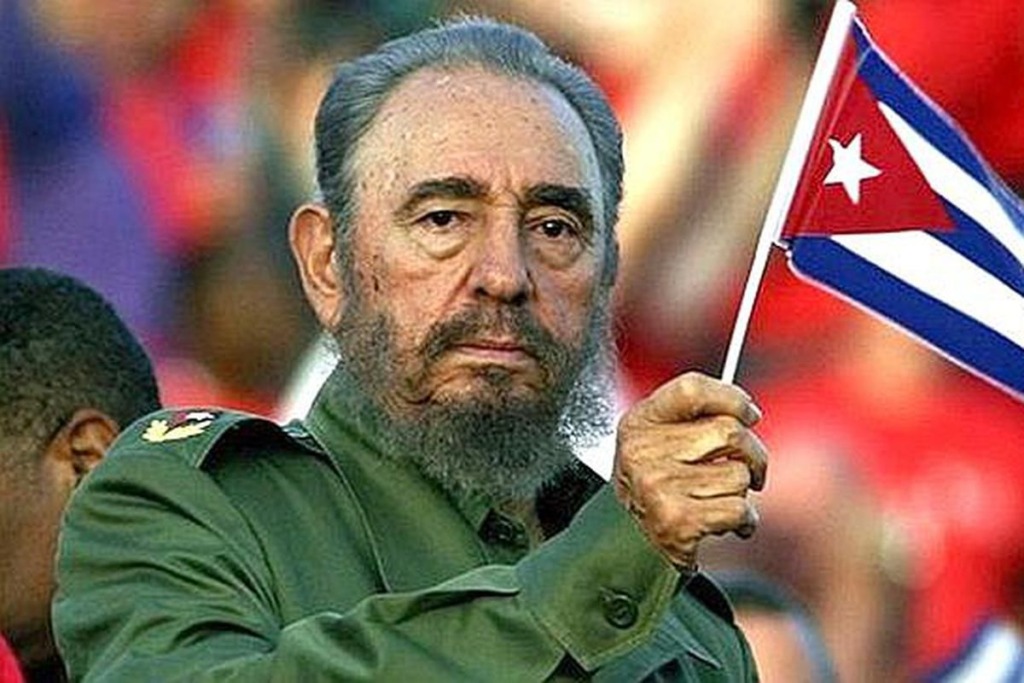
On November 25, Cuba marks the tenth anniversary of the passing of the historic leader of the Revolution, Fidel Castro Ruz, with a program of political, academic, and cultural activities aimed at highlighting the enduring relevance of his thought and legacy.
This date coincides with the centenary year of his birth—celebrated throughout 2026 through initiatives dedicated to studying and disseminating his work, which began with the revolutionary process in January 1959.
A key moment in the centenary commemorations took place in August 2026, when the 100th anniversary of Fidel Castro’s birth was marked by a political-cultural event in Havana and the closing of the International Colloquium: “Fidel: Legacy and Future.”
That gathering brought together representatives from dozens of countries. On that occasion, Cuban President Miguel Díaz-Canel described the revolutionary leader as a man of justice for humanity and underscored the continued relevance of his ideas, which inspire struggles for sovereignty, social justice, and solidarity among peoples.
Honor Beyond the Military Uniform
To mark the tenth anniversary of his passing, cultural, educational, and scientific institutions are hosting an extensive program this week—including exhibitions, lectures, book presentations, documentary displays, and artistic activities—across various provinces of the country.
Notable initiatives include the exhibition Fidelities (“in spanish Fidelidades”), which focuses on political caricature; the bibliographic exhibition Fidel in Our America; and various projects centered on the study of his thought and revolutionary trajectory. The program also includes meetings with students and young people—a demographic to which Fidel Castro always paid close attention, and whom he frequently described as the ones who would carry on the revolutionary cause.
At the University of Oriente (UO), the workshop “The Power of Truth and Ideas” is being held—a forum for reflection that includes panels titled “Fidel and Science” and “Fidel and the Youth at the University of Oriente,” led by faculty members holding doctoral degrees from the institution. Additionally, this Tuesday, November 25, a University Vigil is taking place in Julio Antonio Mella Plaza.
The schedule of activities continues on Monday the 30th with the commemoration of the 70th anniversary of the city’s armed uprising, led by Frank País—an event that preceded the landing of the yacht Granma.
Fidel Castro’s legacy is tied to anti-colonial struggles, national liberation movements, and efforts toward Latin American and Caribbean integration, as well as to the advocacy for a more equitable international order for the nations of the Global South.
As part of the activities planned for this November 25, the traditional evening tribute to the Commander-in-Chief was scheduled to take place on the steps of the University of Havana. However, authorities decided to reschedule it for November 26 due to deteriorating weather conditions, brought on by the formation of a low-pressure system and the arrival of a cold front over the western part of the country.
The news of Fidel Castro’s passing emerged on the night of November 25, 2016. The announcement spread across the island, crossed borders, and elicited reactions from millions of people. Years later, his name remains present in the memory of Cuba and in international debates.
Prime Minister Manuel Marrero Cruz remarked: “From the realm of immortality, Fidel continues to lead our battles, pointing out challenges and driving every victory. Fidel—who embodies both example and the future, sheer will and the people themselves; Fidel, who is Cuba—lives on and multiplies through our capacity to overcome.”
Desde la inmortalidad #Fidel sigue comandando nuestras batallas, señalando los desafíos, impulsando cada victoria.
Fidel, que es ejemplo y porvenir, voluntad y pueblo; Fidel, que es #Cuba, vive y se multiplica en nuestra capacidad de vencer.#100AñosConFidel pic.twitter.com/TEMo9E7f6M
— Manuel Marrero Cruz (@MMarreroCruz) November 25, 2026
The text reads, “From the realm of immortality, Fidel continues to lead our battles, pointing out the challenges, and driving every victory forward. Fidel—who embodies both example and future, sheer will and the people themselves; Fidel, who is Cuba—lives on and multiplies within our capacity to triumph.”
The Mark of a Universal Leader
Examining his legacy requires looking back at the events that led to the revolutionary triumph of January 1, 1959. The Moncada, his imprisonment, exile, the Granma landing, and the Sierra Maestra were all part of a trajectory that placed him at the forefront of the Cuban Revolution. In the years that followed, initiatives such as the Literacy Campaign, the expansion of education and public health, agrarian reform, and the development of science and culture were set in motion.
On the international stage, Cuba became a significant voice. The Bay of Pigs invasion, the October Crisis, the confrontation with the United States, and participation in the debates of the Non-Aligned Movement shaped a foreign policy focused on defending sovereignty and independence, and on ensuring a greater role for nations in global decision-making.
Fidel Castro was a leader, a strategist, and an orator. His leadership took shape within a specific historical context. As we mark this anniversary, we are invited to study his ideas, acknowledge his contributions, and examine the circumstances under which he exercised his leadership.
For Cuba, his legacy is tied to the defense of sovereignty, social justice, education, public health, and international solidarity. Globally, he remains a key reference point regarding the self-determination of peoples and the resistance of smaller nations against major centers of influence.
Generations who did not know him personally have a responsibility to approach his history with a well-informed perspective. A legacy is passed on and enriched when aspirations are transformed into reality. Ten years after his passing, Fidel Castro remains a part of Cuba’s collective memory and of contemporary history. His name belongs to an era and a nation whose history cannot be explained without him.
The Cuban Foreign Ministry noted: “Ten years after his physical passing, Fidel remains in the hearts of his people and in every one of their struggles. His legacy of solidarity, justice, and the defense of sovereignty stays with us.”
From teleSUR English via This RSS Feed.