

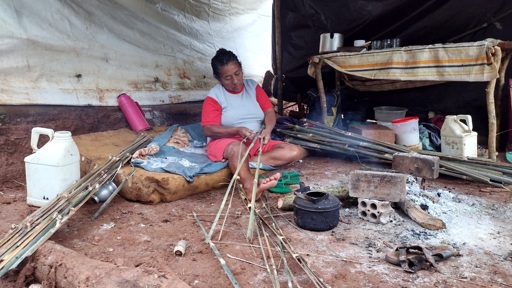
PITANGA, Brazil — Since February 2025, around 300 Indigenous Kaingang people have been living in rural Pitanga, a municipality in central Paraná, Brazil. Camping in a wooded area on private property, they survive in makeshift shelters covered with tarpaulins, without electricity or running water. The camp is not a village. Displaced residents describe it as a temporary shelter that seems to be turning into a permanent home with each passing day. Conditions at the camp are precarious. Families shelter under plastic tarpaulins battered by constant storms associated with El Niño, which further worsen their living conditions. Hunger is also part of daily life. The families’ only steady income is Bolsa Família, a federal welfare benefit, which runs out long before the end of the month. Job opportunities are scarce. Farms across the region have spent years replacing manual laborers with machinery for planting and harvesting. Finding work in downtown Pitanga is hardly an easy alternative: The daily round trip covers more than 40 kilometers (25 miles), most families have no car, and there is no public transportation serving the rural area where the camp is located. The roughly 300 people living at the Pitanga camp were forcibly driven from their village in January 2025. Unlike in other parts of Brazil, they were not expelled by agribusiness. According to the residents, they were driven out by members of their own people amid a conflict that has dragged on for nearly three years and stems from a practice prohibited by law but…This article was originally published on Mongabay
From Conservation news via This RSS Feed.