

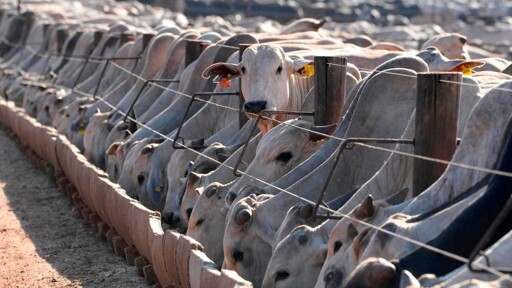
Cargill, one of the world’s largest agribusiness companies, says it’s prepared to comply with the European Union’s new antideforestation law when it takes effect at the end of this year. But a recent investigation has found that the company has been simultaneously working behind the scenes to weaken the law and delay its implementation. The EU Deforestation Regulation (EUDR), scheduled to take effect for large and medium operators Dec. 30, will require companies to prove certain commodities aren’t sourced from land that was deforested after 2020. Cargill has lobbied against the law while publicly claiming to be prepared for its implementation, according to an investigation by Earthsight, an environmental nonprofit based in the U.K. “While publicly positioning itself as EUDR-ready, the agribusiness giant has been using a network of trade associations, parliamentary forums, business chambers and public affairs consultancies to push for changes to the law,” the investigation said. Cargill is one of the world’s largest traders of soy, beef, palm oil, and cocoa — all commodities subject to the EUDR once it goes into effect. In 2025, the company said it had mapped its direct suppliers in Argentina, Brazil, and Uruguay. It also said all soy from those countries would be deforestation- and conversion-free by the end of that year. But Earthsight’s investigation, published Nov. 10, uncovered Cargill’s campaign to influence policymakers in the other direction. In a series of meetings with European Commission officials and their staff in 2025 and 2026, it raised concerns about food shortages caused…This article was originally published on Mongabay
From Conservation news via This RSS Feed.