

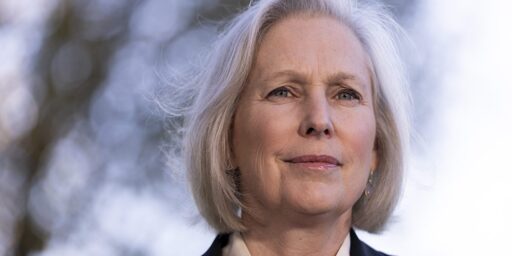
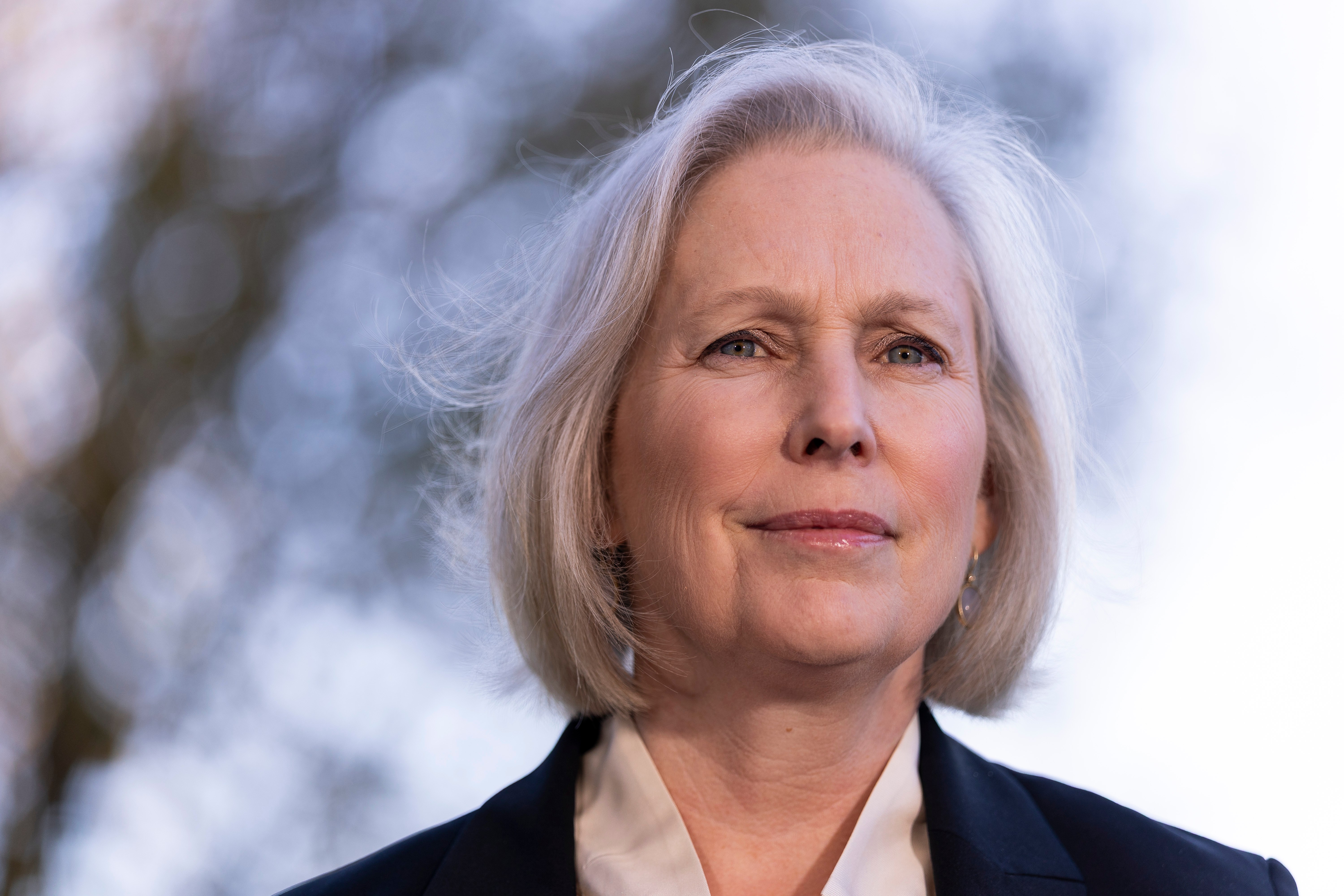
Sen. Kirsten Gillibrand, D-N.Y., during a press conference outside of the U.S. Capitol on Nov. 19, 2026, in Washington, D.C. Photo: Finn Gomez/Getty Images
The stakes in 2028 couldn’t be higher for Democrats. Americans see the party as likely to win the White House after another two years of Donald Trump, especially given his historic unpopularity, and Democratic leadership will look to further expand their majorities in Congress.
How the Democratic Party selects candidates and develops strategy is going to have an outsized effect on the overall results — and the direction of the country.
After Senate Democrats elect their leader for the next two years on December 1, Chuck Schumer or Chris Van Hollen will have the opportunity to name the next head of the Democratic Senatorial Campaign Committee. It’s a powerful role: Whoever’s chosen will have an outsized voice in what kind of candidates run in 2028 and how much support they get.
New York Sen. Kirsten Gillibrand, a close ally of Schumer and a loyal member of the party’s pro-business wing, is making her case to remain DSCC chair for a second two-year term. On the face of it, she has a lot to commend her record: nine flipped seats in the 2026 midterms and a new majority that is likely to extend to 2030. It’s inarguable that under her leadership, the DSCC saw major gains.
[
Related
The Future Is Bright for the Democrats, as Long as They Don’t Have to Interact With the Public](https://theintercept.com/2026/11/16/democrats-whats-next-denver-2028/)
Yet Gillibrand’s political instincts have, at times, threatened electoral success. Her tenure at DSCC has been marked by pushing ideological preferences, and candidate choice from her and Schumer has been a mixed bag.
While Gillibrand and the DSCC can point to real success stories like James Talarico in Texas and Mary Peltola in Alaska, they also backed Haley Stevens in Michigan, a charisma void who turned on the Democratic nominee, Abdul El-Sayed, in the last days of the race allegedly over his views on Israel.
Even in cases when her instincts are right, Gillibrand struggled to exercise her influence for material effect.
In Maine, the DSCC and establishment Democrats recruited Gov. Janet Mills, a 78-year-old with little interest in running, whose campaign against progressive upstart Graham Platner failed to launch. That was true even despite the many glaring deficiencies that ultimately doomed Platner’s candidacy and saw him replaced with ultimate general election winner Troy Jackson (whom Mills declined to endorse outright).
Even in cases when her instincts are right, Gillibrand struggled to exercise her influence for material effect. In Florida, left-wing Democratic Socialists of America member Angie Nixon came within 2 percentage points of winning the state’s Senate seat. Gillibrand, alongside Schumer, donated $5,000 each from their own leadership PACs and urged other senators to do the same — but couldn’t get the party overall to commit cash when it could have mattered.
The Democratic Party is not a monolith bringing together moderates and progressives into a general left-of-center umbrella. There are, necessarily, compromises for those in the tent, as Third Way Democrats are in coalition with DSA members.
After a blue-wave election, it’s important for party leaders to keep both sides happy as much as possible — within reason. The current push and pull and jockeying for position is leading to some dubious assertions of success metrics that the next DSCC chair will need to keep a clear head about.
Polling decisively showed Americans want action on the economy, healthcare, and the war with Iran. Over and over again, the public has made its priorities clear about accountability: Many voters in Texas were motivated this year because of the brutality of the administration’s immigration crackdown; voters also named “corruption” as a top concern.
Given those concerns, a role in leadership for someone like Gillibrand raises questions. The senator’s coziness with the crypto industry has drawn criticism as sector heavy-hitters poured over $196,000 in campaign donations to her in 2026 alone, by far the most for a candidate or officeholder in New York state.
This summer, Gillibrand’s son, Theo, started a financial exchange at age 22. He quickly took on investments from powerful financial operatives like crypto billionaire Chris Larsen and Palmer Luckey, founder of Anduril Industries, among others.
[
Related
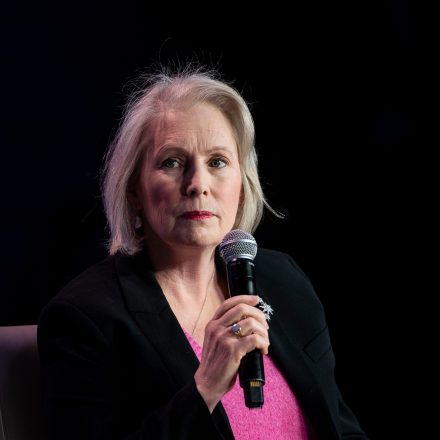
Crypto Darling Gillibrand’s 11th-Hour Flip-Flop Helps Block Trump Crypto Bill](https://theintercept.com/2026/09/15/congress-trump-crypto-clarity-blocked/)
Gillibrand has legislated in lockstep with industry interests and repeatedly publicly defended crypto —even, in 2022, analyzing the feasibility of investing retirement plans in the currency market. As The Intercept reported in July, she was a lead negotiator in the crypto industry-favored legislation known as the Clarity Act, which would have allowed Wall Street to directly invest in the currency. The bill stalled out in the Senate in September despite her best efforts.
It’s hard to see a context in which it makes sense to send the message that corruption will continue, just as long as it’s our team doing it. But with Gillibrand at the head of the DSCC, that’s exactly what voters will hear in the next election cycle. The New York senator simply isn’t the right leader for the moment.
DSCC vice chairs Adam Schiff, Lisa Blunt Rochester, and Mark Kelly seem to be the three most likely alternatives, and all bring with them their own baggage. But they can plausibly claim a break with the existing do-nothing-Dem approach aimed more at personal enrichment and out-of-touch ideological commitments than Gillibrand can.
Newly elected Democrats understand the need for change and have almost uniformly rejected calls to continue the status quo by backing stale leadership in the Senate. Whether their efforts to change the face of the party in the chamber succeed or not, first-term Democrats are going to be more attuned to the concerns and priorities of the voters who sent them to Washington.
Senate leaders should listen to them. Democrats have an opportunity to show the public they heard the change message on Election Day.
Sticking with Gillibrand won’t help get that across to voters.
The post It’s Time to Ditch Kirsten Gillibrand appeared first on The Intercept.
From The Intercept via This RSS Feed.
They really buried the lede
The so-called moderates in the Democratic party hinder the FDR Democrats(AKA DSA and Progressives) because FDR Democrats have three agenda items that threaten the so-called moderates: anti-corruption, universal healthcare and no more support for Israel.
The so-called moderates sold us out for personal gain, it’s that simple.