

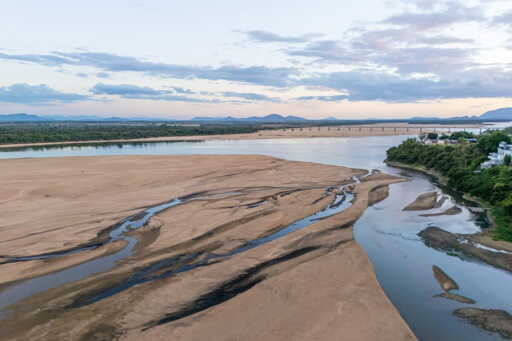
A third El Niño-fueled drought since 2015 has pushed river levels in Roraima, Brazil’s northernmost Amazonian state, to critical lows. Severe drought affected 95% of the state in October, up from 47% in September, according to Brazil’s federal water agency, ANA. Roraima’s main river, the 775-kilometer (482-mile) Branco River, has dwindled, exposing large stretches of sand. People are now able to walk beneath the Macuxis Bridge in Boa Vista, the state capital, local media reported. Upstream, two smaller rivers that feed the Branco, the Tacutu and the Maú, dropped earlier and faster than usual, the water agency said. On Nov. 10, the agency declared a critical water shortage until April 30, 2027, for both rivers, which run through Indigenous territories, including Raposa Serra do Sol and Jacamim. “The trend is still toward a continued decline in water levels in the Branco River basin,” the agency said in a statement, warning of potential disruptions to navigation and water supplies. Between Nov. 16 and 22, Roraima’s fire brigade and disaster response agency took boats with food, medicine, fuel, and water pumps to seven isolated villages along the lower stretch of the Branco, the state government said in a statement. The teams needed shallow-draft boats, piloted by locals, to reach them. In Caicubi, a village with no road or airstrip, some people were stranded for about two weeks. Farther downstream, in Panacarica, the river dried up entirely, and residents had to walk up to 2 km (1.2 mi) to fetch water. Firefighters deliver…This article was originally published on Mongabay
From Conservation news via This RSS Feed.