

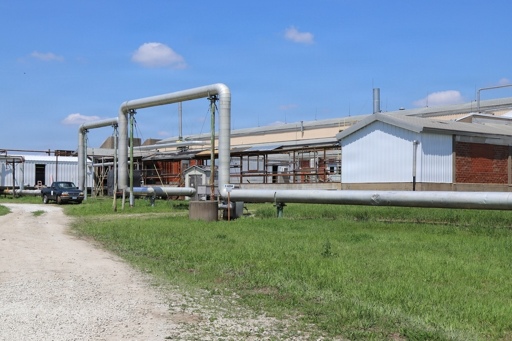
MIDDLETOWN, Iowa (AP) — The U.S. Army says it plans to detonate its entire stockpile of lead azide in Iowa on Wednesday morning, warning that the dangerously degrading bomb-making chemicals could spread toxic lead within the area. Officials sought to assure residents Tuesday that they’ve taken steps to put barriers around the blast zone and limit the plume from the detonation. “We don’t believe that the public should be in a panic,” said Acting Secretary of the Army Adam Telle. The controlled detonation of five tons of degraded lead azide at the Iowa Army Ammunition Plant in Middletown has set off concerns about potential health and environmental effects and frustration over a lack of information. By Laura Bargfeld and Susan Montoya Bryan, Associated Press Banner image: This photo provided by the U.S. Army shows the Iowa Army Ammunition Plant in Middletown, Iowa, on May 14, 2024. Image courtesy of Shawn Eldridge/U.S. Army via Associated Press. This article was originally published on Mongabay
From Conservation news via This RSS Feed.
we don’t believe the public should be in a panic
Says the administration who grew up eating lead paint chips and inhaling lead gas fumes.
In March of this year, the Army said it discovered that 68 drums of lead azide at the site had started “recrystallization.” The lead was stored in bunkers at the Iowa Army Ammunition Plant, a munitions plant built in 1941, which produces quality medium- and large-caliber munitions.
Lead azide is a highly sensitive primary initiating explosive. Due to its extreme sensitivity, even minor external triggers, such as sparks, open flames, friction or pinpricks, can detonate it.
The recrystallization of lead azide can have a high risk of spontaneous explosion, which the EPA said creates a highly unstable and dangerous situation.
Additionally, cold weather would further destabilize the explosive materials. Justine Barati, a public affairs specialist at Army Sustainment Command, told CBS News Chicago that the risk of accidental detonation increases in cold weather.
This is the stuff the primer in bullets is made of. It’s designed to go off when hit with the hammer or pin of a gun when the trigger is pulled, that’s not even enough force to bruise your finger in most guns. And that’s when it’s stable.
It’ll blow if they leave it there, if they move it, if they bury it, if it gets too cold, if the air gets too dry, if it gets even slightly bumped, or if it gets too warm.
The problem was manufacturing and subsequently storing this shit to begin with. There’s no solution now that doesn’t risk a massive explosion, so exploding it all on purpose is the least bad solution.
