

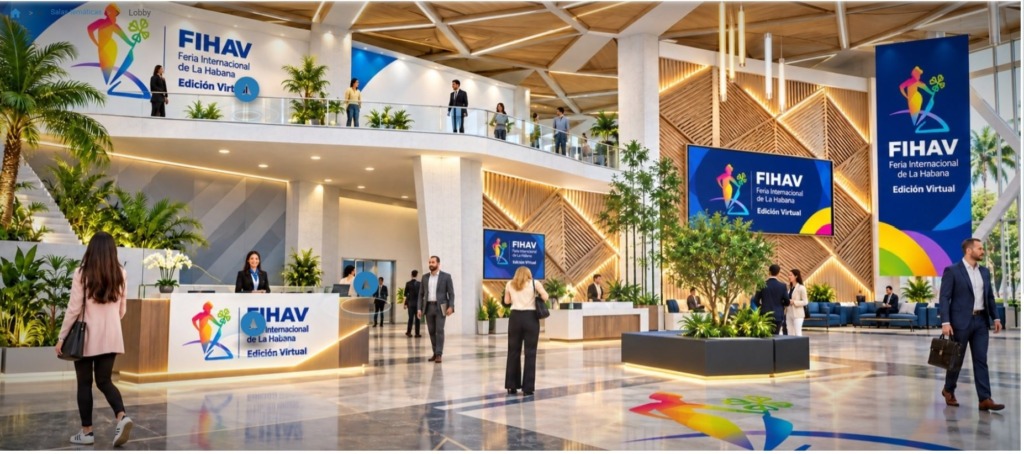
On Tuesday, Cuba inaugurated the 42nd Havana International Fair (FIHAV 2026), a strategic event designed to promote business opportunities, strengthen commercial ties, and attract foreign investment.
During the opening ceremony, the Cuban government announced that a new Foreign Investment Law would be presented to the National Assembly of People’s Power this coming December. This initiative aims to establish a more streamlined and transparent regulatory framework that provides legal safeguards for investors.
RELATED:
Cuba Approves Tax Incentives to State-Owned and Private Companies
Speaking at the opening, Deputy Prime Minister and Minister of Foreign Trade and Foreign Investment, Oscar Pérez-Oliva, placed the event within the context of current economic challenges. He denounced the intensification of the economic, commercial, and financial blockade imposed by the United States, as well as the restrictions resulting from an energy siege.
Specifically, he noted that U.S. executive orders issued on January 29 and May 1, 2026, threaten to impose tariffs on countries that supply fuel to Cuba and include sanctions against foreign companies, banks, and entities that maintain relations with the island. Pérez-Oliva warned that these measures directly affect the population and hinder the operations of the national economy, foreign trade, and banking transactions.
FIHAV 2026: un mundo de oportunidades, una feria que impulsa el futuro. pic.twitter.com/x1ZAjiuugA
— MINCEX🇨🇺 (@MINCEX_CUBA) November 16, 2026
The text reads, “FIHAV 2026: a world of opportunities, a trade fair that drives the future.”
Despite this situation, the minister affirmed that the hosting of FIHAV 2026 demonstrates Cuba’s commitment to economic development. As part of ongoing transformations, he detailed the implementation of 176 economic and social measures aimed at revitalizing the economy through the participation of various stakeholders.
Regarding foreign investment in Cuba, the country is simplifying bureaucratic procedures and reducing the time required for administrative processes. The new opportunities encompass projects in the real estate, banking, financial, commercial, and tourism sectors, as well as frameworks that allow for partnerships between foreign companies and Cuban private or cooperative entities, while also encouraging the participation of citizens residing abroad.
The government also underscored the need to attract capital for projects in technology and renewable energy—key components for sustainable mobility. Regarding foreign trade, the focus was placed on opening access to this sector for all economic actors on equal terms.
Encuentro de negocios con cubanos residentes en el exterior en el marco de la Feria Internacional de la Habana #FIHAV2026 pic.twitter.com/kXbI3dGIZY
— MINCEX🇨🇺 (@MINCEX_CUBA) November 24, 2026
The text reads, “Business meeting with Cubans residing abroad, held within the framework of the Havana International Fair”
The fair, which runs until November 26 under the slogan “Cuba Open to the World,” is being held in a hybrid format, featuring both virtual and in-person activities. The first day includes showcases of products “Made in Cuba,” demonstrations of artificial intelligence, and national pavilions.
The agenda continues to emphasize the energy transition and the strengthening of an export offering with added value. “Cuba’s doors are open to the world,” concluded Pérez-Oliva, as he declared the event officially open.
From teleSUR English via This RSS Feed.