

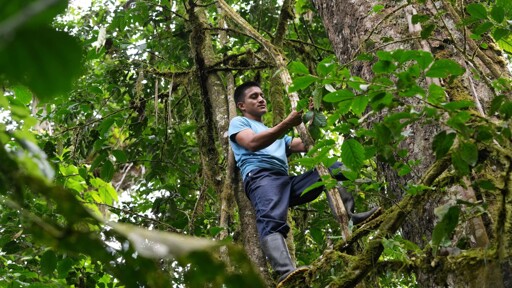
The government of Ecuador has approved a new 10-year plan to promote economic activities that make use of the country’s biological resources, while also taking steps to conserve the ecosystems that they rely on. It aims to innovate agribusiness, ecotourism, and other industries in rural areas, without threatening the environment or Indigenous communities. The National Bioeconomy Strategy, approved on Oct. 29 and to be implemented through 2036, is billed as a new development model that will “align the country’s biological wealth with production, innovation, science and technology.” “Ecuador faces a historic opportunity to redefine the direction of its development, pursuing a model that reconciles natural wealth, territorial equity and innovation with the well-being of its people,” the strategy says. Other parts of the world already have robust bioeconomy strategies. The European Union generates billions of dollars from sustainable farming practices, biomass management, and biotechnology research. In Latin America, the bioeconomy programs in Colombia and Costa Rica have developed ecotourism with Indigenous communities and improved waste management practices in the private sector, among other initiatives. A hammerhead shark nursery in Santa Cruz, Galapagos Islands, Ecuador. Image via Galapagos National Park Photo via AP, File By comparison, Ecuador’s bioeconomy projects are more “scattered” and “isolated,” the strategy acknowledges. The next 10 years will be largely devoted to identifying financing sources for future projects and improving coordination between different parts of the government. The plan doesn’t provide an exact financing figure. “Ecuador aims to have a robust bioeconomy operating within a regulatory framework…This article was originally published on Mongabay
From Conservation news via This RSS Feed.