


On Tuesday in Brasília, regional authorities are debating priorities for cooperation in science, technology, and innovation during an event convened by the Economic Commission for Latin America and the Caribbean (ECLAC).
RELATED:
ECLAC to Promote Climate Adaptation as a Development Strategy at COP-31
The Fifth Meeting of the Conference on Science, Innovation, and Information and Communications Technologies is hosted by Brazil’s Ministry of Science, Technology, and Innovation and brings together government representatives and officials from international organizations.
The meeting aims to strengthen regional coordination in these areas and define the lines of work and spheres of cooperation that will shape the agenda for the next two years. During the sessions, the international body will present a position paper titled “Science, Technology, and Innovation Policies for Sustainable and Inclusive Productive Development: Challenges, Regional Coordination, and Guidelines for the 2027–2028 Period.”
🤝 La cooperación en ciencia, tecnología e innovación es clave para impulsar un desarrollo más productivo, inclusivo y sostenible en América Latina y el Caribe.
La Quinta Reunión de la Conferencia de Ciencia, Innovación y #TIC fue inaugurada en Brasilia 🇧🇷 por José Manuel… pic.twitter.com/oqB78ic7yh
— CEPAL (@cepal_onu) November 24, 2026
The text reads, “Cooperation in science, technology, and innovation is key to fostering more productive, inclusive, and sustainable development in Latin America and the Caribbean. The Fifth Meeting of the Conference on Science, Innovation, and ICTs was inaugurated in Brasília 🇧🇷 by José Manuel Salazar-Xirinachs (@JoseMSalazarX), Executive Secretary of ECLAC (@cepal_onu), alongside Marlova Jovchelovitch Noleto, Director and Representative of UNESCO in Brazil (@UNESCOBrasil); Claudia Benavides (@ClauPBenavides), Minister of Science, Technology, and Innovation of Colombia (@MincienciasCo); and Luciana Santos (@lucianasantos), Minister of Science, Technology, and Innovation of Brazil.”
The document, which will serve as a roadmap, argues that the productive transformation of Latin America and the Caribbean requires aligning policies in these fields with broader productive development strategies and other priority sectors. This can be achieved through concrete objectives, institutions with the capacity to act, and effective implementation mechanisms.
In this context, the document examines the regional architecture for cooperation and emphasizes the importance of countries identifying their own sectoral and technological priorities, leveraging their productive capacities, and coordinating efforts in the face of international competition for leadership in strategic industries.
The agenda includes five panels focused on the governance of science, technology, and innovation; instruments to advance these policies; the integration between universities and businesses; innovation with a territorial focus; and the region’s strategic and technological agendas. Another key item on the agenda is the election of the Conference’s new Executive Committee, as well as the definition of priorities and joint actions for the immediate future.
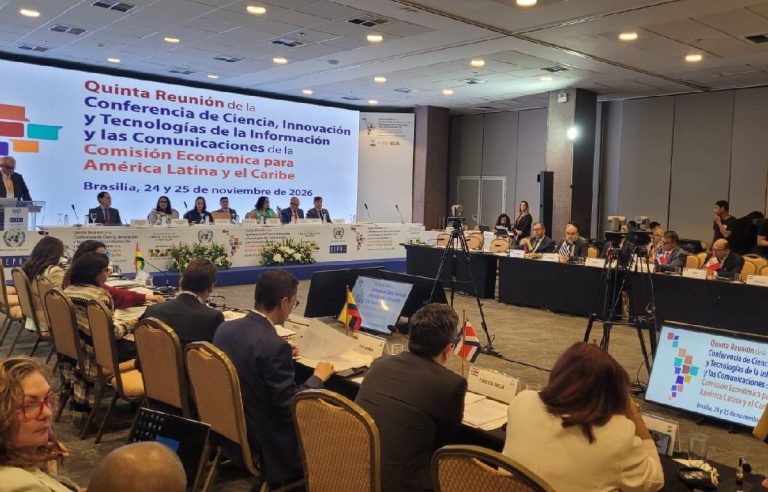
The meeting, held at the Windsor Plaza Hotel in Brasília, will coincide with the Open Science Forum for Latin America and the Caribbean, organized from November 24 to 26 under the leadership of UNESCO.
Since 2012, the Conference has served as the primary, ongoing forum for political and technical dialogue within ECLAC, facilitating the exchange of experiences and the coordination of actions among the authorities responsible for these areas throughout Latin America and the Caribbean.
From teleSUR English via This RSS Feed.