


This article by Carlos Calles appears in the November 2026 issue of Let’s Talk About Migration (Hablemos de Migración), a magazine on migration issues published by the Frente Amplio de Mexicanos y Migrantes. Read and download the full November issue.

Since late 2018, Mesoamerican highways have been the stage for a phenomenon that has drastically transformed the narrative of human mobility: migrant caravans. These mass exoduses captured global attention, not only for their scale but also for representing a bold survival strategy in the face of a historically deadly journey. In the current landscape, marked by increasingly stringent border policies and coercive diplomacy, an unavoidable question arises: are caravans still a viable strategy for collective protection, or are they definitively changing due to controls, deportations, and new restrictions? To answer this question, it is essential to analyze how the externalization of borders is beginning to dismantle a movement born from the instinct for self-preservation.
Originally, the decision to travel in caravans arose as a response to terror and utter vulnerability. Research by the Network for Documentation of Migrant Advocacy Organizations (REDODEM) and the National Human Rights Commission (CNDH) indicates that mass gatherings allowed thousands to confront a journey besieged by kidnappings, extortion, and recruitment by organized crime. Eduardo Torre Cantalapiedra, a researcher at El Colegio de la Frontera Norte (El Colef), argues that these marches, from their inception, constituted a vital source of protection and material support. This collective dynamic facilitated the movement of vulnerable populations—such as single mothers with children, unaccompanied minors, and members of the LGBTQ+ community supported by specialized shelters like Casa Frida in Mexico City— with greater guarantees of survival.
In addition to providing immediate physical security, these marches have historically served as a vital “release valve” against administrative collapse. Numerous journalistic reports and academic studies highlight that transit cities located on Mexico’s southern border, particularly Tapachula in Chiapas, operate in practice as enormous “pressure cookers.” Faced with the dramatic backlog of immigration procedures at the Mexican Commission for Refugee Assistance (COMAR) and the lack of local employment opportunities, mass mobilizations have become the definitive means to break through the state’s containment barrier and demand respect for international asylum law.
Despite the legitimacy of the caravans as a tool for citizen self-defense, the fierce government reaction has eroded their viability. Analytical reports published by the Washington Office on Latin America (WOLA) and extensive reports from the Migration Policy Institute (MPI) indicate that the United States’ constant coercive diplomacy has forced Mexico to undertake strict punitive containment measures, effectively extending the U.S. southern border to the Isthmus of Tehuantepec. Thus, the region’s migration model has rapidly shifted from humanitarian rhetoric to systematic policies of entrapment and outright deterrence.
This metamorphosis becomes undeniably evident in the direct repression of the migrants on the highways. According to alerts issued by the Migration Affairs Program at the Ibero-American University, Mexican authorities such as the National Migration Institute (INM) and the National Guard have deployed violent raids to break up and deport the migrants, an operational tactic consistently observed from 2021 through more recent mobilizations in 2025 and 2026. Direct testimonies gathered by academics and independent journalists in the region reveal institutional tactics of systematic attrition that include everything from military blockades and physical assaults to the sophisticated infiltration of undercover agents, who seek to fracture the internal organization and sow deep discord.
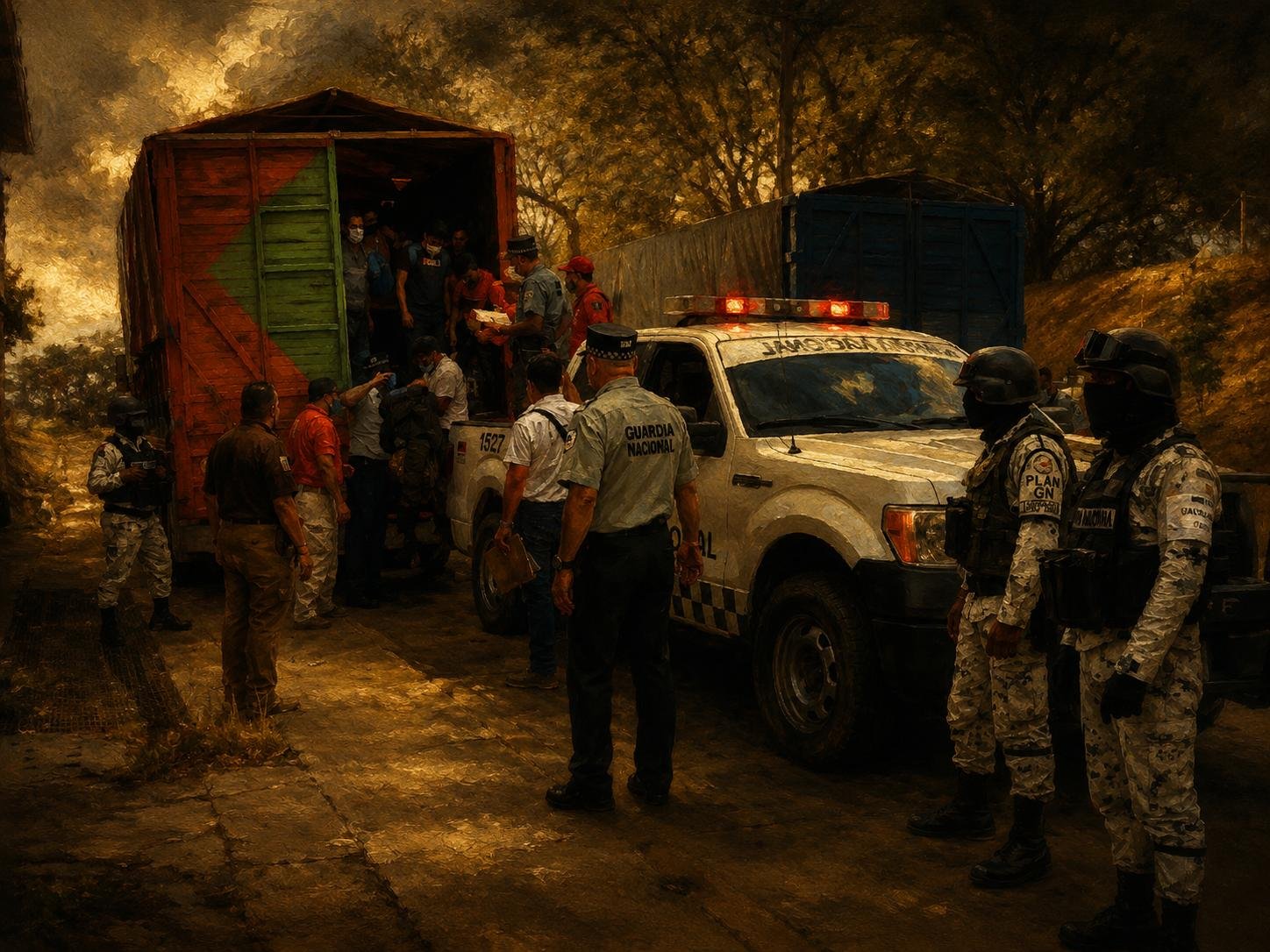
Illustration: Let’s Talk About Migration, November 2026
The most serious consequence of this institutional harassment is the practical elimination of collective protection. Abruptly dispersed in the middle of the road, families are left without communication and far more exposed to the local and transnational predators they were trying to avoid. Intense fear of the authorities themselves, who are frequently accused of having high levels of criminal collusion, drives people to flee along desolate and inhospitable routes. Emergency health organizations like Doctors Without Borders (MSF) tirelessly reiterate that blocking mass migration never eliminates the human desire to migrate; on the contrary, it only increases clinical risk, chronic physical suffering, and total vulnerability to human trafficking networks at the regional level.
Given this suffocating context of institutional repression, the future of the caravans is at a turning point. While the format has not disappeared entirely—as illustrated by some recent mobilizations in southern Mexico seeking to appeal to high-level political junctures and changes—its structural and organizational viability has profoundly mutated due to exhaustion and fear. Demographic experts and civil society organizations unequivocally agree that institutional violence is drastically reshaping the dynamics of migration.
As Mexican security forces refine their protocols for rounding up and dismantling large groups in the first few kilometers of their journey, the caravan loses its greatest tactical and historical advantage: the invulnerability afforded by its size. Consequently, a forced return to invisibility is now evident. Perceiving that walking in a massive group of people guarantees confrontations and deportations, thousands are once again resorting to transnational trafficking networks and the practice of human smuggling.
The migrant caravans, therefore, are ceasing to be that invulnerable shield of collective protection and are instead becoming a sporadic expression of courageous political resistance in the face of humanitarian collapse. New government restrictions, coupled with severe immigration controls and mass deportations, have forced the vast majority of the population in transit back into complete secrecy, dismantling the networks of mutual support that in previous years saved countless lives throughout the treacherous Mexican territory.
This punitive dynamic indirectly strengthens the illicit enrichment of trafficking networks and definitively confirms that forced displacement will not be halted by mere military presence. The near future of collective migrations suggests that caravans will continue to exist solely as intermittent symptoms of systemic crises that erupt when social pressure and hunger outweigh any well-founded fear of punishment, kidnapping, or official repression. However, as a sustained survival strategy, this model has been systematically undermined by the state. The future that awaits thousands of Central American, South American, and Caribbean families along the route is, unfortunately, an incessant journey that cruelly mutates, stripping them of essential collective solidarity and becoming, in an accelerated and tragic manner, a much more silent, invisible, and lethal passage.
-
Mexico and China Agree on Working Group to Boost Mexican Exports to China
November 24, 2026
Ebrard seeks faster approval for Mexican food exports and invites China to move some production to Mexico to narrow the trade gap.
-
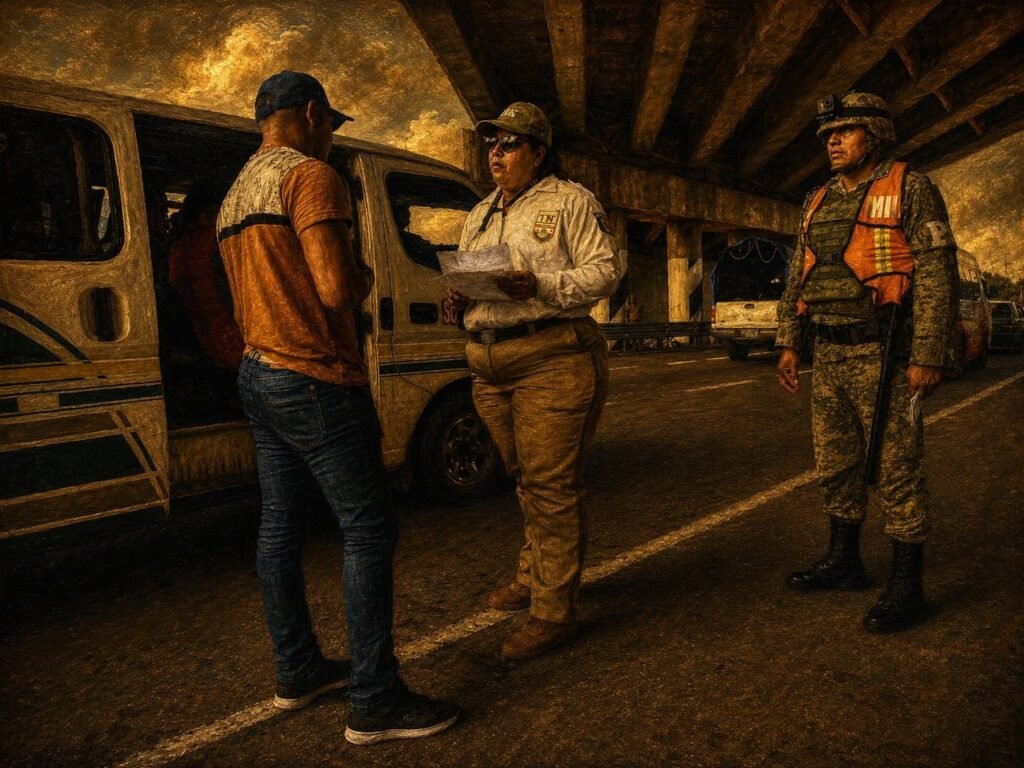
Analysis | Let’s Talk About Migration | Migrant Justice
The Future of Migrant Caravans: Collective Resistance or the End of a Containment Strategy?
November 24, 2026November 11, 2026
How border externalization, repression and deportations are eroding migrant caravans as a collective protection strategy in Mexico.
-
People’s Mañanera November 23
November 23, 2026
President Sheinbaum’s daily press conference, with comments on security in Sinaloa, a smart hospital with China, and a new university campus in Zacatecas.
The post The Future of Migrant Caravans: Collective Resistance or the End of a Containment Strategy? appeared first on Mexico Solidarity Media.
From Mexico Solidarity Media via This RSS Feed.