

Paul Daly / The Canadian Press
In September 1968, Quebec Premier Daniel Johnson travelled to the Manicouagan-5 dam, more than 600 kilometres from Quebec City, to deliver an inauguration speech for the newly built hydro-electric project. The reservoir for the dam flooded Innu land, but the dam was the pride of a province that had taken control of its electricity under a slogan: “Maître chez nous,” or “Masters in our own house.” But Johnson died suddenly from a heart attack while on site and never delivered his speech.
Nevertheless, 58 years later, the words are back. “Maîtres chez nous” was the French title of this month’s federal budget. In English, the government translated it as “Masters of our destiny.” The slogan is printed above a photo of a power line at Churchill Falls in Labrador and is part of a plan to dramatically increase Canada’s electricity production.
But for First Nations, this resurrection raises a question: masters of whose house, or whose destiny? In the past half-century, Hydro-Québec — like others across Canada — has imposed projects on dozens of communities, and went to court over it time and again. It now reports more than 40 agreements with communities across five Indigenous nations saying “significant progress has been achieved.”
“When I hear ‘chez nous,’ I think, ‘Nitassinan,’ ” Audrey-Lise Rock-Hervieux said in French, using the Innu word for her nation’s ancestral land. Rock-Hervieux is vice-chief of the Innu council of Pessamit, on Quebec’s North Shore. For her, the slogan brings back memories of places her nation lived for generations — places that are now under water. For her, the current push for more electricity sounds all too familiar.
But Canada needs more power. The Canada Energy Regulator projects demand for electricity will grow by 44 to 84 per cent by 2050, depending on climate policy. To meet that demand, the budget promised $50 billion to double Canada’s electricity generation, saying it means more “energy we generate and control.” At the same time, Prime Minister Mark Carney is pushing Bill C-39 through Parliament to approve major projects faster. Consequently, many First Nations leaders fear history is circling back.
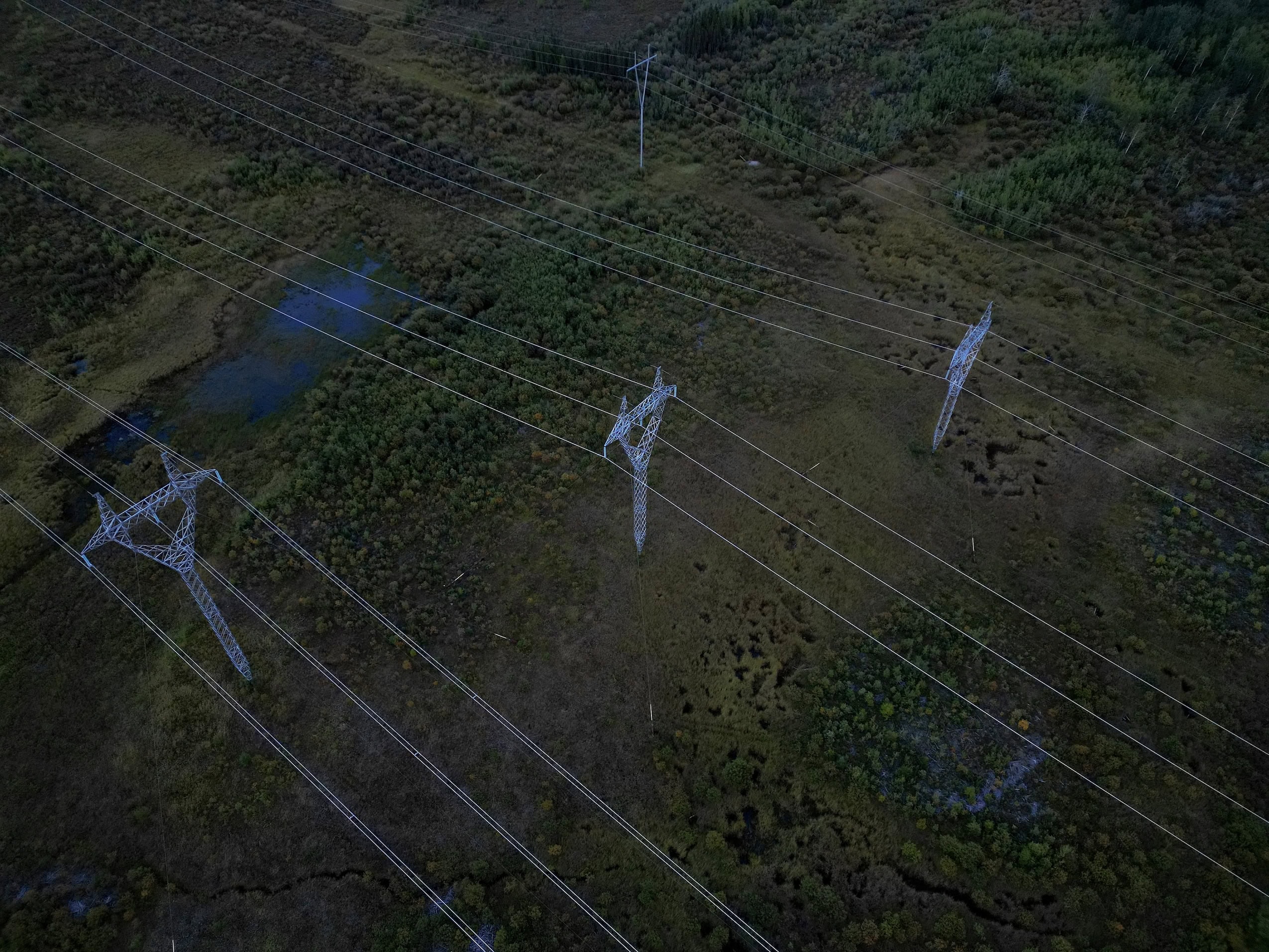
The Canada Energy Regulator expects electricity demand to grow by 44 to 84 per cent by 2050, depending on climate policy. To meet the growing need, the latest federal budget promises $50 billion to increase Canada’s energy generation capacity. Photo: Tim Smith / The Narwhal
“Maîtres chez nous” was the slogan of Jean Lesage’s Liberals in 1962, in a provincial election fought on the promise to bring electricity generation under government control. The minister behind the plan was René Lévesque, who later founded the Parti Québécois and held the 1980 sovereignty referendum. Hydro-Québec became the engine of a new Quebec nationalism, built on huge dams in the North.
These dams transformed rivers and the lives of the First Nations who depended on them. Yet two days after Johnson died, a La Presse editorial quoted, in French, the speech he never gave: “The Quebec of the space age will be a Quebec more confident, stronger and more determined than ever.” The speech never mentioned Indigenous communities.
Previous hydro projects flooded Indigenous lands — and erased memories
For decades, hydro-electric power in Canada was developed with little regard for the Indigenous communities impacted. Between 1944 and 1971, Indigenous Rights in relation to hydro development were “almost never raised” in Quebec’s legislature, historian Stéphane Savard found. Leaders “ignored the Innu communities of the North Shore” while building the Bersimis and Manicouagan-Outardes complexes, he wrote in a peer-reviewed analysis published in French. In leaders’ view, there was no need to consult: offering jobs on the work sites was enough.
Hydro-Québec told the story as a creation myth. “In the beginning were a river, mountains, a forest,” begins its French-language brochure from April 1964, Manicouagan. Then “came giants with iron-clad brows who gutted the shining river” and “Manicouagan, which still carried in its flanks the echo of Montagnais drums, was waking up to the world.” The giant, the brochure adds, raised “a tent that was no longer of bark but of white metal.”
The people of the bark tents were not a myth. For generations, they had lived along the river where the dams were built, mostly without their consent or even consultation. The reservoirs on the Betsiamites and Manicouagan rivers flooded the land of the Innu of Pessamit. In Labrador, Churchill Falls flooded an area larger than Prince Edward Island to create the Smallwood Reservoir. The same scenario unfolded in Manitoba along the Nelson River where Cree communities have lived for decades with flooding, erosion and burial sites exposed by Manitoba Hydro’s dams.
This disrupted the lifestyle of the nomadic families of Pessamit, who had long paddled up the Tshishe-Manikuan, the Innu name for the Manicouagan River, to reach their winter hunting grounds in the interior of the Nitassinan. It is a name often translated as “the great river where one drinks.” They would travel for more than a month, paddling and portaging for kilometres around waterfalls as tall as 10-storey buildings.
Joseph-Louis Vachon, an elder of Pessamit, was one of the last children of that river. He spent much of his childhood on the land around Manicouagan before the dams, Rock-Hervieux recounted. His happiest memories are now under water, and young people will never see what he saw.
The dams still shape life on the river. In 2017, days of heavy rain led Hydro-Québec to release the surplus from its reservoirs through its spillways, said Jean-Luc Kanapé, an Innu land guardian from Pessamit. He lost the tourism business he ran on the Pessamiu Shipu, the Betsiamites River when his site was flooded, he said in French in a conversation published by the research institute IRIS.
“When the government talks about rivers, it is generally because it is proud to promote the great engineering projects …. But what breaks my heart in all this is that we lost everything: our identity and our culture, which is disappearing too,” Kanapé said.
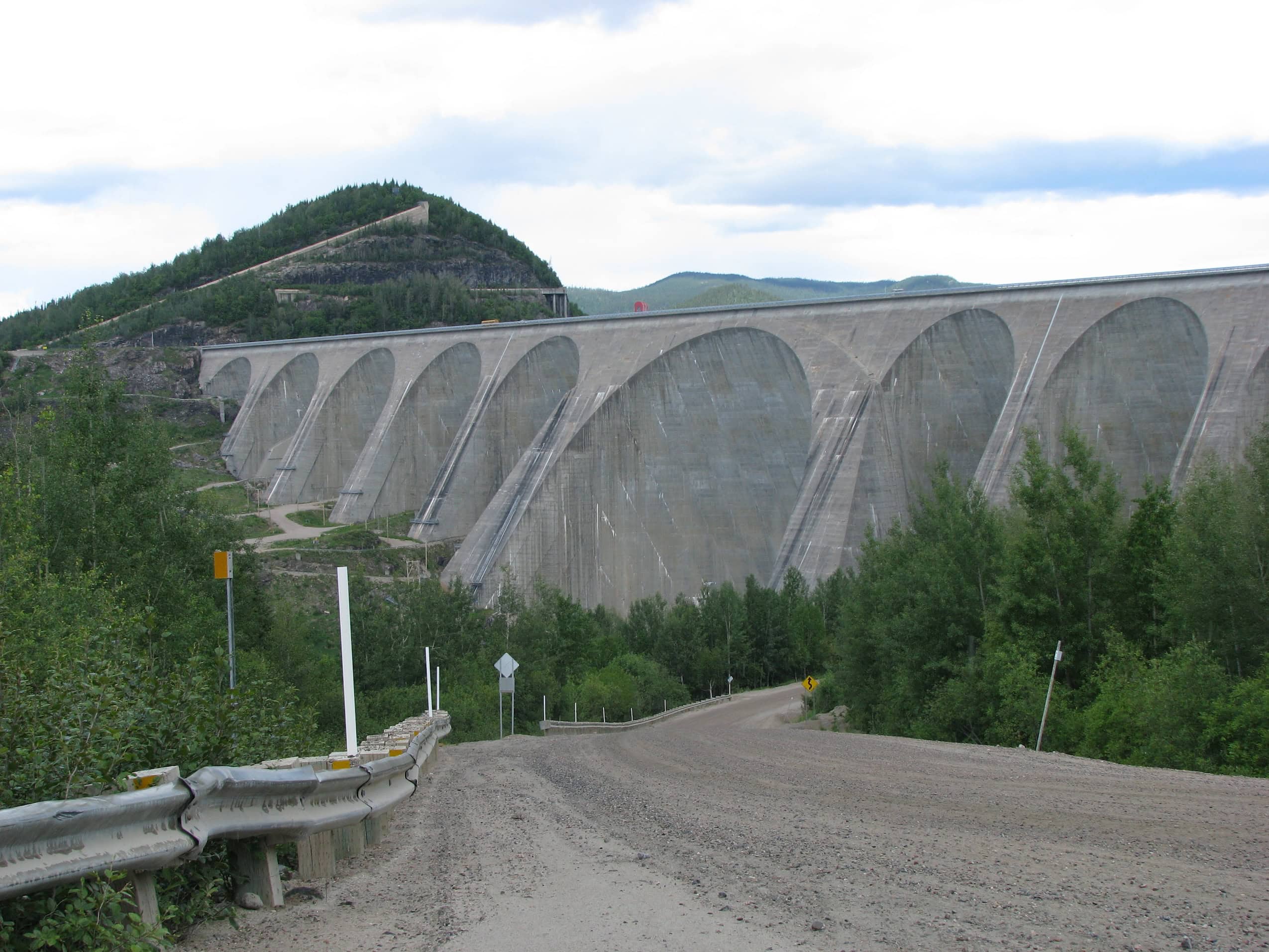
Hydro-Québec celebrated the construction of the Manicouagan-5 dam and other hydroelectric stations in the 1960s. But to the Innu people whose lands were flooded, the projects were devastating. Photo: Michel Corboz
Pessamit wasn’t the only Indigenous homeland threatened by Quebec’s hydro-electric ambitions. In 1971, the province launched the James Bay project on Cree lands in northwestern Quebec, kicking off years of legal battles. The result was the 1975 James Bay and Northern Quebec Agreement, and in 2002 the Paix des Braves recognized a principle of Cree consent for development in Cree territory, Eeyou Istchee.
For the Innu, there was no James Bay Agreement. In 1989, Bernard Cleary, of the Atikamekw-Montagnais Council, said in French that his people wanted, “Exactly what Quebecers of the early ’60s wanted and later obtained: more powers to develop according to their own choices, respect for their distinctiveness and recognition of their competencies.”
The federal government eyes a major project at Churchill Falls
The largest project in the current federal electricity plan is the one on the budget’s cover: the “Labrador Trough Clean Power, Critical Minerals and Infrastructure Corridor.” It would expand the Churchill Falls hydroelectric complex and build a new dam across the river at Gull Island, “creating 14,000 megawatts of clean, renewable power and nearly tripling Churchill Falls’ current generating capacity,” according to the budget. “That is enough power to light, heat and cool all the homes in Toronto, Montreal, and Vancouver combined,” the Prime Minister’s office said in a statement. The budget adds the Major Projects Office will “work with Indigenous Peoples, including the Innu people, to forge meaningful partnerships.”
But the Innu Nation of Labrador, on whose land the project sits, is still in court over the first dam. It sued Hydro-Québec for $4 billion in 2020 for what it calls the illegal taking of its land in 1969 to build the Churchill Falls hydro-electric project, asking for “a fair share of the tremendous profits being made by Hydro-Québec from the destruction of [Innu] lands.” A settlement failed in 2025 because too few members voted. Innu communities in Quebec have also sued. In July, the Innu of Pessamit, Rock-Hervieux’s community, voted 63 per cent against a deal worth more than $2.5 billion with Hydro-Québec and the provincial government that would have ended its lawsuit and opened the way to a new station, Bersimis 1A.
Despite that, governments are moving ahead. In August, Hydro-Québec and Newfoundland and Labrador Hydro signed a new deal on Churchill Falls, with the two premiers and Carney. It would replace the 1969 contract, which let Hydro-Québec buy most of Churchill Falls’ power at very low prices until 2041, with a new 50-year agreement worth nearly $70 billion. The final contracts are expected in December, but the Parti Québécois, elected in October, has said it would review the deal first.
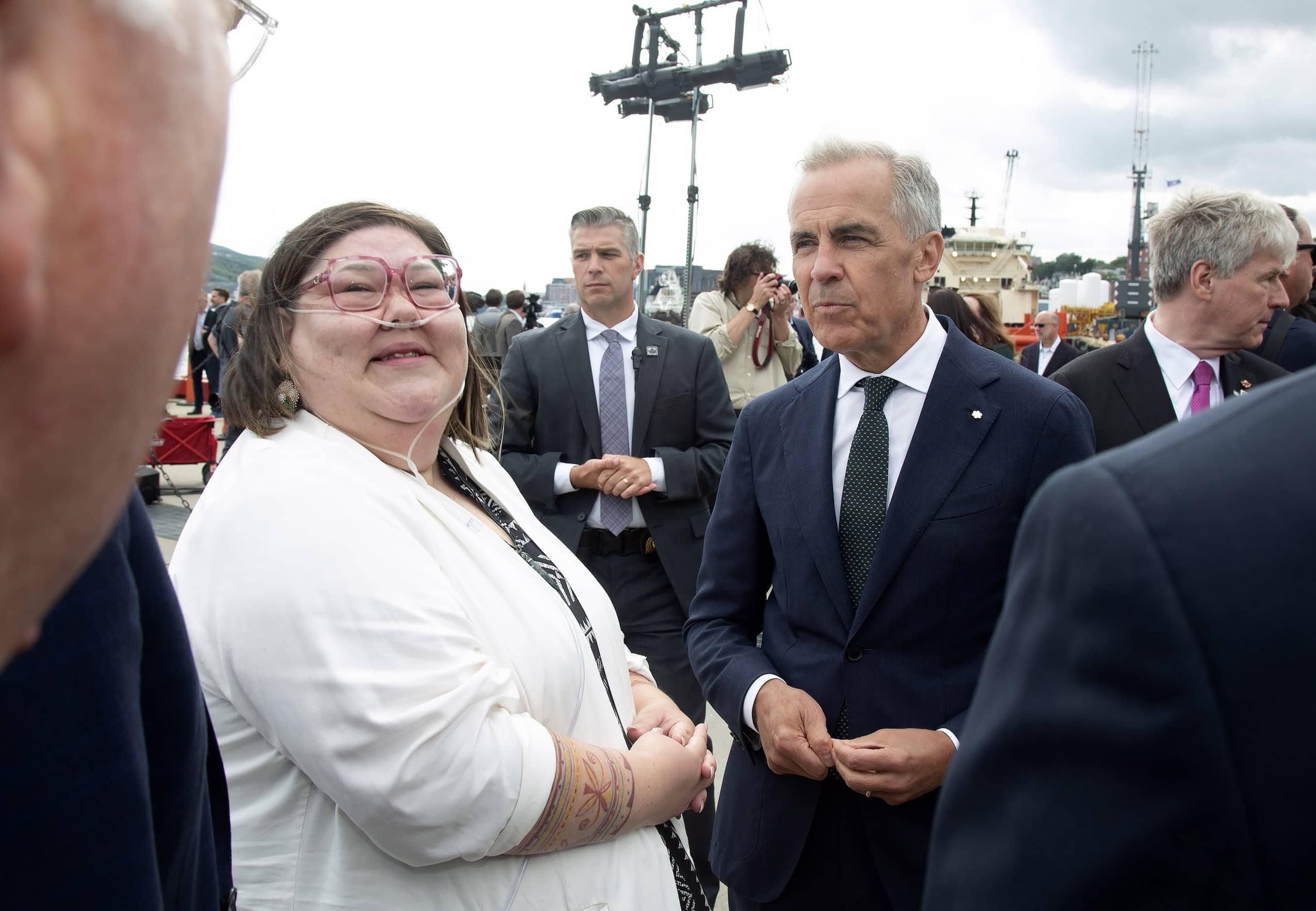
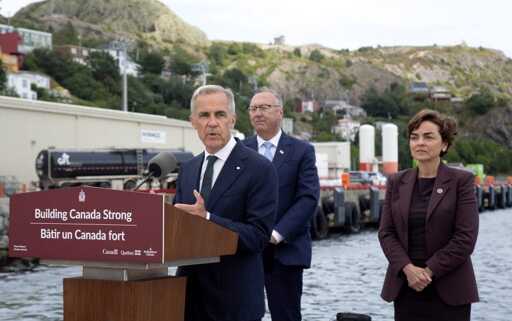
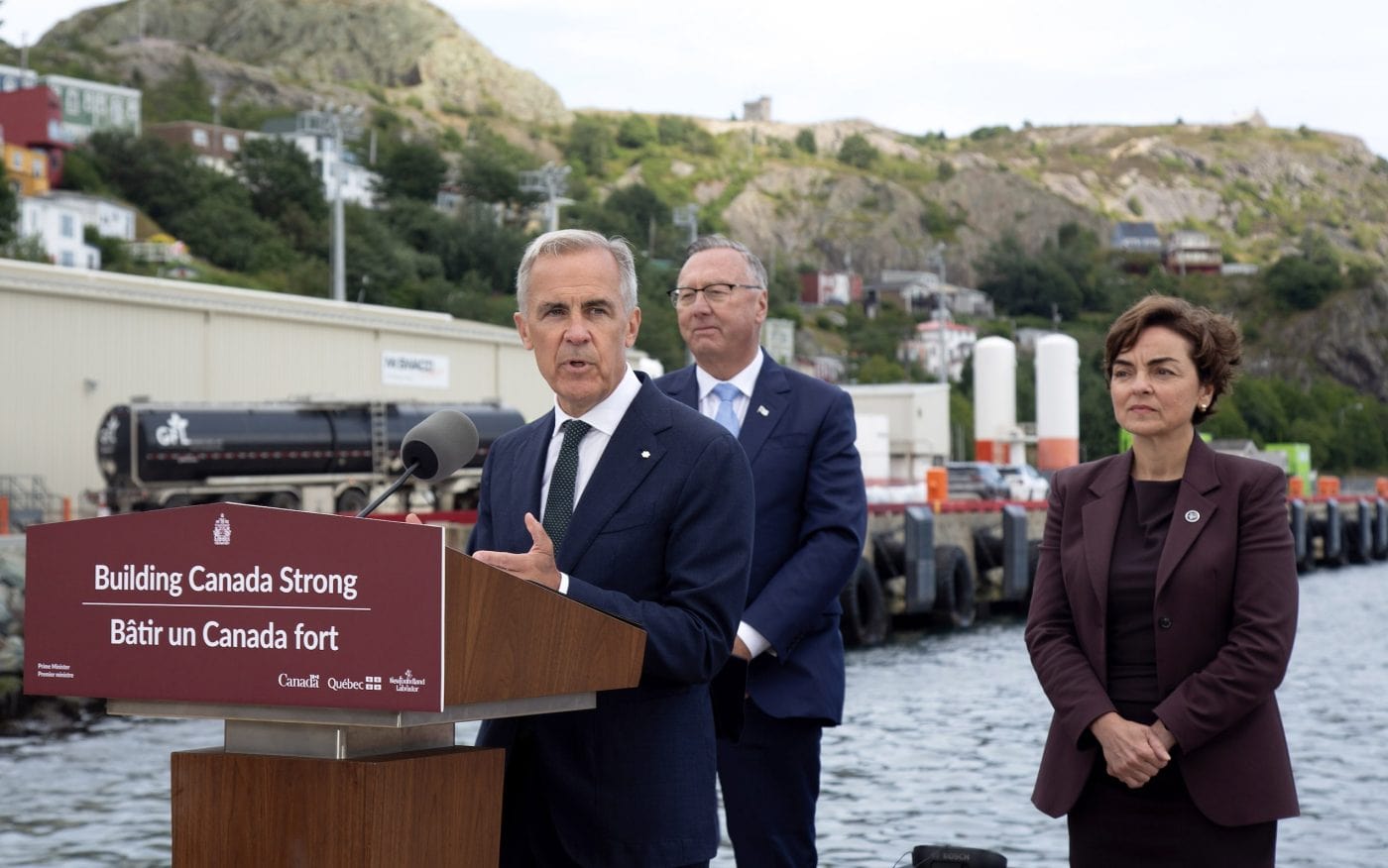
Innu Nation Grand Chief Jodie Ashini, seen here with Prime Minister Mark Carney in August 2026, said the Innu need an apology for the damage caused to their territory by the original Churchill Falls dam before they can support an expansion of the facility. Paul Daly / The Canadian Press
Also in August, the Carney government referred the Labrador project to the Major Projects Office, part of its effort to approve infrastructure and development projects in a fraction of the time it takes now. In June 2025, Parliament passed Bill C-5, which lets cabinet name “projects of national interest” and speed up their approval, including by bypassing or truncating environmental and other assessments.
The first project designated under the law, the Pacific Link oil pipeline to the B.C. coast, is already facing legal action by Cold Lake First Nations, which said Ottawa did not consult it properly. And in September, Innu Nation Grand Chief Jodie Ashini said the Innu needed an apology for the original Churchill dam before they could support the Labrador deal.
A new bill making its way through Parliament now — Bill C-39, the Building Canada Strong Act — would go even further in accelerating development. It would let the federal government designate entire “regions of national interest” and hold a single federal consultation with Indigenous Peoples, instead of several, which the national Assembly of First Nations has called “fundamentally flawed.”
In October, a group of cross-Canada First Nations organizations, including the Assembly of First Nations Quebec-Labrador and its Innu members, released a statement criticizing the government’s move to speed up the bill. The move had “one purpose: to push the most consequential economic legislation in a generation through Parliament before First Nations, or anyone else, can meaningfully scrutinize it. It is fundamentally antidemocratic,” the statement said.
Innu Senator Michèle Audette raised a similar concern when the bill reached the Senate in October. She asked whether the government’s study of “regions of national interest” would include “not only the Indigenous Peoples who are directly affected by the projects” but also “those upstream and downstream who will feel the environmental, social and economic impacts.”
“We don’t want to be a third party or a stakeholder,” she later told The Narwhal.
The budget says the new timelines in Bill C-39 do not change Indigenous Peoples’ constitutional rights, “the duty to consult or treaty obligations.” But the word “consent” appears only once in the budget — in a section about artificial intelligence deepfakes.
Hydro-Québec says it will collaborate with communities. Not everyone is convinced
For Pessamit’s vice-chief, Rock-Hervieux, the problem is “the gap between the guarantees that were announced and what we will really live on the ground,” she said. “If we don’t have time to analyze the studies, ask questions and consult our members, how will our rights be exercised in practice?”
She also has questions for Ottawa. “When I see the federal government putting big hydroelectric projects forward again, I want to know what will be done differently today before deciding where to build,” she said. “I also want to understand what we can repair today, because there was so much damage in the past.”
Hydro-Québec says it has changed. In June, another Innu community, Nutashkuan, signed an agreement with the utility that includes a settlement for past developments and gives the community a role in future hydro, wind and transmission projects on its land. Chief Réal Tettaut said it gives his community “the means to move forward in accordance with our priorities and values while respecting and protecting our Nitassinan.” Hydro-Québec CEO Claudine Bouchard called it “a renewed approach to energy development, based on collaboration with communities from a project’s earliest stages.”
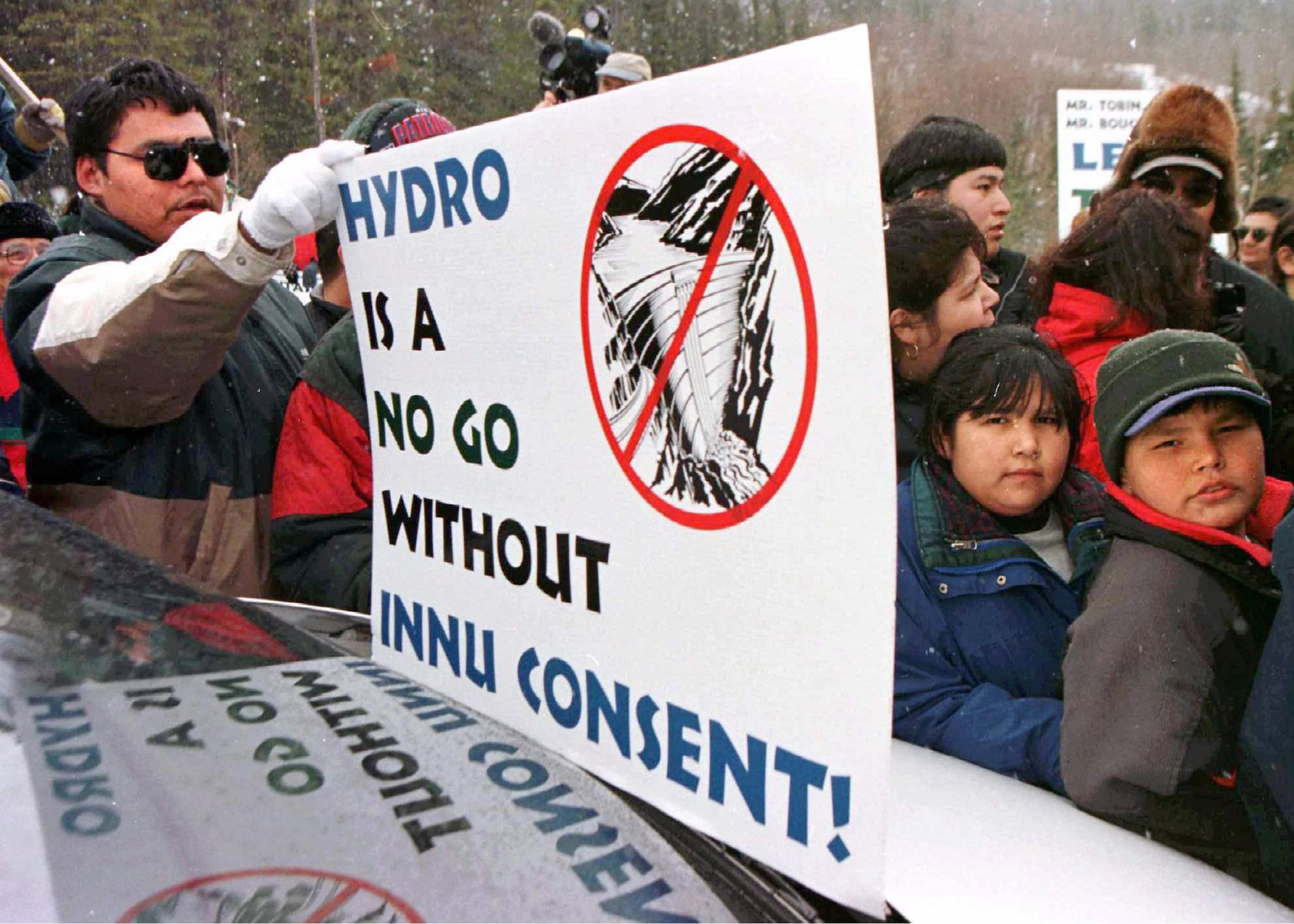
When the premiers of Quebec and Newfoundland and Labrador visited Churchill Falls in 1998 to announce negotiations to increase the hydroelectric station’s capacity, Innu community members confronted them in protest. Photo: Paul Chiasson / The Canadian Press
In July, Bouchard formally apologized to the Innu of Uashat Mak Mani-utenam, over yet another project, the Romaine complex and the Arnaud-Alouette transmission line. It came 18 months after a Quebec court found Hydro-Québec had acted in bad faith. The $75-million agreement creates a permanent reconciliation committee. Made of four generating stations, the Romaine complex is Hydro-Québec’s largest hydroelectric complex to be built since James Bay. Arnaud Alouette is a power line connecting Arnaud electrical substation to the Aluminerie Alouette aluminum smelter.
More projects are coming. “Over $600 billion of projects are forecasted to be launched on our traditional lands over the next decade,” Assembly of First Nations National Chief Cindy Woodhouse Nepinak told the House of Commons Standing Committee on Natural Resources in March. “They represent a cornerstone of Canada’s future economic growth, but they won’t advance without the support of First Nations,” she added.
In 1962, “maîtres chez nous” meant that French-speaking Quebecers would control their own resources. The federal government is now using the same words for a national electricity plan, at the same time as it asks Parliament to approve major projects in one year. In Pessamit, Rock-Hervieux understands what the words meant for Quebec in the 1960s, and what they mean for Canada today: a way to take charge of the economy and decide what to do with natural resources. “But for me, as an Innu, it is also what we are asking for ourselves,” she said.
The Narwhal’s reporters are telling environment stories you won’t read about anywhere else. Stay in the loop by signing up for our free weekly dose of independent journalism.
From The Narwhal | News on Climate Change, Environmental Issues in Canada via This RSS Feed.