

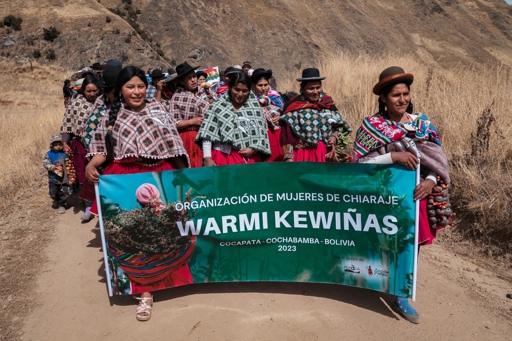
The bare ridges of the Tunari mountain range rise high in Bolivia’s central Cochabamba department. Only the occasional stand of squat, shrubby trees and rust-red potato crops dot the slopes. It wasn’t always this way. The high-elevation landscape was once filled with native Kewiña (Polylepis sp.) trees, a slow-growing tree belonging to the rose family that thrives well above the typical tree line, at up to around 4,450 meters (14,600 feet) above sea level. Today’s lack of vegetation reflects decades of clearing for firewood, construction and small-scale potato agriculture, as well as drier and warmer weather in the area linked to forest loss and climate change. Only 10% of the region’s original Kewiña tree coverage remains, biologists estimate. The trees were also decimated by urban expansion, intensifying wildfires and habitat fragmentation. In 2023, the IUCN listed one Polylepis species endemic to central Bolivia as endangered. Tunari National Park, covering about 309,000 hectares (763,500 acres), is home to a large, albeit much reduced, Kewiña population, which provide vital habitat for the near threatened Cochabamba mountain finch (Poospiza garleppi) as well as critical ecosystem services for the Cochabamba metropolitan area and beyond, to the nearby Amazon basin. Today, however, the region faces both chronic drought and increasing erosion on the mountain range’s slopes. A river bordered by Polylepis trees in Chiaraje, Bolivia, in Tunari National Park. Image by Benjamin Swift. “We used to harvest firewood from the Kewiña without replanting,” Andrea Vicente, a potato farmer in Chiaraje, a village perched at some…This article was originally published on Mongabay
From Conservation news via This RSS Feed.