

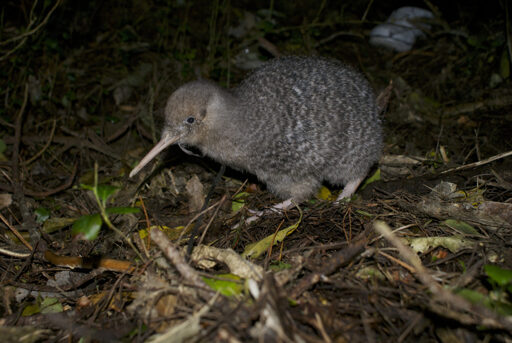
For the first time in more than 150 years, wild kiwi are roaming the hills surrounding Aotearoa New Zealand’s capital city, Wellington. The milestone follows the reintroduction of more than 250 kiwi to the landscape, an effort led by Indigenous iwi (Māori nations), local community members and private landowners through the Capital Kiwi project, a nonprofit organization. Speaking on the Mongabay Newscast with host Mike DiGirolamo, project founder and lead Paul Ward explains that returning iconic flightless manu, or birds, to Wellington’s hills required extensive landscape-scale predator management. Stoats (Mustela erminea), small mammals that were introduced to Aotearoa New Zealand by Europeans in the late 1800s to control rabbit numbers, are the primary threats to young kiwi. So, before releasing the birds to the hills, project teams deployed more than 5,300 traps across 24,000 hectares (59,300 acres) of working farmland, and forestry and suburban reserves to trap and remove stoats. In areas without predator control, nearly all chicks die before reaching adulthood, Ward said, but under the project’s trapping regime, the chicks’ survival rate has exceeded 90%, he adds. Since late 2022, more than 250 kiwi have been translocated to the region. Including wild-hatched chicks, Ward estimates the local population now exceeds 300 birds. This “extraordinary result” is because the areas where the kiwi have been released have plenty of food for the birds, Ward says, “And so if you control or manage the predator threats, there are a heap of opportunities for our manu that are capable of fending…This article was originally published on Mongabay
From Conservation news via This RSS Feed.