

WARNING: This story contains disturbing details about boarding schools. If you are feeling triggered, here are healing-informed resources from the National Native American Boarding School Healing Coalition in the U.S.
Charles Fox
Special to ICT
The use of before-and-after photography to document and promote change in the 1800s did not originate at the Carlisle Indian Industrial School, nor was it the first time for school founder Richard Henry Pratt.
But Pratt made full use of the technique. He had initially used it to show his success transforming 74 prisoners of war from Southern Plains tribes at Fort Marion in St. Augustine, Florida, and while recruiting Native people in Nebraska to attend the Hampton Institute in Virginia.
“We wish a variety of photographs of the Indians,” Hampton’s founder, General Samuel Chapman Armstrong, wrote to Pratt. “Be sure and have them bring their wild barbarous things. This will show whence we started.”
Pratt continued the use of photographs once the Carlisle school was started. He had local photographer John N. Choate photograph before-and-after images of groups, both large and small, and of individuals.
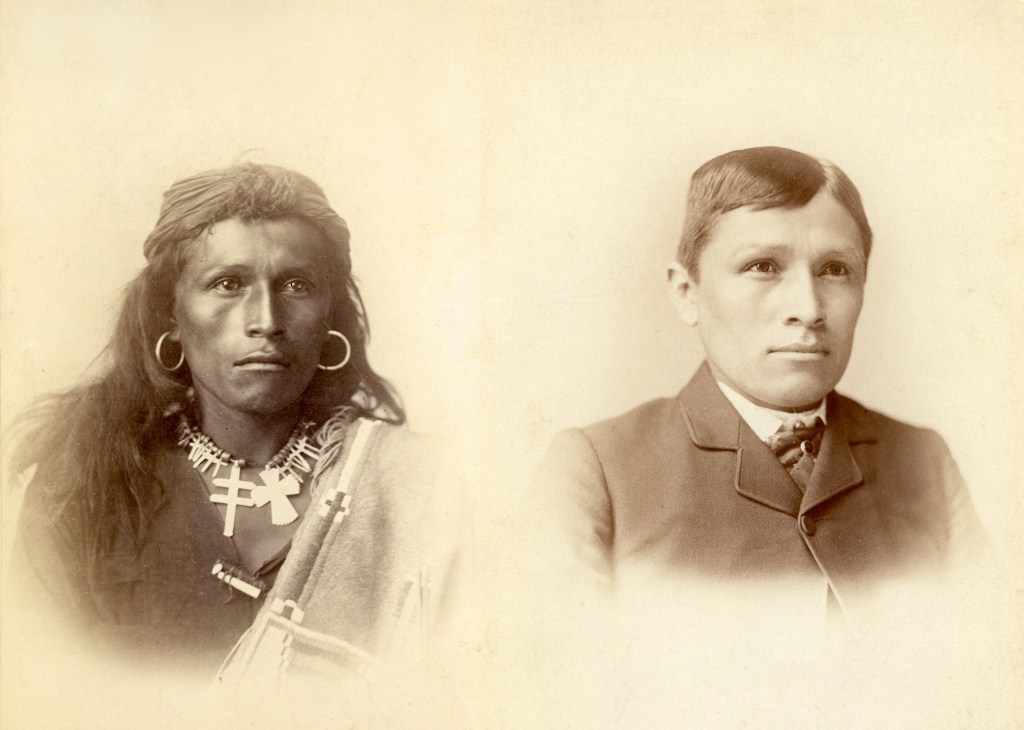
One of the best known of the “before-and-after” photos taken at the Carlisle Indian Industrial School was of Tom Torlino, Navajo. He is shown left, as he arrived at the school on Oct. 21, 1882, at age 22, and at right, a few years later as a student at the school. Credit: Photos by John. N. Choate courtesy of the Cumberland County Historical Society
But no set of “contrast” images was as successful promoting his mission to force assimilation onto Native people as the iconic pairing of images of Tom Torlino, a who arrived at the school as a young man in 1879 and returned home four years later to become a leader and traditional healer for the Diné people.
“I think Choate just struck gold with this particular image,” observed Kate Theimer, author of the book, “A Very Correct Idea of Our School: A Photographic History of the Carlisle Indian Industrial School.”
At 5’6” and 120 pounds, Torlino was by no means an intimidating presence, but in many ways, he represented the visual image many had of Native Americans from the Southwest.
The “before” image, taken soon after he arrived at the school, shows Torlino wrapped in a woven blanket, with long hair and a necklace. The “after” shot, taken a year or two later, shows him with close-cropped hair, wearing a suit and tie.
The images were paired side-by-side and distributed on postcards and other propaganda from Carlisle to illustrate the forced assimilation at the heart of the school’s mission.
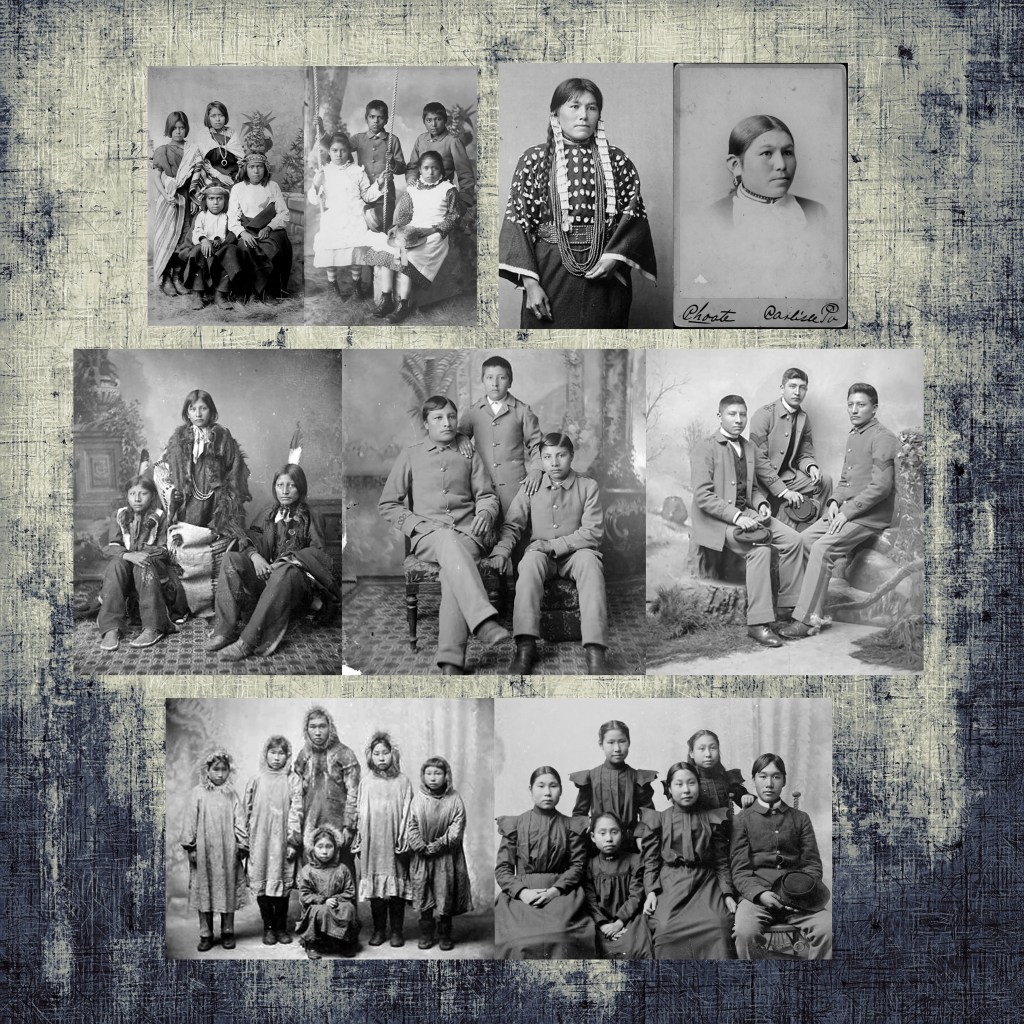
Before-and-after photographs of students at the Carlisle Indian Industrial School taken by John N. Choate show students as they arrived in traditional clothing and then again after their hair had been cut and their clothing changed. In the top row, left, four Pueblo students arrived in Carlisle on July 31, 1880; and at right, Rose White Thunder, Rosebud Sioux, entered the school on Nov. 14, 1883 and departed on June 14, 1887. In the middle row, a studio portrait of Rosebud Sioux students Wounded Yellow Robe (also known as Richard Yellow Robe), Chauncey Yellow Robe (also known as Timber Yellow Robe), and Henry Standing Bear on Nov. 15, 1883. In the bottom row, Inupiat students upon arrival on Nov. 14, 1897, include Tummassak (second from left), in the left photo and standing, left, in the right photo, whose remains were returned to Alaska in 2026. . Top row photographs are courtesy of Dickinson College. Other photographs are courtesy of the National Anthropological Archives/Smithsonian Institution. Credit: Photo Illustration by Charles Fox/Special to ICT
“Why does that one of Tom Torlino work so well? I think it’s the degree of his … accessories, jewelry, regalia, whatever you want to call it. There’s a lot going on visually,” Theimer said in a recent interview. “He’s got long hair, and he’s got a strong commanding face and he’s not looking directly at the camera in the before (photo)… It might have been like hitting the notes that people were expecting to see.”
Jim Gerencser, associate dean for archives and special collections at Dickinson College and the Carlisle Indian School Digital Resource Center, agrees.
“Tom’s before-and-after pairing becomes the shorthand to just represent so many aspects of Carlisle and the whole assimilation agenda,” Gerencser told ICT. “That clean pairing [of images] captures that in the same way that people use Pratt’s “kill the Indian and save the man” phrase as a really simple, short way of conveying that idea.”
As the years passed, a diminishing number of students arrived at Carlisle dressed in traditional clothing, and fewer before-and-after photos were taken.
“By the early 1900s. nobody is arriving at the school dressed in any kind of traditional way. Those days are long over,” said Gerencser. “So, that’s one of the reasons there are so few before and after pairings out there. It just wasn’t that common for people to arrive at the school still dressed in a traditional way.”
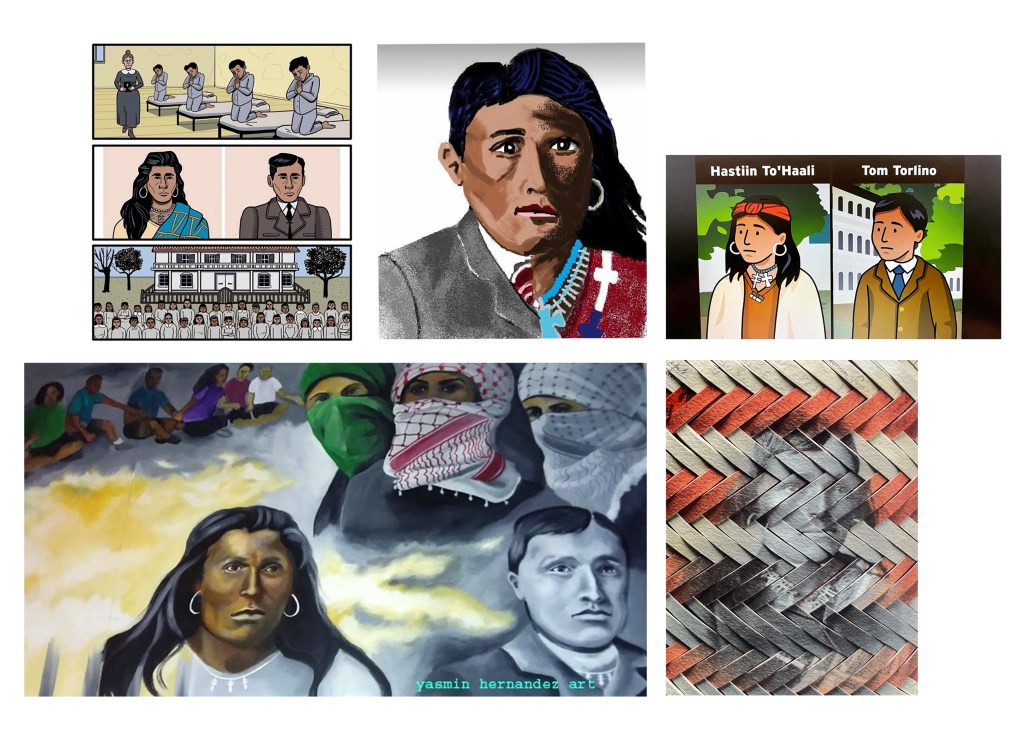
A sampling of the artistic and educational adaptations of Tom Torlino’s before-and-after photographs from his time at the Carlisle Indian Industrial School have been collected by his great-granddaughter Gerilyn Tolino. They include, at top, left to right, NPR, 3rd Culture Arts and Crafts, and BrainPOP (an educational site for children). At bottom is artwork by Yazmin Hernández and a basket weaving by the late artist Shan Goshorn. Credit: Photos courtesy of Gerilyn Tolino
The use of Tom Torlino’s image, however, did not diminish. Starting with the Sept. 11, 1891 edition, his contrasting images were incorporated into the flag of the school’s weekly newsletter, “The Indian Helper.”
His image was also used in conjunction with a football story, “From the Wigwam to the Gridiron.” in the Illustrated Sporting News, with the caption, “What Carlisle School and football did for this Navajo Indian,” on Oct. 24,1903, despite the fact he had left the school in 1886 long before the school had a football team. An animated version appears on BrainPOP, an educational site for children.
Author and former Arizona State University Professor K. Tsianina Lomawaima, Muscogee (Creek) Nation and German Mennonite, believes the photos not only promoted the superiority of White civilization but also were demeaning of Native parenting skills.
“The people who produced the ‘before and after’ photos and the audiences who consumed them shared a basic assumption: The civilized life alluded to in the ‘after’ image was superior in every way to the primitive, backward, savagery of the ‘before,’” Lomawaima wrote in “Indian Boarding School, Before-and-After: A Personal Introduction,” in the Journal of American Indian Education.
“It makes me wonder if, at that time, did they sincerely believe that changing clothes changed the person? That cutting hair changed a person’s mental state?” Lomawaima asked recently in an interview with ICT. “And that just seems like such a transparently bogus assertion. But did they really believe it? Or was that part of the PR campaign?”
In the present day, the contrasting images of Torlino and others elicit a completely different set of emotions than Pratt had intended, raising issues of injustice and cultural destruction.
“In the beginning of the school era, we’re still in the era when the U.S. government and the popular press and everyone is still concerned about Native Americans resisting the government’s impositions upon them,” Gerencser said.
“And once you get to the early 20th century, where they’re continuing to use the Tom Torlino image, then it becomes the flip side. Now you’ve got the ethnologists and others being concerned about the vanishing Indian. You’ve gone from, ‘we’re afraid they might make war upon us,’ to now, ‘we’re afraid they might cease to exist altogether’ … When we’re at war with them, it’s constantly degrading them and making them seem like less. Now when they’re no longer considered a threat, we’re just going to talk about their nobility.”
The images also stirred Torlino’s family to bring his accomplishments to light.
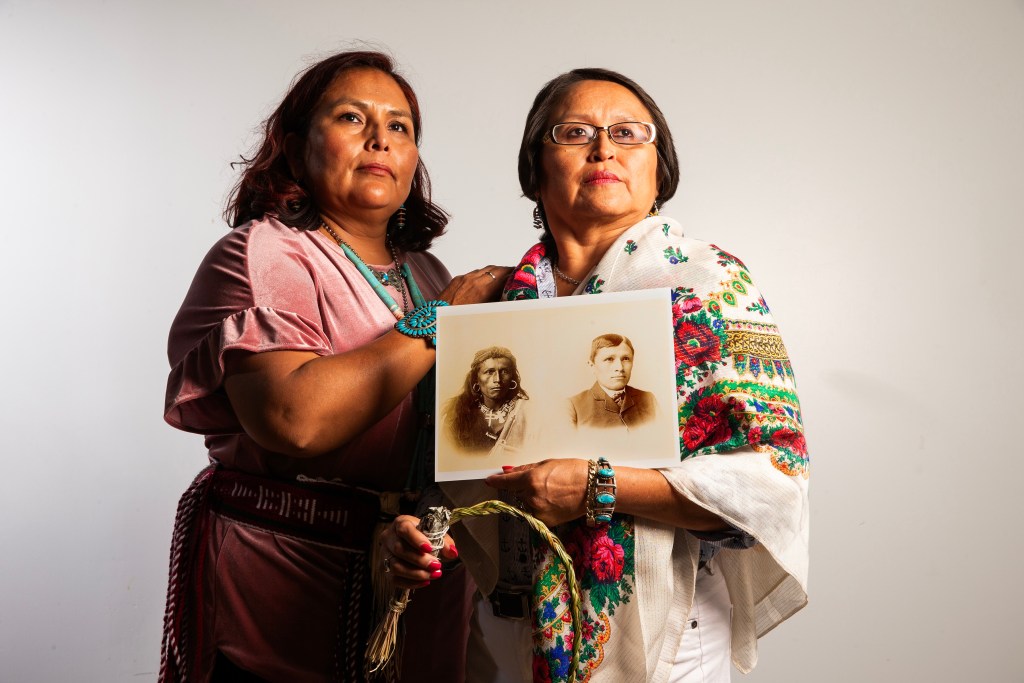
“His family was really frustrated about how their father’s, their grandfather’s story is being silenced because people are not seeing him beyond the photograph,” said Farina King, Diné, a professor at the University of Oklahoma and author of the book, “The Earth Memory Compass: Dine’ Landscapes and Education in the Twentieth Century.”
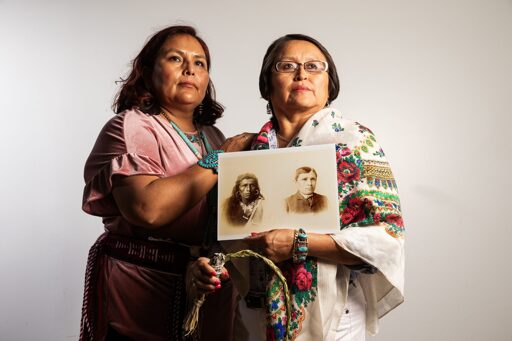
Dr. Nonabah Sam, Torlino’s great-great granddaughter, echoed this sentiment.
“You hear about Jim Thorpe and other individuals that went to Carlisle,” Sam said. “I always wondered, ‘Will there ever be a time that somebody will shed light on not just the photograph, but how far this family has come since?’”
The post How Carlisle used photos to promote assimilation appeared first on ICT.
From ICT via This RSS Feed.