

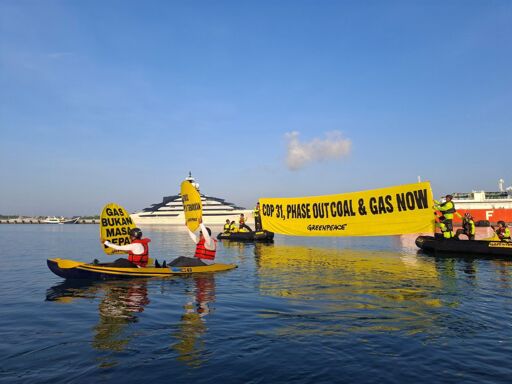
DENPASAR, Indonesia — Customary leaders from Serangan village in Bali have renewed local opposition to a planned liquefied natural gas terminal off the east coast of the Indonesian island, saying the floating LNG site is too close to customary fishing grounds. “We disagree with the 3.5-kilometer distance [2.2 miles] because the vessel is large, and very close to the village’s sacred point as well as our fishing routes,” said I Nyoman Gede Pariartha, the traditional leader in Serangan, at a meeting on Nov. 14. Earlier this year Indonesia’s environment ministry issued an environmental permit for a Floating Storage and Regasification Unit (FSRU) off the eastern coast of Serangan island in Bali. The new infrastructure is intended to improve the reliability of Bali’s electricity supply by supplying gas-fired power plants amid rising electricity demand on the island. Bali has a population of 4.5 million, but the island received almost 7 million tourism visits in 2025 and, since the pandemic, has increasingly been host to longer-term visitors. Increasing electricity demand on the island is supplied by several power plants on Bali, including the gas-fired Pesanggaran power station, a 200 megawatt capacity facility next to a protected mangrove forest on the northern fringe of Benoa Bay. In addition, up to 30% of the island’s electricity is supplied by cables from neighboring Java, the world’s most populous island. The planned new FSRU site east of Bali will receive liquified natural gas offshore from tankers, and convert the fuel back into natural gas before supplying…This article was originally published on Mongabay
From Conservation news via This RSS Feed.