

As soaring rents trigger a snap general election on November 29, Spain faces a decisive choice between state rent controls and market deregulation.
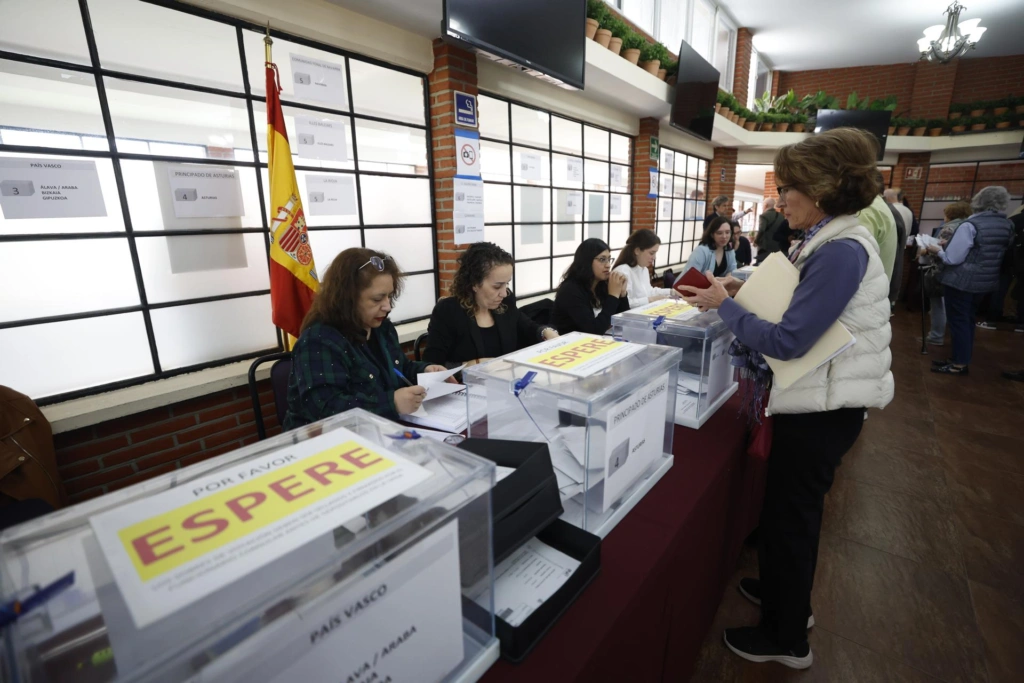
On Sunday, November 29, voters in Spain will participate in general elections. By Royal Decree 806/2026, Prime Minister Pedro Sánchez dissolved the Spanish Parliament (General Courts) and called for a snap election on October 5.
The immediate trigger for the early vote was a legislative defeat in the lower house of parliament on October 2. On that day, the Congress of Deputies voted down two emergency decrees from Sanchez’s government (Royal Decree-Law 26/2026 and Royal Decree-Law 27/2026) that sought to regulate rental contracts, extend expiring leases, and limit evictions for vulnerable households.
RELATED: Spain Begins “Polling Blackout” Ahead of General Elections
The parliamentary vote took place amid widespread street protests across Madrid and other major cities over rising housing costs and high-profile evictions, including the eviction of 87-year-old Madrid resident Maricarmen Abascal from an apartment she had occupied for seven decades.
Explaining his decision to seek a new parliamentary mandate, Sánchez stated during a press conference that his minority coalition government needed a broader parliamentary majority to pass housing legislation.
As a result, the November 29 election places housing policy and the broader cost of living at the center of Spain’s national political debate.
Spanish Prime Minister and Socialist candidate Pedro Sanchez acknowledged making mistakes during a key televised debate in Madrid ahead of next week’s general election, while defending his administration’s economic record and overall direction. 🇪🇸🗳️🎙️
Addressing voters during… pic.twitter.com/HItql6M1Ga
— teleSUR English (@telesurenglish) November 20, 2026
Rules Shaping Spain’s Next Government
The November 29 vote is Spain’s 17th democratic general election. In this process, citizens will elect members of the 16th Spanish Parliament, the bicameral legislature responsible for passing national laws, approving the state budget, and selecting Spain’s prime minister.
According to data published by the National Institute of Statistics (INE), 38,728,356 citizens are registered to vote in the 2026 general election. Voting in Spain is voluntary and takes place across two separate legislative chambers: the Congress of Deputies and the Senate.
The Battle for the Lower House
Voters directly elect all 350 members of the Congress of Deputies, which serves as the primary legislative chamber and holds the exclusive power to confirm or remove the Prime Minister.
Seats are distributed across 52 electoral districts corresponding to Spain’s 50 provinces plus the autonomous cities of Ceuta and Melilla. Each province receives a minimum baseline of two seats, while Ceuta and Melilla receive one seat each.
The remaining 248 seats are allocated proportionally based on each province’s population, a calculation that shifted one seat from Cadiz to Madrid for the 2026 election.
Inside each province, voters cast a single ballot for a closed party list. Seats are awarded using the D’Hondt method, a proportional representation formula that divides each party’s total votes by sequential divisors.
To qualify for seat allocation in any province, a party list must exceed an electoral threshold (at least 3% of the valid votes) in that constituency. Because smaller rural provinces have fewer seats up for grabs than large urban centers like Madrid or Barcelona, the effective threshold needed to win a seat in less populated provinces is considerably higher, often favoring the two largest national parties and regionally concentrated parties over smaller statewide formations.
How Spain Chooses Its Next Prime Minister
In addition to Congress, voters directly elect 209 of the 267 members of the Senate, Spain’s upper chamber, while Spain’s regional parliaments later appoint the remaining 58 senators.
Unlike the Congress lists, Senate elections use an open-list partial block voting system. Mainland provinces elect four senators each, and voters can select up to three individual candidates from any party.
Following a 2026 constitutional reform, the Balearic islands of Ibiza and Formentera are electing one senator each for the first time rather than sharing a single joint seat.
Once polls close on November 29, provincial electoral boards will conduct the official vote count between December 4 and December 7, and the newly elected chambers will convene on December 23, 2026.
Under Article 99 of the Spanish Constitution, King Felipe VI will consult with parliamentary leaders and nominate a candidate for Prime Minister.
To take office, that candidate must win an absolute majority of at least 176 votes in the 350-seat Congress during a first investiture vote, or a simple majority of more votes in favor than against in a second vote held 48 hours later.
Spain is heading to snap elections on November 29, 2026. PM Pedro Sánchez dissolved parliament after his minority coalition lost a key October 2 vote, as right-wing opposition parties blocked two urgent housing decrees. The election had originally been scheduled for 2027. #Spain… pic.twitter.com/XYFDLlbJmA
— SNN Finland (@snnfinalnd) October 5, 2026
Coalitions Defining Vote
The November 29 election features competing national parties and regional coalitions that span Spain’s ideological spectrum. The Spanish Socialist Workers’ Party (PSOE) is led by PM Pedro Sánchez, who has governed since June 2018 and frames his administration around institutional stability, European fiscal compliance, and targeted social policies.
During an October 2026 campaign speech in Seville, Sánchez said his government sought to “protect working families while keeping Spain’s economy credible in Europe.”
To the left of the PSOE, voters face two distinct political projects. Former Barcelona mayor Ada Colau leads Broad Front, an electoral coalition bringing together Sumar Movement, United Left (IU), Catalonia in Common, More Madrid, and allied regional groups.
Colau came to national prominence as a spokesperson for the Platform for People Affected by Mortgages (PAH) during Spain’s post-2008 housing crisis before serving two terms as mayor of Barcelona from 2015 to 2023.
Separately, former Minister of Equality and Member of the European Parliament Irene Montero leads Podemos party, arguing for stronger direct intervention against corporate landlords, higher taxes on large fortunes, and a more independent foreign policy.
On the right-wing, Alberto Núñez Feijóo leads the conservative People’s Party (PP). As former President of the regional government of Galicia from 2009 to 2022, Feijóo presents himself as an experienced administrator focused on business confidence, deregulation, and lower taxes.
Further to the right, Santiago Abascal leads Vox, a national-ultraconservative party emphasizing strict border controls, opposition to climate mandates, criticism of trade unions, and tough measures on crime and immigration.
Regional and pro-sovereignty parties also play a role in shaping potential post-election majorities. In Catalonia, Gabriel Rufián leads Esquerra Republicana de Catalunya (ERC) while Míriam Nogueras leads Junts per Catalunya.
In the Basque Country, Oskar Matute represents the leftist Euskal Herria Bildu Coalition and Maribel Vaquero represents the Basque Nationalist Party (EAJ-PNV), while Néstor Rego leads the Galician Nationalist Bloc (BNG) in Galicia.
Spanish conservative opposition leader Alberto Nunez Feijoo outlined his housing plan during a televised election debate in Madrid against Prime Minister Pedro Sanchez, pledging to boost housing supply by one million units. 🇪🇸🏠🗳️
Critiquing the government’s housing policies… pic.twitter.com/ydtSl47CQt
— teleSUR English (@telesurenglish) November 20, 2026
Where the Parties Stand on the Cost of Living
Housing policy sits at the center of each party’s economic program for the November 29 vote.
The Broad Front (Frente Amplio, in Spanish) proposes dedicating 1% of annual Gross Domestic Product (GDP), roughly 17 billion euros, to build 1.5 million public rental homes over 12 years, cap rents at 25% of median household income, make rental contracts indefinite by default, impose sharp surcharges on second and third home purchases, and transfer vacant properties held by large corporate landlords into public or social use.
Podemos party calls for a mandatory 40% reduction in rents and stricter limits on real estate investment funds. The Spanish Socialist Workers’ Party (PSOE) pledges 1% of GDP to expand its state housing agency, Casa 47, aiming to add 100,000 public homes and offer interest-free down-payment loans of up to 50,000 euros for eligible buyers.
By contrast, the People’s Party (PP) and Vox propose repealing Spain’s existing Housing Law and ending rent caps. The PP’s platform emphasizes releasing land for construction to build one million homes, cutting value-added tax on new homes for buyers under age 40 from 10% to 4%, and speeding up eviction procedures in cases of non-payment or squatting.
Vox similarly favors eliminating tax barriers on home purchases, streamlining permitting, and introducing a “national priority” rule that would restrict access to public housing and social rental support for undocumented migrants.
Proposals on working hours, wages, and taxes also divide the contenders. The Broad Front (Frente Amplio, in Spanish) advocates moving toward a 32-hour workweek without wage reductions, alongside increases to the minimum wage and higher levies on wealth and corporate profits. Podemos proposes a 30-hour workweek and broader public ownership in strategic sectors. The Spanish Socialist Workers’ Party (PSOE) supports a 37.5-hour maximum workweek with plans to study a gradual move toward 35 hours, paired with minimum wage adjustments and targeted tax measures.
Meanwhile, the People’s Party (PP) favors broad income and corporate tax cuts, labor-market flexibility, and fewer regulatory burdens on small and medium-sized businesses, while Vox calls for deep tax reductions, cutting public subsidies to unions and political organizations, rolling back green-transition rules, and increasing defense spending.
Ver esta publicación en Instagram
Una publicación compartida de teleSUR English (@telesurenglish)
Two Futures After November 29
The outcome of the November 29 Spanish election carries direct consequences for Spain’s economic and social trajectory, particularly regarding housing affordability and living costs.
According to data from Spain’s National Statistics Institute (INE), residential property prices have risen for 45 consecutive quarters, including six recent quarters with year-over-year increases exceeding 12 percent.
The Bank of Spain estimates a structural deficit of roughly 750,000 homes, while average new mortgage loans have reached a record high of 180,785 euros.
Rental prices have also reached historic peaks in major cities, averaging 23.3 euros per square meter in Madrid and 20.2 euros per square meter in Barcelona, absorbing a growing share of household wages despite overall national gross domestic product growth.
Depending on which parliamentary coalition secures a majority when the new Spanish Parliament convenes on December 23, 2026, Spain faces two distinct policy paths.
Sources: RTVE – El País – Diario Red – Agencia EFE – TV3 – Canal Sur – El Salto – La Marea – elDiario.es – La Base – CNN – BBC – TeleSUR – DW – France 24 – RT – Xinhua
From teleSUR English via This RSS Feed.