


On November 12, the campaigns for Ecuador’s local elections formally began. This Sunday, November 29, voters will elect prefects, mayors, city council members, and members of local boards.
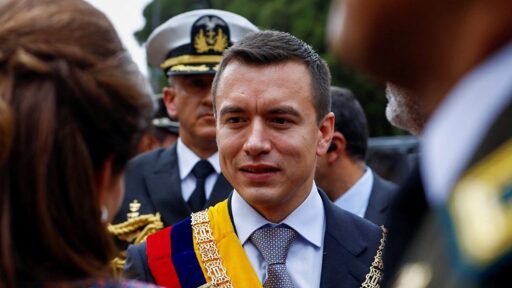
Historically, local elections have reflected the level of support or opposition to the current government. In this sense, right-wing president Daniel Noboa has more at stake than just a simple popular election.
This is especially true when considering the last elections (which centered on four referendum questions) held on November 16, 2025. In those elections, Noboa suffered a fourfold electoral defeat, as the majority of Ecuadorians rejected his attempt to repeal the current constitution – which guarantees rights – in favor of a neoliberal one. Furthermore, Ecuadorians said no to the possibility of establishing foreign military bases.
The defeat took the government by surprise, as it had been confident of a victory in a country that, in recent history, has consistently voted “yes” in referendums held by successive administrations.
Read more: Ecuadorian people deal a crushing blow to neoliberalism in Noboa’s referendum
And for that very reason, Noboa needs a victory at all costs. But it is important to understand that success for Noboa does not necessitate that his candidates win, but rather that his main opponent – Correísmo – loses.
Noboa’s anti-Correa crusade
From the very beginning, his main selling point (and the primary reason for the support that enabled him to win two presidential elections) has been to present himself as the antithesis of the supporters of Ecuador’s former president, the progressive Rafael Correa (2007–2017). As a result, Noboa has been viewed by many as a key player capable of preventing the return of Correísmo to the presidency, and it is precisely this antithetical distinction that keeps him a politically relevant figure.
This has led Correa’s own party, the Citizen Revolution, to claim that the elections on November 29 will take place in an undemocratic and authoritarian environment, in which most institutions – including electoral ones – serve the interests of the executive branch.
The main basis for this accusation stems from the suspension of the Citizen Revolution party in early 2025. The party’s candidates have been forced (when possible) to seek participation in the elections on other parties’ slates.
Added to this is a series of allegations from the opposition regarding alleged political persecution against the main political leaders of the Citizen Revolution and their allies. Several months have already passed since Aquiles Álvarez, the then-mayor of Guayaquil, Ecuador’s largest city, was imprisoned in a maximum-security prison.
The current mayor of Quito, the capital, Pabel Muñoz, who is seeking reelection, has been accused of various alleged crimes . The mayor of Cuenca was removed from office, and the prosecutor’s office is currently seeking to arrest him.
Opposition leader Luisa González jailed by Noboa government
One of the most emblematic cases is that of Luisa González, president of the Citizen Revolution and a two-time presidential candidate (who lost to Noboa both times). González was seeking the governorship of Manabí (a stronghold of Correísmo) but on October 22, she was arrested and has been held in prison on charges of money laundering ever since.
Read more: Luisa González, former presidential candidate and opposition leader, is arrested in Ecuador
And while the executive branch defends these actions by linking the Citizen Revolution to organized crime, the Correístas insist that this is political persecution, and that the upcoming election is one in which every effort has been made to ensure that their candidates fail to win elected office; therefore, they claim, the current government is seeking to ensure the victory of candidates close to it, who would run as candidates for other parties.
Thus, according to this interpretation, Noboa seeks to win with his own candidates and with allied candidates from other parties. But his greatest victory would be to prevent the Citizen Revolution from achieving wins that would once again call into question his popularity, which has not recovered from its slight but steady decline over the past several months.
For their part, the polls have once again shown clear inconsistencies among themselves, which has raised suspicions of alleged political manipulation of the numbers. In some polls, candidates opposed to the government hold a slight lead over many pro-government candidates or those allied with the executive branch. Other polls, however, show Noboa’s candidates in the lead.
However, since these are regional elections, they will reveal different political realities and aspirations depending on the region under consideration. And while a country as complex and diverse as Ecuador may offer various paths forward, there are four provinces (Guayas, Pichincha, Manabí, and Azuay) and three cities (Quito, Guayaquil, and Cuenca) that will surely attract the most attention. They are home to a huge percentage of the population and tend to set the pace and political trends for the 2028 presidential elections.
From BT News via This RSS Feed.