

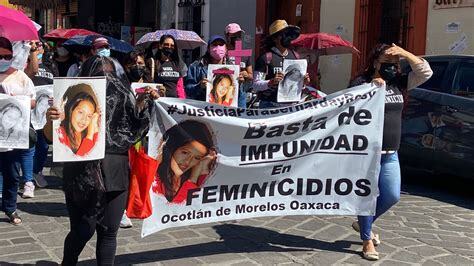
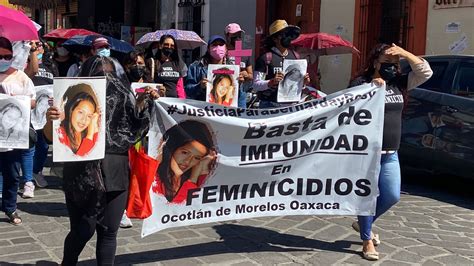
Impunity in femicide cases in Bolivia is not the result of a single, isolated failure, but rather a chain of institutional practices that come into play from the moment a crime is reported through the entire judicial process. This is the conclusion of a qualitative study—based on ten cases of femicide and attempted femicide—presented by the state-run Plurinational Service for Women and Depatriarchalization (Sepmud) and the NGO Alianza por la Solidaridad/ActionAid.
RELATED:
Bolivia and Chile Resume Political Talks After 16-Year Hiatus
The research identifies ten mechanisms that perpetuate impunity, most notably revictimization, negligence, institutional corruption, intimidation, and the shielding of perpetrators.
The figures highlight the severity of the problem: out of more than 1,000 cases recorded between 2013 and 2024—the period since the enactment of Law 348, which guarantees women a life free from violence and mandates a 30-year prison sentence for femicide—only 5.7% have resulted in a conviction.
The study’s author, Tania Quilali, explained that there is no single “bottleneck” or institution that fails in isolation; rather, various problematic practices converge whenever a case of gender-based violence occurs.
🟠 #Visión360 l Feminicidios en Bolivia dejan al menos 67 hijos e hijas en la orfandad hasta noviembre de 2026-#Feminicidios #BoliviaVerificahttps://t.co/Dh1uksmDjg
— Visión 360 (@vision360_bo) November 23, 2026
The text reads, “Femicides in Bolivia have left at least 67 children orphaned as of November 2026.”
Quilali emphasized the need to combat the culture of impunity by fostering counter-responses—driven by the advocacy of activists, NGOs, and family members—whose demands are amplified by the media.
Furthermore, she noted that Bolivia urgently requires a violence prevention plan, as efforts and resources have thus far been focused more on seeking justice than on preventing high-risk situations.
Magalí Chávez, the NGO’s country coordinator, lamented that protection measures often go unenforced, existing only on paper. Chávez questioned the fact that the only cases being resolved are those in which the perpetrators plead guilty, while cases requiring investigation remain unpunished; she demanded the implementation of public policies backed by financial resources.
🇧🇴 #Bolivia Si bien los pueblos indígenas lograron consolidar sus gobiernos autónomos, el cumplimiento de los derechos de las mujeres indígenas aún dista de ser el adecuado…➧ https://t.co/NaSuHV6JLv pic.twitter.com/e7lt0Xm9KQ
— Servindi (@Servindi) November 20, 2026
The text reads, “Bolivia Although indigenous peoples have succeeded in establishing their own autonomous governments, the fulfillment of the rights of indigenous women remains far from adequate.”
To address this crisis, the study proposes the creation of oversight bodies for judicial proceedings, as well as committees composed of women to monitor stalled cases. Among its institutional recommendations, it calls for the police to ensure that the evidence-collection protocol does not depend on the victim; it urges the Public Prosecutor’s Office to establish specialized units for femicide cases and to initiate investigations ex officio (on its own initiative); and it asks the Ombudsman’s Office to conduct rigorous follow-up.
From teleSUR English via This RSS Feed.