

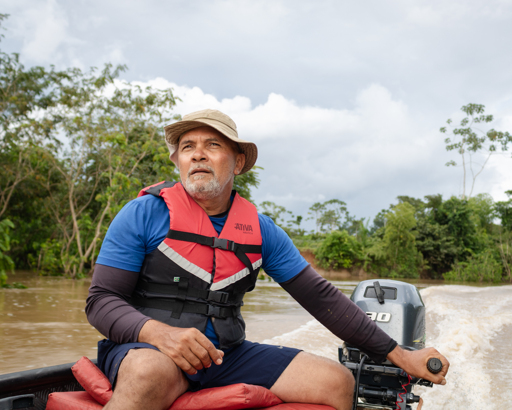
RIO BRANCO, Brazil — The sun rises as the riverine healthcare crew starts disembarking medical supplies. They pass down boxes and coolers of all sizes from boat to canoe to smaller canoe, from the far end of the ship to the water’s edge, where a staff member with mud halfway up their shin will hand the load to the next on dry land to carry it uphill where the rest of the team is setting up today’s medical outpost. Every year, doctors, nurses, dentists and community health agents sail along Riozinho do Rôla, delivering medical care to the riverine population of the rural area of Rio Branco, capital of Acre state, in the Brazilian Amazon. Barro Alto, where the fleet is docked, is the first stop. Across the Amazon, a landscape of forests and rivers poses unique obstacles for accessing healthcare. “There are technical and operational challenges that are characteristic to this region,” nurse Alexandra Fernandes, who oversaw this year’s edition of Rio Branco’s healthcare flotilla, told Mongabay. In riverine communities like Barro Alto, isolated for months during wintertime floods, waterbound medical attention becomes a lifeboat. But with climate change and increasingly extreme drought seasons, channels that once connected people to the care they needed are now turning into barriers, as water gives way to mud. According to the November bulletin of the Drought and Immobility Risk in the Amazon Basin report, river levels across the Brazilian Amazon are “below or far below average.” In Acre alone, six of its 22…This article was originally published on Mongabay
From Conservation news via This RSS Feed.