

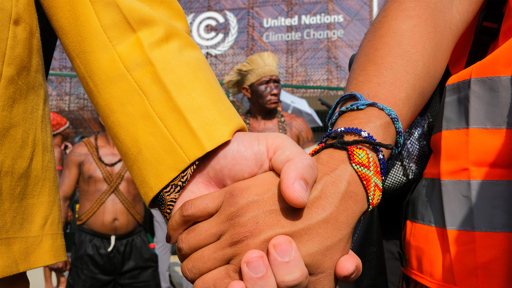
In November 2025, Indigenous and Afro-descendent peoples, frontline defenders and civil society movements mobilized in unprecedented numbers in Belém, Brazil, to advocate for their demands at the 30th U.N. Climate Change Conference (COP30). One of the key demands was for direct access to climate finance. At COP30, donors announced a new $1.8 billion pledge to support Indigenous peoples’ and Afro-descendent and local communities’ land tenure and resource rights. However, despite certain advances in climate finance and philanthropy, major bottlenecks still remain a year later when it comes to implementation of such commitments. For example, under the previous $1.7 billion pledge, only 7.2% of the funds in 2025 went directly to Indigenous and community organizations, with the vast majority routed through international NGOs, consultancies and development banks. “That system is ill-designed and it is trapping the money. We know what we need. We have the systems and we don’t want anybody else in the middle creating these layers,” Maria Amália Souza, Fundo Casa Socioambiental’s founder and director of Global Philanthropy Strategies, tells Mongabay. “We can attend to the demands of our societies, our movements and our causes much better because we belong to them. The belonging is the part that nobody else can claim.” Determined to not replicate the shortcomings of conventional philanthropy, Souza gathered community and movement leaders at Fundo Casa Socioambiental, a Brazilian socio-environmental fund established in 2005, to design a system to rapidly redistribute funds through thousands of small grants across the country. In partnership with others, they…This article was originally published on Mongabay
From Conservation news via This RSS Feed.