

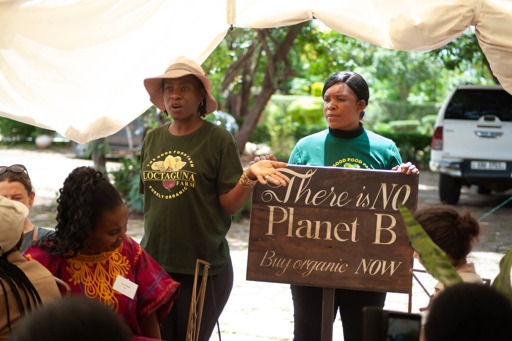
LUSAKA, Zambia — A passenger finishing a salad on a flight out of Lusaka may not know where the vegetables came from — or where some of the organic waste generated during meal preparation ends up. The answer to both questions could be: A 10-hectare (25-acre) farm on the outskirts of Zambia’s capital run by Loctaguna Organics. The farm supplies vegetables and herbs to Newrest Zambia, a catering company that supplies meals to airline companies operating out of Lusaka. Some organic waste from the catering operation is then returned to Loctaguna, where it is used as compost. The farm runs on an agroecology model. Loctaguna produces vegetables, fruits, herbs and animal products without synthetic fertilizers or pesticides, employing 12 people. “The most fundamental part of this whole process is soil health, promoting the soil health,” Loctaguna founder Kanangwa Newlove said. Goats and pigs are part of the Loctaguna Organics ecosystem. The droppings from the livestock are used to produce manure and the residues from the meals are fed to the pigs. Image by Chisapi Kumbutso for Mongabay. Newlove’s journey into agriculture followed a decade-long career in business and marketing. “I used my gratuity from COMACO to set up operations on this farm,” she told Mongabay referring to COMACO Limited, where she worked as a sales and marketing operations manager. Her transition from business to farming has shaped Loctaguna’s approach to connecting organic production with commercial markets. Through a partnership with Kasisi Agricultural Training Centre, she also promotes agroecological farming among…This article was originally published on Mongabay
From Conservation news via This RSS Feed.