

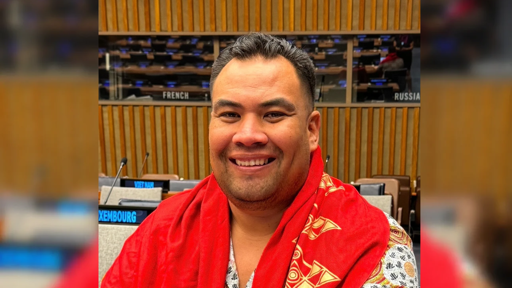
Keola Kauhane CastroExecutive Director of RISE Earth Initiative
The United States Senate has passed the Bipartisan American Affordability and Jobs Act, threatening more than half a century of environmental protections. I watched Hawaiʻi Sen. Brian Schatz stand on the Senate floor defending a manager’s amendment that he claimed would protect tribal nations and Native Hawaiian organizations. BAAJA does nothing of the sort.
Introduced in the Senate in late September and aggressively pushed through during this lame-duck session, BAAJA aims to fast-track permitting for projects ranging from geothermal, wind farms, and nuclear power, to fossil fuels and mining. The industry-backed bill would fundamentally change four federal laws: National Environmental Policy Act, National Historic Preservation Act, Clean Water Act, and the Endangered Species Act. These are the laws that protect our land, water, historic places, sacred sites, and endangered species. And it would limit how our communities can fight unlawful projects in the courts.
Despite intense opposition nationwide from broad coalitions, tribal nations, and communities in Hawaiʻi, Schatz argued that the manager’s amendment would ensure more projects undergo historic preservation review, require agencies to assess adverse effects on tribes and Native Hawaiian organizations, and provide additional funding for historic preservation. But consultation and consideration of adverse effects are already required under Section 106 of the National Historic Preservation Act. Tribal nations and Native Hawaiian organizations have fought for generations to secure these protections. They are asking Congress to preserve them, not weaken them.
The Earth needs us: Why tribal nations must stand against BAAJA
Schatz acknowledged that the manager’s amendment would not make things right with tribes, but insisted Congress was “in the business of making things better.” BAAJA accomplishes neither. Oregon Sen. Jeff Merkley exposed the indignity of this argument when he described tribal sovereignty being overrun, only for tribes to be offered what amounted to candy in return.
In supporting BAAJA, Sen. Schatz has failed Hawaiʻi, Native Hawaiians, and our Native American relatives. As members of the Senate Committee on Indian Affairs, he and Alaska Sen. Lisa Murkowski have a responsibility to Kānaka Maoli and tribal nations. Instead, they have helped advance legislation that puts our ocean ecosystems, lands, waters, and sacred places at risk.
I have been in spaces like the United Nations in New York and Geneva where Hawaiʻi is barely considered in conversations about Indigenous peoples. The overthrow of the Hawaiian Kingdom and the subsequent occupation and annexation of our homeland by the United States have obscured our history, while our current struggles remain an afterthought. That dispossession continues today.
Tourists overrun our islands daily. Native Hawaiians are priced out of paradise and forced to leave our homeland, while families wait decades for Hawaiian homestead lands, and the places our ancestors protected are increasingly threatened by development.
And now a United States senator has handed industry an offering plate, and Hawaiʻi is on it.
Sen. Schatz should know the long history of military exploitation and desecration of our ʻāina, the struggles to protect our mauna and fragile island aquifers, and the devastation at Red Hill, where communities were forced to fight for clean drinking water. He should know the history of Kahoʻolawe, Pōhakuloa, and Mākua Valley, where generations of Hawaiians have resisted military bombing, live-fire training, and destruction of sacred lands. At Kahoʻolawe, our kūpuna crossed dangerous waters, defied the military, faced arrest, and risked their lives to protect an island the United States treated as expendable. Uncle George Helm and Uncle Kimo Mitchell never came home. Our kūpuna fought for us, our keiki, and generations they would never live to see.
BAAJA will set us back, as Hawaiʻi continues to confront military contamination, unfettered development, and emerging threats of deep-sea mining in the Pacific, including the Clarion-Clipperton Zone between Hawaiʻi and Mexico. It will fundamentally change how we protect cultural and sacred sites like Mauna Kea and Haleakalā. No amount of money can replace the right to protect what is sacred. The dispossession of Indigenous Peoples continues, and Schatz has opened the door wide to further destruction of our islands.
My great-grandmother built the first house facing Diamond Head in Kapahulu generations ago. My grandfather, a Bronze Star and Purple Heart veteran of multiple wars, always reminded us he was born in the Territory of Hawaiʻi and told us to protect this land. He recognized the impact of the military on our lands and waters, supported accountability for Red Hill, and prayed for the kūpuna arrested at Mauna Kea. He was proud when I stood on the mauna with my keiki, representing our ʻohana.
Our ʻāina and waters carry our family histories and our moʻolelo. It is where our umbilical cords are buried, where kalo first nourishes our keiki, and the ocean is where we paddle out our loved ones when they return to the stars. Protecting our islands is not a choice; it is an existential reality. We do not have the luxury of favoring development over the Earth or sacrificing our water.
If Schatz is unwilling to protect the interests of Native Hawaiians and tribal nations in Congress, he should resign from the Senate Committee on Indian Affairs.
BAAJA has passed the Senate, but it is not yet law. The House of Representatives must stop this legislation before these changes become permanent. Without these legal protections, our communities will face an even harder struggle to defend our lands, waters, and sacred places. Regardless, we will continue fighting. Our ʻāina is not an offering to industry. Our future is not anyone’s to give away.
Keola Kauhane Castro is a Native Hawaiian and Executive Director of RISE Earth Initiative, a Native Hawaiian-led nonprofit dedicated to protecting the ocean and advancing the rights of Indigenous Peoples. He holds an MLS in Law and Sustainability from Arizona State University Sandra Day O’Connor College of Law.
This opinion-editorial essay does not reflect the views of ICT; voices in our opinion section represent a variety of reader points of view. If you would like to contribute an essay to ICT, submit your op-ed here.
The post Senator Schatz has failed Hawaiʻi: BAAJA hands our islands off to industry appeared first on ICT.
From ICT via This RSS Feed.