

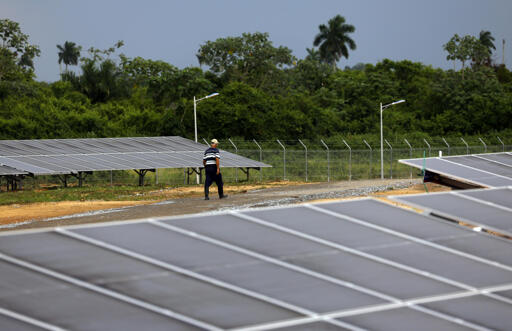
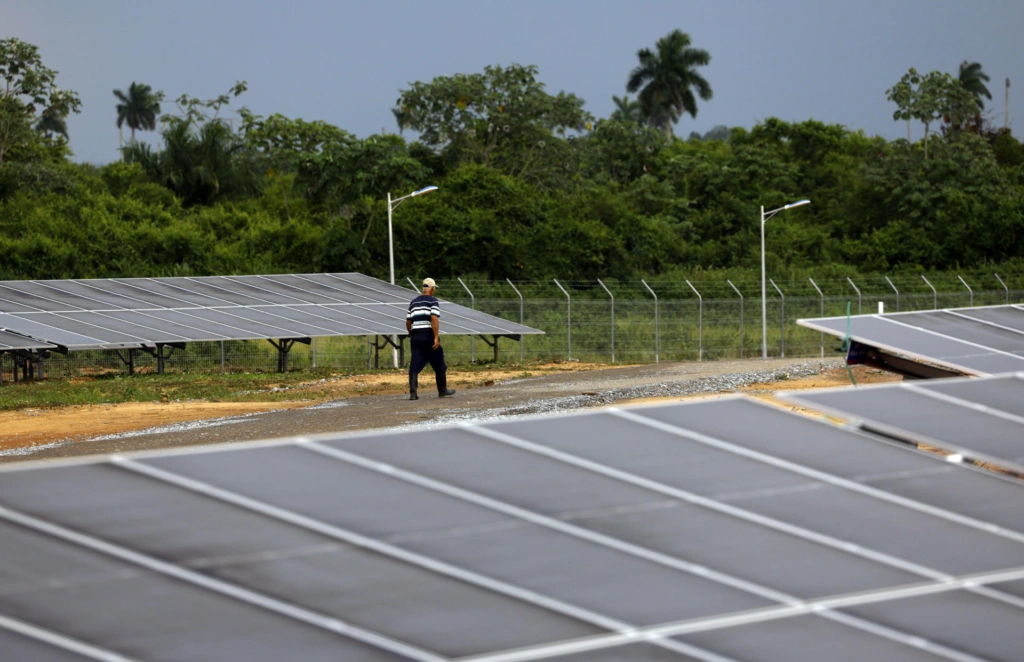
The project will help sustain healthcare and education services for more than 1,200 children and students in Pinar del Río amid persistent power shortages.
Spain’s Seville Provincial Council will finance solar power installations at 13 healthcare and education facilities in western Cuba, providing electricity to essential services struggling with the island’s prolonged energy crisis.
RELATED: Cuba Denounces U.S.-Funded Poll on Support for Invasion as Fraud
The project, implemented by the Andalusia-Cuba Association in partnership with the government of Pinar del Río province, will install photovoltaic systems with capacities of three, six and 12 kilowatts. More than 1,200 children and students are expected to benefit, according to Cuban state media.
Healthcare facilities are a priority, including the province’s Medical Genetics Center, which serves high-risk pregnancies involving genetic conditions across all 11 municipalities of Pinar del Río.
Several doctors’ offices in remote communities and three polyclinics will also receive installations. The new systems will provide electricity for laboratories and ultrasound equipment at the polyclinics, which currently rely on low-capacity power systems, provincial health director Sandra Ramírez said, according to Cuban news outlet Cubadebate.
🫂 La Asociación Andalucía-Cuba contribuirá al cambio de matriz energética en 13 centros sanitarios y de educación de #PinardelRío, de cara a mejorar los servicios en un contexto marcado por el bloqueo estadounidense que frena la entrada de combustible
https://t.co/hRJCN9cOmi pic.twitter.com/6OGFn3156h— Gobierno Provincial de Pinar del Río (@GobProvPR) November 22, 2026
Text Reads: 🫂 The Andalusia-Cuba Association will contribute to transitioning the energy mix at 13 healthcare and educational facilities in #PinardelRío, with the aim of improving services in a context marked by the U.S. blockade, which hinders the arrival of fuel.
The project will also provide electricity for food preparation at four childcare centers and a teacher-training school. Fuel shortages have forced these institutions to rely on firewood and charcoal for cooking.
Antonio Zurita Contreras, president of the Andalusia-Cuba Association, said healthcare and education were given priority because of their contribution to social well-being. He spoke after the organization signed a cooperation agreement with the Pinar del Río provincial government.
Cuba’s energy crisis
The initiative comes as Cuba grapples with a deepening economic and energy crisis, compounded since January by a U.S. oil blockade that has disrupted imports of crude oil and petroleum products. The island depends on foreign supplies for roughly half of its energy needs.
The crisis has also been aggravated by the deteriorating condition of the country’s aging thermoelectric power plants, which have suffered decades of wear and chronic underinvestment in maintenance.
Prolonged daily blackouts have severely disrupted economic activity. According to official figures, Cuba’s economy contracted by more than 15% between 2020 and 2025.
Solar power has become a central pillar of the government’s response, with significant support from China. A national program aims to build 92 solar parks across the island, with a combined installed capacity of approximately 2,000 megawatts.
From teleSUR English via This RSS Feed.